Security Product Engineering










Site Reliability Engineering for Systems Your On-Call Team Can Sleep Through
Full-stack application development, compliance architecture, and domain-specific integrations delivered alongside your team, so the product fits your industry's data standards and regulatory requirements from the first sprint.
Trusted by leading ISVs
and ecosystem partners



















SRE Services That Turn Reliability From a Firefighting Habit Into an Engineering Discipline
Alert fatigue, manual runbooks that nobody runs correctly under pressure, and on-call rotations that burn through senior engineers are symptoms of reliability treated as an operations problem. We treat it as an engineering problem: defined SLOs, measured error budgets, automated incident response, and observability instrumentation that gives your team the context to resolve incidents faster and prevent the next one from happening at all.
Engineering reliability into every part of the software lifecycle
From SRE foundations and observability to resilience, automation, incident response, and performance, we build systems that stay reliable as they scale.
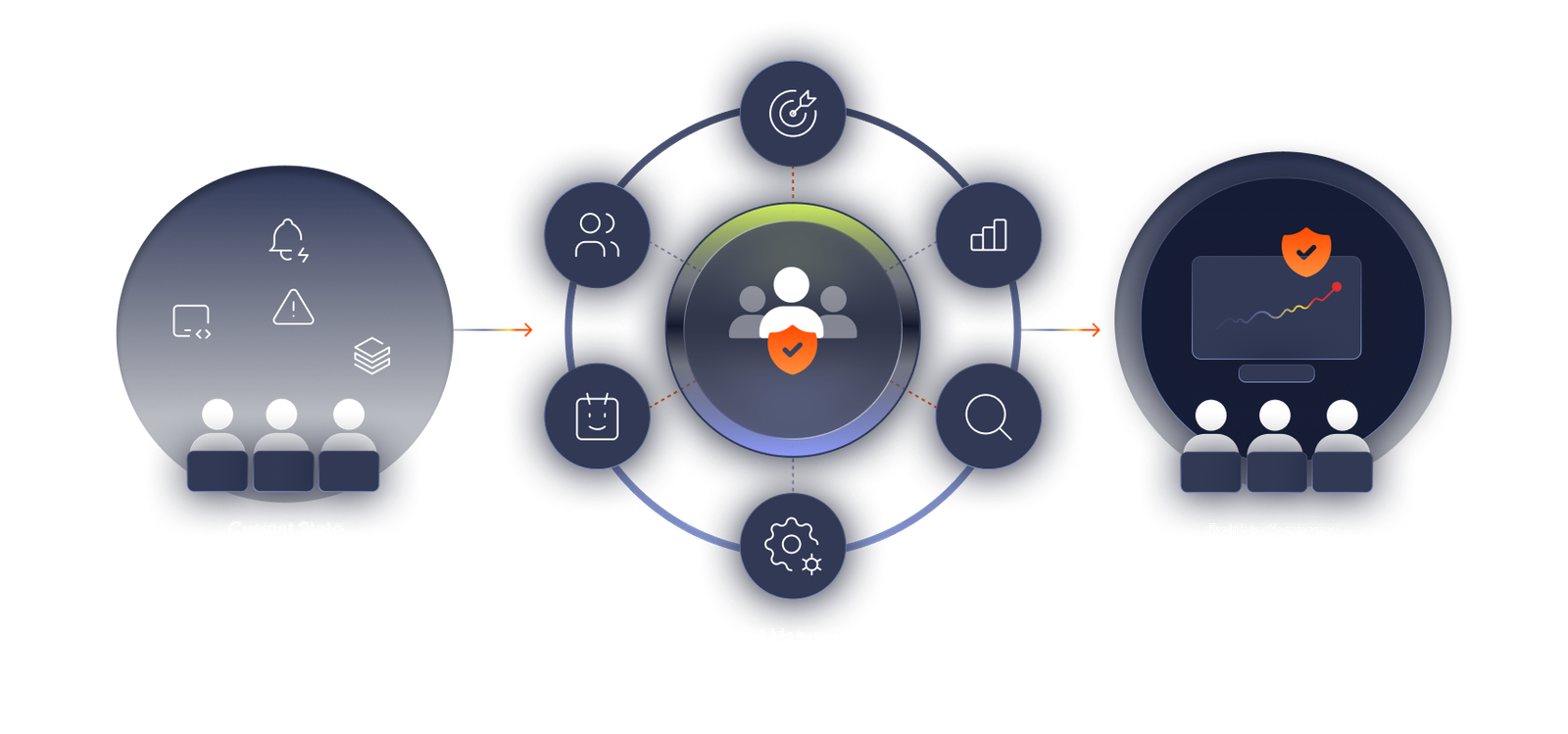
Whether you're standing up SRE from zero or maturing a team that's grown organically, we build the practice around where you actually are, team structure, ownership boundaries with product engineering, and a path from your current maturity level to the next.
What to measure: SLIs tied to latency, success rate, and availability. How we set targets: SLOs benchmarked to business needs, where slow-but-correct still counts as failure. How we enforce: error budgets tracked via Prometheus, with burn-rate alerts and CI/CD deploy gates.
GameDay exercises and fault-injection testing with controlled blast radius limits validate that error handling, fallback behaviour, and recovery automation perform as designed before a real incident tests them. Each experiment maps to a reliability improvement backlog item.
Auditing recurring manual work, deploys, provisioning, and repetitive troubleshooting, then systematically automating it. The standard target is keeping toil under roughly half of total SRE time, freeing the rest for work that improves the system.
Designing on-call rotations, escalation paths, severity tiers, and runbook automation so the right person gets paged with context. Postmortems review system and process failure points, not individual fault, with action items tracked to closure, not documented and forgotten.
Instrumenting services to emit latency, traffic, error rate, and saturation, the baseline layer SLO computation and alerting are built on. Logging, tracing, and metrics unified into one pipeline using OpenTelemetry, so context is available when an incident fires.
DORA metrics, deployment frequency, lead time, change failure rate, and MTTR connect delivery performance to reliability outcomes. Security monitoring and compliance automation now sit inside the same reliability discipline, not a separate SecOps function layered on afterward.

Built Around You
Practice built around
your current maturity

Clear Ownership
Ownership boundaries
with product engineering

Maturity Path
A defined path to the
next maturity level
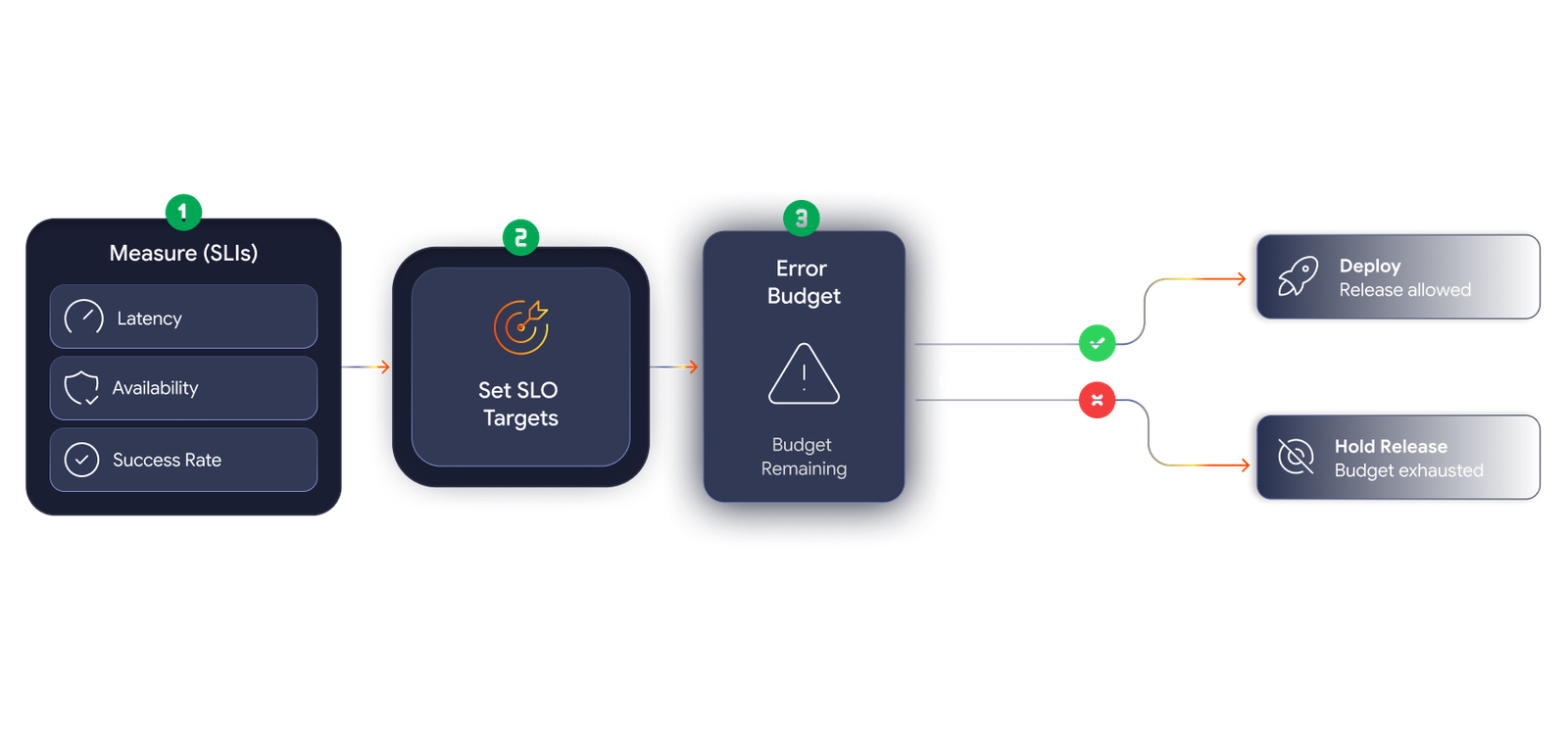
What to Measure
SLIs tied to latency,
success rate, uptime
Targets That Fit
SLOs benchmarked
to real business needs
Enforced in CI/CD
Error budgets gate
deploys automatically
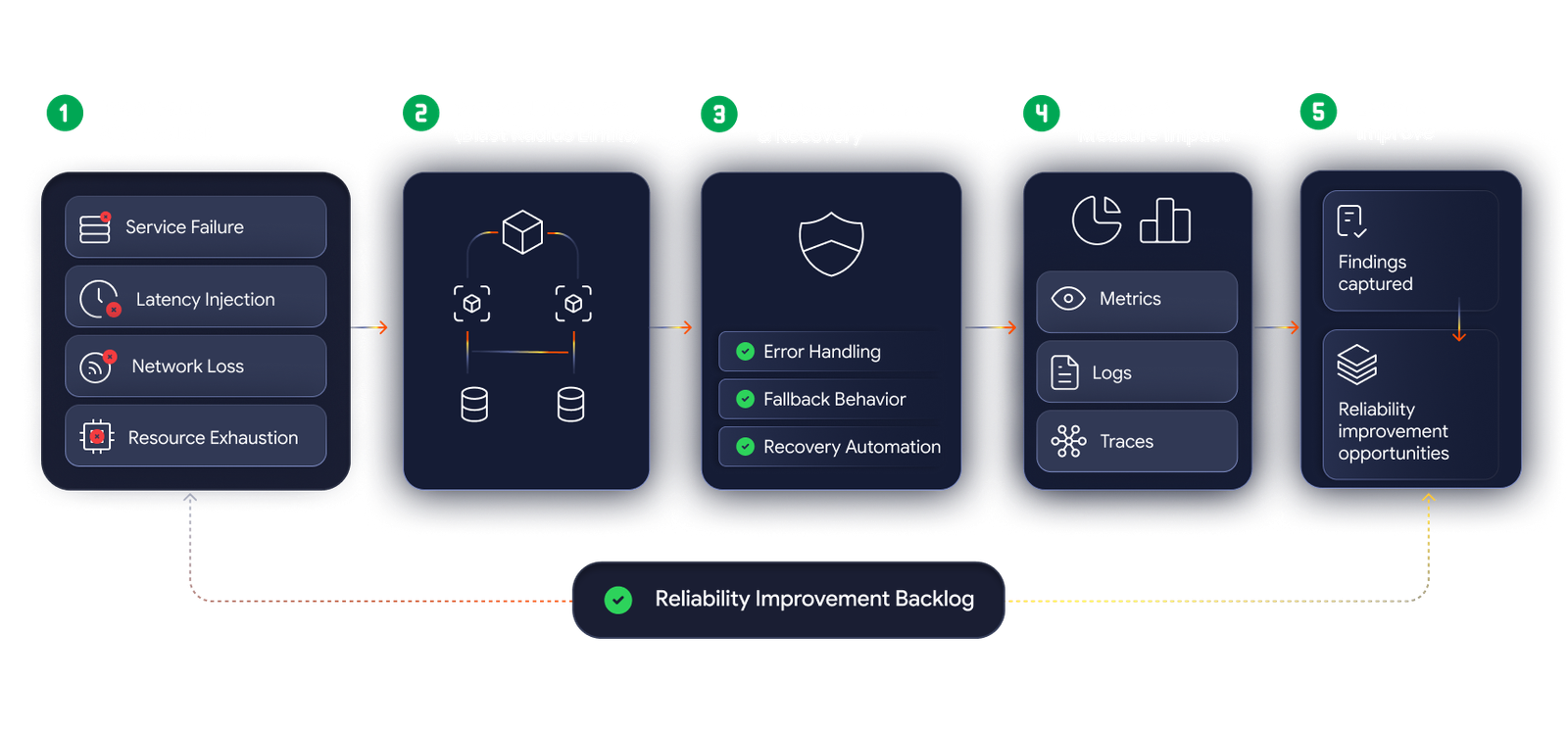
Catch It Early
Failures injected before
they happen for real
Controlled Limits
Controlled experiments
with defined limits
Backlog-Linked
Every finding maps
to a backlog item
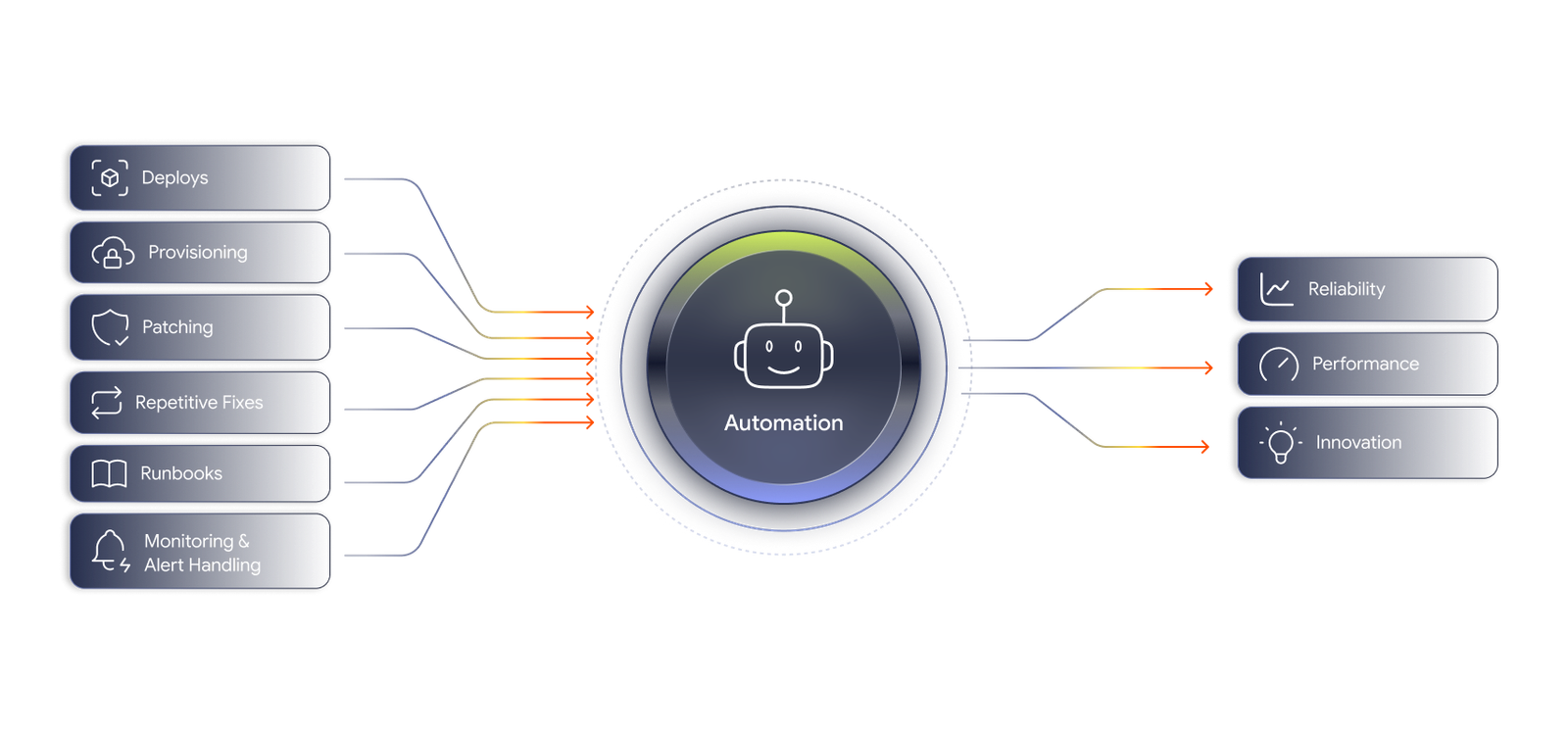
Cut Manual Work
Manual deploys and
provisioning automated
Automate Repeats
Toil kept under half
of total SRE time
Free Up Engineers
Engineers freed for work
that improves things
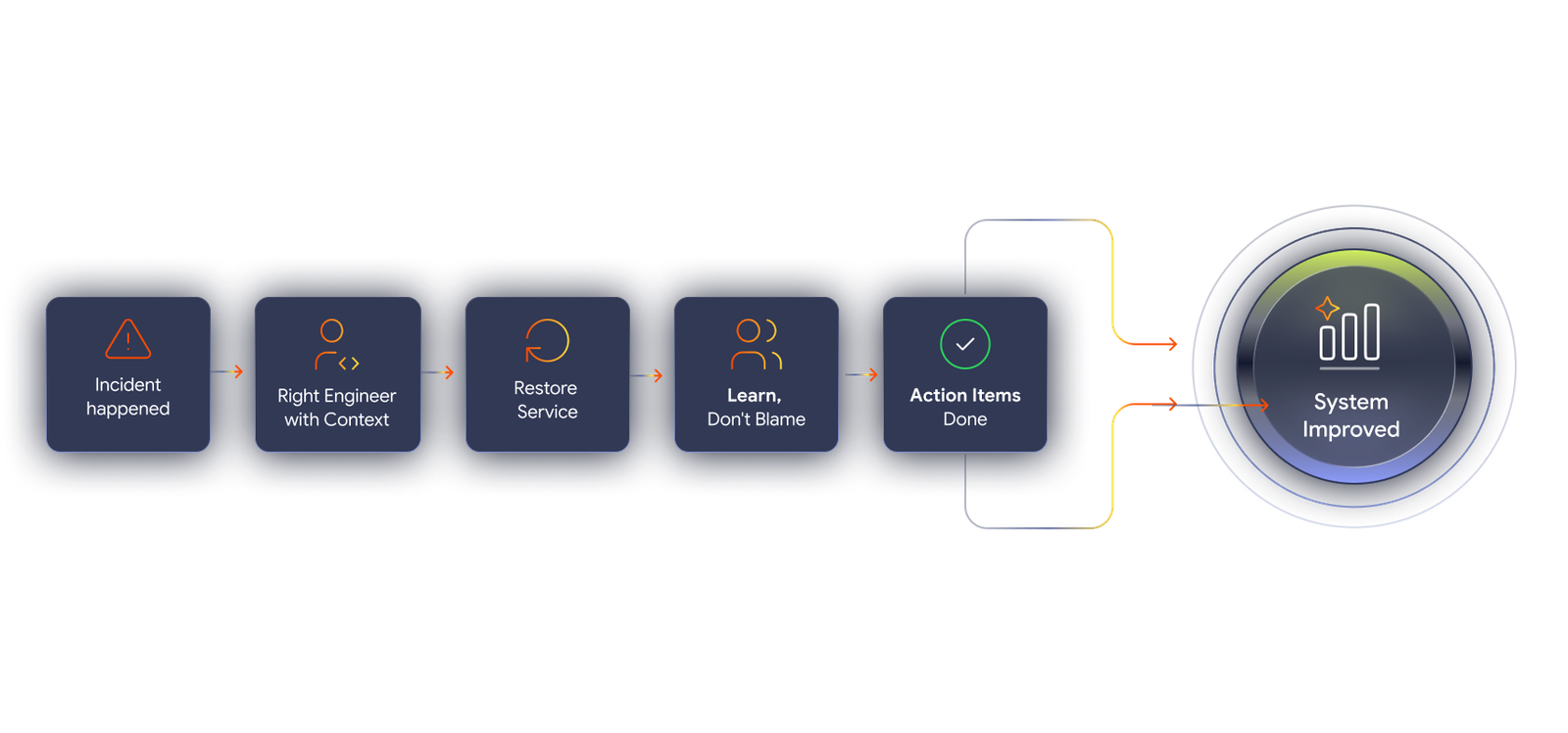
Right Person Paged
Escalation paths and
severity tiers defined
Blameless Reviews
Reviews focus on
systems, not individuals
Actions Tracked
Action items tracked
through to closure
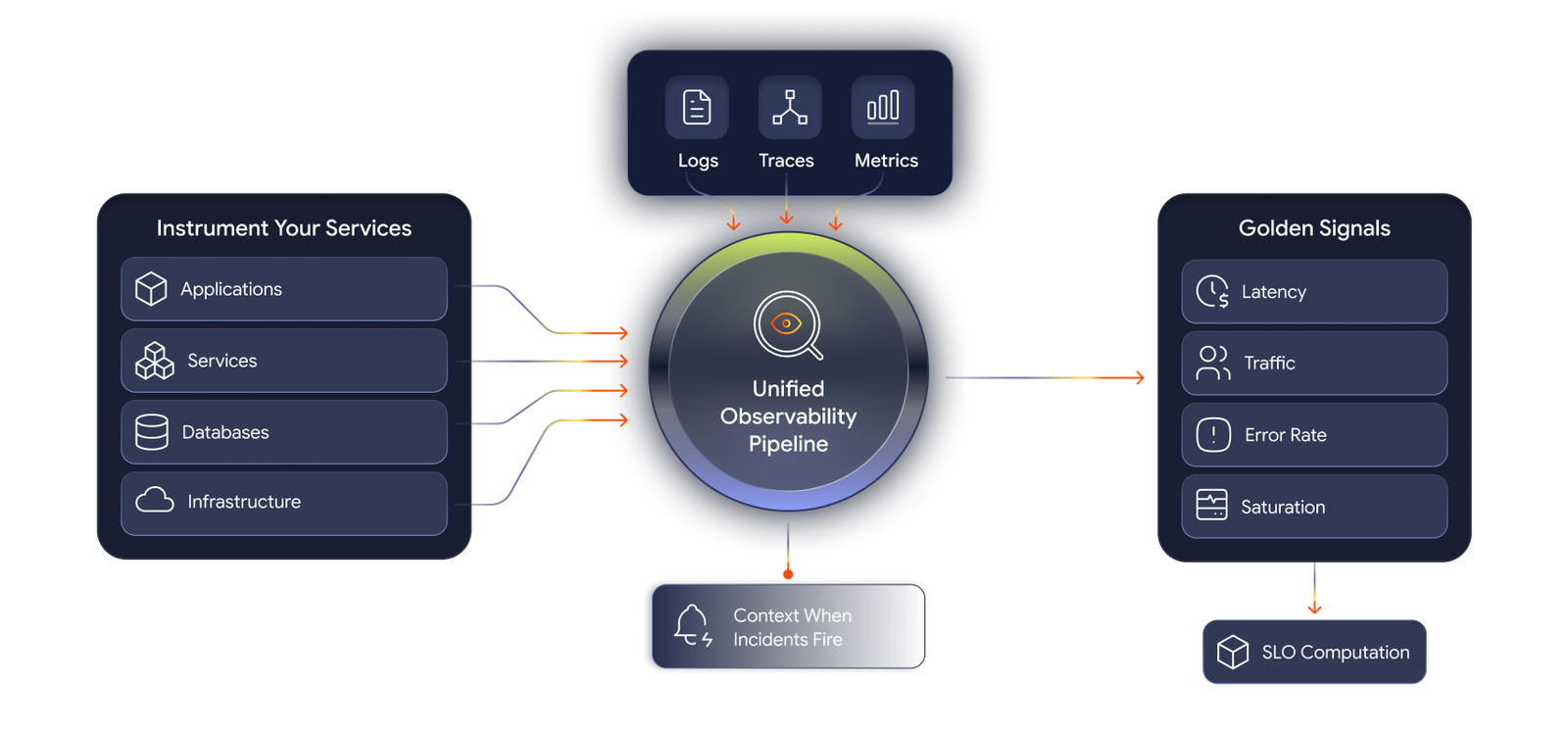
Golden Signals
Latency, traffic, errors,
saturation emitted
Unified Pipeline
Logging, tracing, and
metrics in one place
Context on Alert
OpenTelemetry as the
instrumentation standard
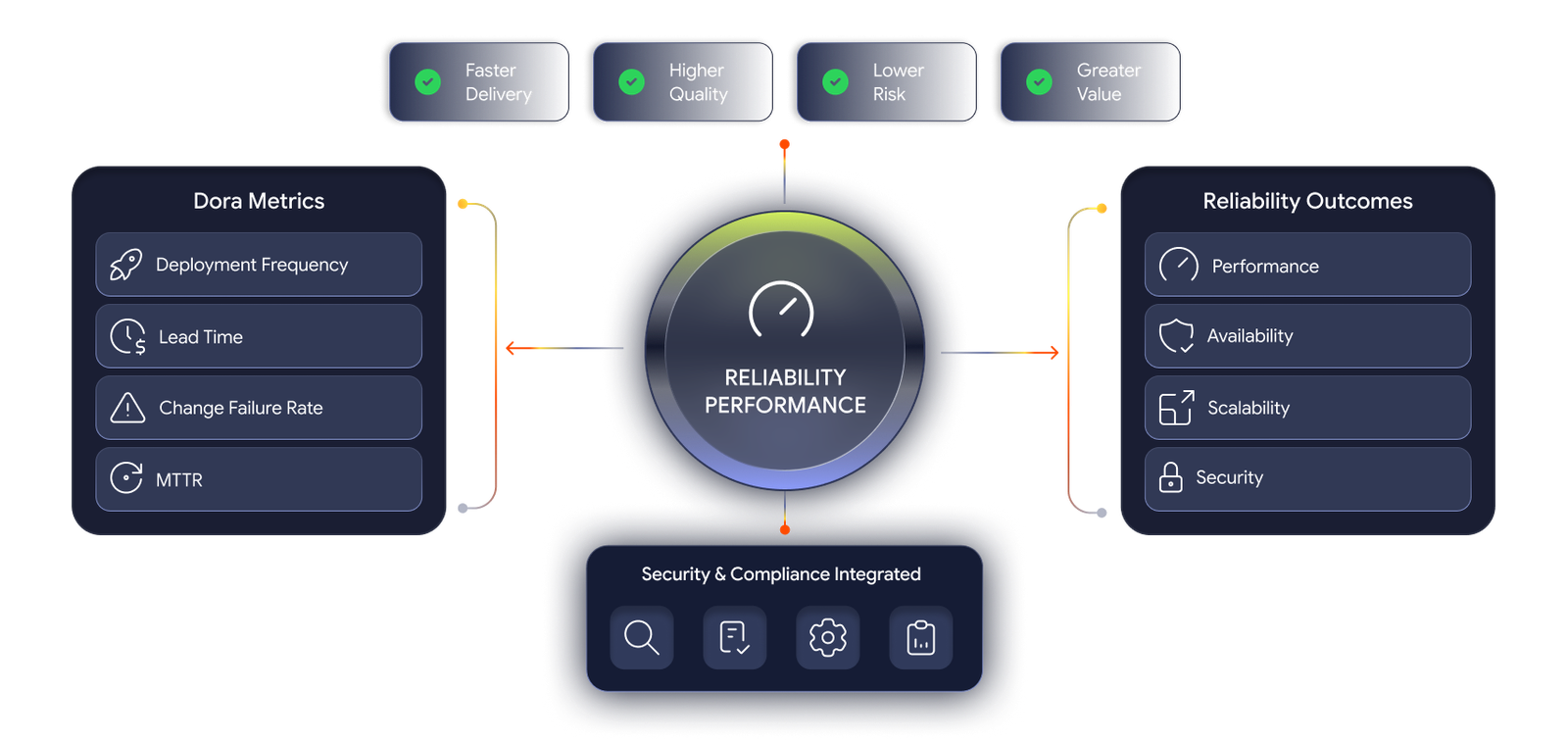
DORA Benchmarks
Deployment frequency,
lead time, MTTR tracked
Security Included
Security monitoring inside
the same discipline
One Set of Metrics
Delivery and reliability
measured together
Releasing on Gut Feel, or on Data?
Find out what an error budget means for your release process.
Built for Complexity. Engineered for Scale.
Building the technology capabilities that underpin enterprise scale and resilience.
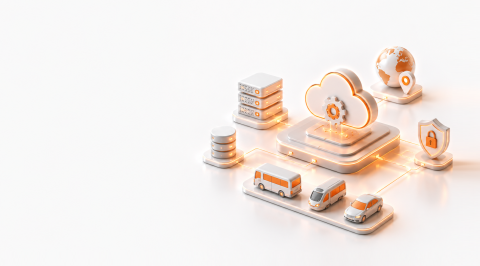
Cloud-native infrastructure modernization for a multi-carrier…
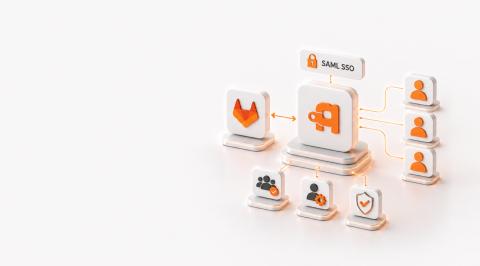
Automated GitLab group provisioning and user access management via…
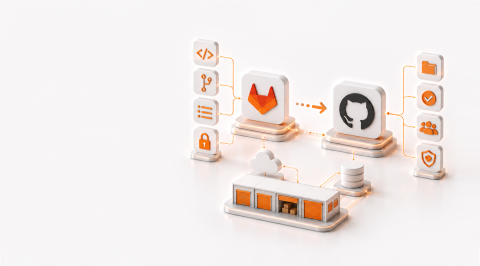
GitLab to GitHub enterprise migration for a self-storage SaaS platform
Automating security alert management with a production-grade Jira…

Production-grade testing for enterprise AI governance
Our Technology Ecosystem












Built for Answers That Have to Be Right
Whether you're in fintech, healthcare, legal, or hi-tech, we build the pipelines and governance your AI systems, dashboards, and applications all depend on without anyone noticing they're there. We work with engineering leads, data teams, and product owners who can't afford a pipeline that fails silently.
Leaders responsible for AI systems the business can rely on.
Owners who need AI features that genuinely work for real users.
Engineers building and maintaining the technical layer AI systems run on.
Industries that depend on reliable, secure intelligent systems.
FAQs: Questions Worth Asking Before Making a Technology Decision
Strategic guidance to help technology leaders navigate complex technology questions, evaluate approaches, and address what matters most.
Many enterprises choose cloud operations outsourcing to gain 24×7 monitoring, automation expertise, proactive incident response, and FinOps capabilities without expanding internal operations teams. This improves service reliability while reducing operational overhead.
Yes. Our CloudOps consulting services integrate with your existing cloud management software, observability platforms, CI/CD pipelines, and ITSM tools to improve monitoring, governance, automation, and operational visibility without disrupting existing workflows.
Our agile cloud automation services automate infrastructure provisioning, configuration management, patching, compliance remediation, and self-healing workflows. This reduces manual errors, accelerates deployments, and keeps cloud environments consistently optimized.
Yes. Our experts assess your existing cloud engineering platform, identify performance bottlenecks, optimize infrastructure utilization, improve autoscaling policies, and implement changes through controlled deployment strategies to minimize business disruption.
Yes. Our managed CloudOps services provide continuous monitoring for both cloud infrastructure and cloud applications, including performance monitoring, distributed tracing, log management, incident response, capacity planning, and proactive optimization.
Our CloudOps services improve enterprise technology operations by automating infrastructure management, continuously monitoring cloud environments, strengthening security posture, optimizing resource utilization, and ensuring high availability through proactive operational management.
Choosing a single provider for end-to-end cloud services simplifies operations, improves accountability, reduces vendor management overhead, and ensures cloud infrastructure, security, automation, monitoring, disaster recovery, and optimization work together seamlessly.
Yes. Our CloudOps consulting services implement Cloud Security Posture Management (CSPM), automated compliance monitoring, security policy enforcement, and continuous configuration validation, allowing development teams to move faster without compromising cloud security.
Bring Us the Pipeline That's Holding Everything Else Back
We'll show you exactly what needs to change and build it.