
 Security Product Engineering















Building microservices is a powerful approach, but interacting with external APIs often becomes repetitive. Developers using RestTemplate must write code for every step, from building URLs to handling responses, leading to a slow process that is error-prone and, frankly, frustrating. Fortunately, there is a better way to handle this problem and help developers manage large amounts of API calls—using the Feign Client in Spring Boot. This blog will explain how the Feign Client in microservices streamlines Spring Boot API interactions.
For teams managing multiple microservices, the cost of maintaining hand-rolled API integration code compounds fast — more services means more boilerplate, more points of failure, and more developer time spent on plumbing instead of product logic. Feign Client addresses this directly. It replaces repetitive RestTemplate code with a clean interface-driven approach that's easier to test, faster to onboard new developers onto, and simpler to maintain as your service mesh grows. If you're evaluating how to standardize inter-service communication across your Spring Boot services, Feign Client is worth a serious look.
What is Spring Cloud Feign Client and why does it matter for microservices?
Feign Client is a tool for developers, especially those using Java with Spring Boot. It simplifies creating connections to web services by letting you define an interface. Imagine having a to-do list app and needing to communicate with a separate service for user accounts. With Feign, users design an interface outlining how to interact with the user service. Feign handles behind-the-scenes communication, such as sending requests and processing responses, freeing developers to focus on the core logic of their applications. Feign is like a translator that speaks the language of web services, allowing apps to communicate with them easily.
What dependencies do you need to get started with Feign Client?

Steps to configure the Feign Client in a Spring Boot microservice
Step 1: Enable the Feign Client inside the main class using @EnableFeign Clientsannotation and import the Feign auto-configuration annotation. ‘@ImportAutoConfiguration({Feign AutoConfiguration.class})’.

Step 2. Create an interface inside the project that will act as the client for this API, c. Add URLs that need to be called from third-party services.

Step 3: To handle custom error response, use the Error Decoder and custom exception.


Step 4: Configure the bean creation of Feign CustomErrorDecoder.class
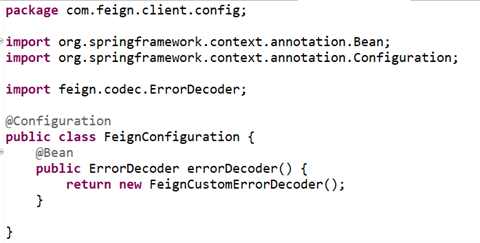
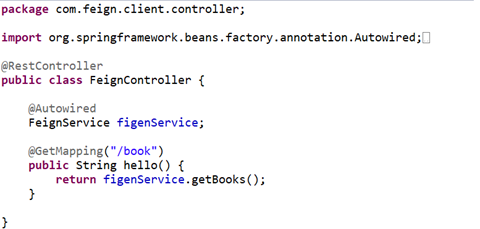
Step 5: Consume this API in the service class by auto-wiring the above interface.

Step 6: Create one rest controller for consuming the above service class.
How do you test your Feign Client setup using Postman?
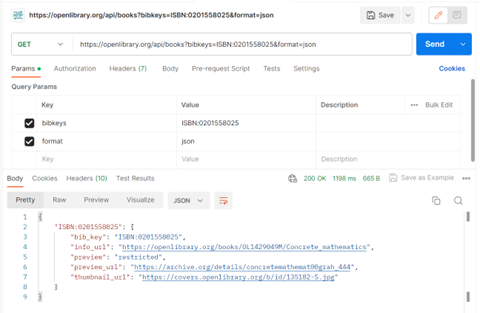
Start by making a GET request to retrieve book information from our API. Use the following endpoint as an example:
locahost:8080/book.

Third-party API that is being consumed:
What are the top advantages of using Feign Client in Spring Boot?
- Clean and concise Interactions: The Feign Client for Spring Boot lets you define API interactions through annotated interfaces, making your code more readable and easier to maintain.
- Built-in load balancing: Forget about managing complex load-balancing logic. The Spring Feign Client integrates with tools like Ribbon to automatically distribute requests across available services.
- Effortless cross-cutting concerns: Feign allows you to define interceptors for tasks like logging, authentication, and request processing. This keeps your core logic clean and avoids code duplication.
- Seamless spring integration: Feign plays nicely with other Spring Cloud components like Spring Cloud Config and Spring Cloud Hystrix, simplifying development within the Spring ecosystem.
Feign Client in Spring Boot transforms microservice development. Forget tedious API interactions – define clear interfaces and let Feign handle the legwork. Built-in features like load balancing and error handling elevate your code's efficiency and resilience. Embrace Feign Client to streamline development, write cleaner code, and build robust microservices with ease. Get in touch with us if you need help with Feign Client implementation in Spring Boot.
Comments
Ready to transform your FinTech Application?
Explore our VAPT as a Service portfolio or speak with our team to discuss your security testing requirements.