Security Product Engineering











Software Product Development to Help Teams Deliver More, Faster
Full-stack development, architecture, and API work delivered alongside your team, so the roadmap moves without pulling your core engineers off everything else they own.
Trusted by leading ISVs
and ecosystem partners



















Full-Stack Engineering Depth Across Every Layer of Your Product
Building a technically complex product means making the right architectural calls early, keeping the stack secure as it scales, and ensuring every layer, frontend, backend, data, and infrastructure, is built to handle what enterprise customers will put it through. We bring that depth across the full stack under one team.
Software Product Development capabilities
From the architecture decisions made before the first sprint to the modernization work that keeps a product current years later.
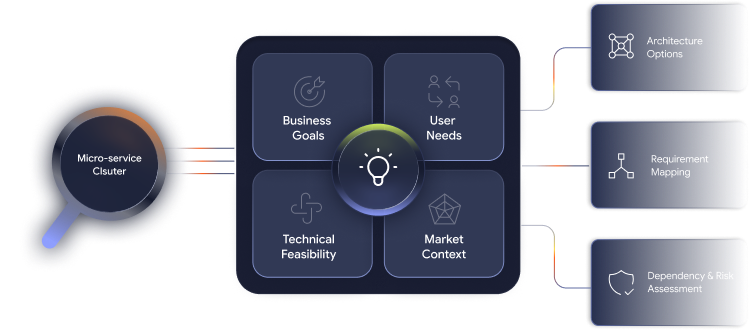
Technology stack selection, requirements mapping, and risk assessment before development starts, with AI-assisted evaluation of architecture options and third-party dependency risk, so the build begins with a defensible technical direction rather than an untested assumption.
Technology stack selection, requirements mapping, and risk assessment before development starts, with AI-assisted evaluation of architecture options and third-party dependency risk, so the build begins with a defensible technical direction rather than an untested assumption.
Technology stack selection, requirements mapping, and risk assessment before development starts, with AI-assisted evaluation of architecture options and third-party dependency risk, so the build begins with a defensible technical direction rather than an untested assumption.
Technology stack selection, requirements mapping, and risk assessment before development starts, with AI-assisted evaluation of architecture options and third-party dependency risk, so the build begins with a defensible technical direction rather than an untested assumption.
Technology stack selection, requirements mapping, and risk assessment before development starts, with AI-assisted evaluation of architecture options and third-party dependency risk, so the build begins with a defensible technical direction rather than an untested assumption.

Scalability & Performance
Built to scale and perform
under real-world load

Reliability & Security
Secure, reliable and built
for resilience

Continuous Improvement
Measure, learn and evolve to
stay ahead

Faster launches
Launch faster with a
strong technical foundation
Scalable foundations
Build product foundations
that scale with demand
Quality by design
Ship faster with quality
built into every release

Seamless integration
APIs built for seamless
integration and growth
Platform reliability
Reliable platforms that
simplify product growth
Secure APIs
Secure APIs designed for
scale and performance

Practical AI
Build intelligent features
with practical AI
AI in the product
Production-ready AI
integrated into your product
Measurable value
AI that creates measurable
value across products

Scalable architecture
Scale architecture
without compromising agility
Built for growth
EStrengthen systems as
usage and complexity grow
Continuous evolution
Evolve architecture for
sustained product growth
Supporting the Entire
Software Product Lifecycle
A product moves through different needs at different points, building new features, stabilizing what's been shipped, scaling for growth, sustaining what's already live. Most engineering partners are built around one of these. Opcito covers all four under one team, so priorities don't get lost in a handoff between vendors.

Build
New features get developed with architecture and code quality considered from the first sprint, not patched in after the fact.
Stabilize
Code gets hardened and technical debt addressed as the product matures, before it becomes the thing slowing every future release down.
Scale
Architecture evolves to handle new load, new markets, or new integrations, often without the disruptive rebuild teams assume is the only option.
Sustain
Ongoing feature work and platform upgrades keep the product current long after the original roadmap shipped.
Stop Deprioritizing the Features That Move the Product Forward
Tell us what needs shipping and we will scope an engagement around it.
Built for Complexity. Engineered for Scale.
Building the technology capabilities that underpin enterprise scale and resilience.
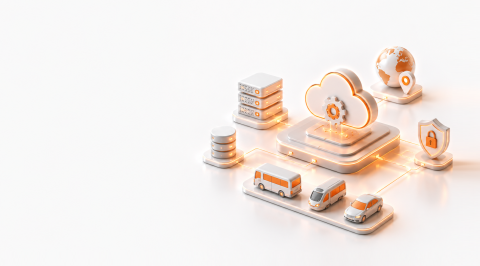
Cloud-native infrastructure modernization for a multi-carrier…
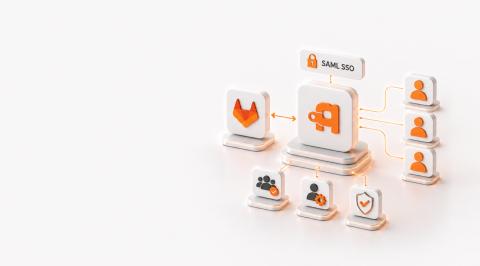
Automated GitLab group provisioning and user access management via…
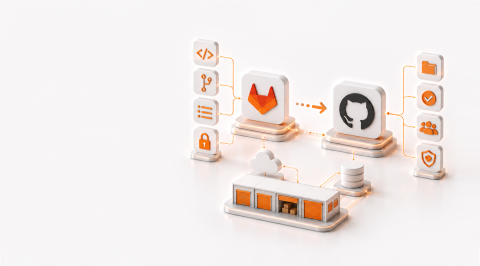
GitLab to GitHub enterprise migration for a self-storage SaaS platform
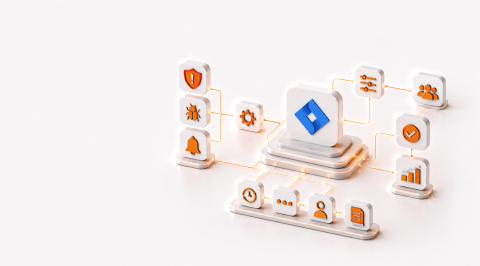
Automating security alert management with a production-grade Jira…

Production-grade testing for enterprise AI governance
Our Technology Ecosystem












Built for AI-first organizations
Whether you're in cybersecurity, fintech, healthcare, or SaaS, Opcito testing scales to your needs. We work with engineering leaders, QA teams, and security architects who demand production-ready AI.
Decision makers who own AI quality and security outcomes.
Industries that depend on reliable, secure intelligent systems.
Technical leaders building robust AI infrastructure.
Teams balancing speed, safety, and cost efficiency.
FAQs: Questions Worth Asking Before Making a Technology Decision
Strategic guidance to help technology leaders navigate complex technology questions, evaluate approaches, and address what matters most.
Software product development for HiTech companies includes product discovery and pre-build advisory, new product development, platform and API engineering, AI-integrated product development, product scaling and architecture, and application modernization.
Yes. The software product lifecycle can be supported across Build, Stabilize, Scale, and Sustain. This includes developing new features, addressing technical debt, evolving architecture for growth, and continuing feature development and platform upgrades.
Product architecture can be evolved through service decomposition, database scaling strategies, and infrastructure redesign to handle new load, new markets, and new enterprise customers without requiring a full rebuild.
Yes. Legacy monoliths can be decomposed into service-based architectures and ageing systems can be re-platformed to modern cloud-native stacks. The modernization can be sequenced to keep the current product running throughout.
Yes. Opcito supports the design and development of developer-facing platforms, APIs, and SDKs for external consumption, including versioning strategy, rate limiting, and backward compatibility considerations.
Stop Deprioritizing the Features That Move the Product Forward
Tell us what needs shipping and we will scope an engagement around it.