
 Security Product Engineering












Know Your Agent Works, Before Your Users Find Out It Doesn't
Built on Amoeba, our agent testing framework, we evaluate accuracy, safety, and cost together, so you catch what a passing test can still miss.
Trusted by leading ISVs
and ecosystem partners



















Confidence in Every Agent Decision, Before It Reaches Production
A traditional test checks whether a deterministic function returns the right output. An agent produces probabilistic outputs across multi-step reasoning chains, where a single wrong tool call in step three can corrupt the final answer in a way that passes every surface-level check. We built our evaluation approach specifically for that, covering task completion, tool call correctness, trajectory analysis, and regression detection when prompts or models change.
Every Place an Agent Can Fail Without Failing the Test
We test reasoning, tools, memory, security, and cost together, then keep testing after the agent ships.
Defining what task success means for the specific agent, building a golden dataset from real production traffic, and combining deterministic checks with LLM-as-judge evaluation before the agent ships.
Evaluating every step of the reasoning chain, not just the final output. An agent that retrieves the right documents but misattributes a fact in step three has still failed, even if the final answer looks correct.
Validating that the agent selects the right tool, passes correctly structured arguments, and handles tool errors without cascading into a broken state, since a schema gap is a leading cause of real production failures.
Running the full evaluation suite whenever a prompt, model, tool, or retrieval system changes, so a behavioral regression is caught before it reaches production, not after a user reports it.
Sampling production outputs for human review, labeling quality dimensions automated checks can't measure, and using those labels to calibrate automated judges, the ground truth for helpfulness and nuanced correctness.
Tracking agent quality metrics after launch and surfacing regressions when real user inputs diverge from what the golden dataset covered, with production traces feeding back to keep the test suite current.
Simulating real-world attacks against agents: prompt injection, single- and multi-turn jailbreaks, prompt extraction, unauthorized tool access, privilege escalation, goal hijacking, excessive agency, insecure function calling, and sensitive data leakage.
Validating that agent actions produce correct real-world outcomes in the systems they operate on. A booking agent's confirmation must match the actual database record, not just the output text, verified across sandboxed and live environments.
Testing both sides of memory: that the right information is written, and that the right information is retrieved. Short-term testing checks context retention within a session; long-term testing checks that facts from prior sessions stay accurate and current.
Capturing full step-level traces across every tool call, model response, memory read and write, retrieval step, and decision branch, so trajectory evaluation has replay data and production regressions have a trace to debug against.
Measuring token consumption, cost per task, and latency across the full execution trace, since a prompt change or model swap can raise cost significantly with no visible change in output quality.
A framework triggering multiple evaluators per input: security, environment, cost, memory, tool accuracy, retrieval quality, and coherence, each with its own pass/fail threshold. Prompts evolve based on past runs and integrate into CI/CD so quality gates run on every change.
Validating that the agent retrieves the correct information from its external knowledge store, distinct from memory. Covers retrieval accuracy, relevance of retrieved context, and cases where the right document exists but retrieval fails to surface it.
Running the same test dataset across different temperature and parameter configurations to find the optimal setup, since some agents need highly consistent responses and only meet quality within a narrow range.
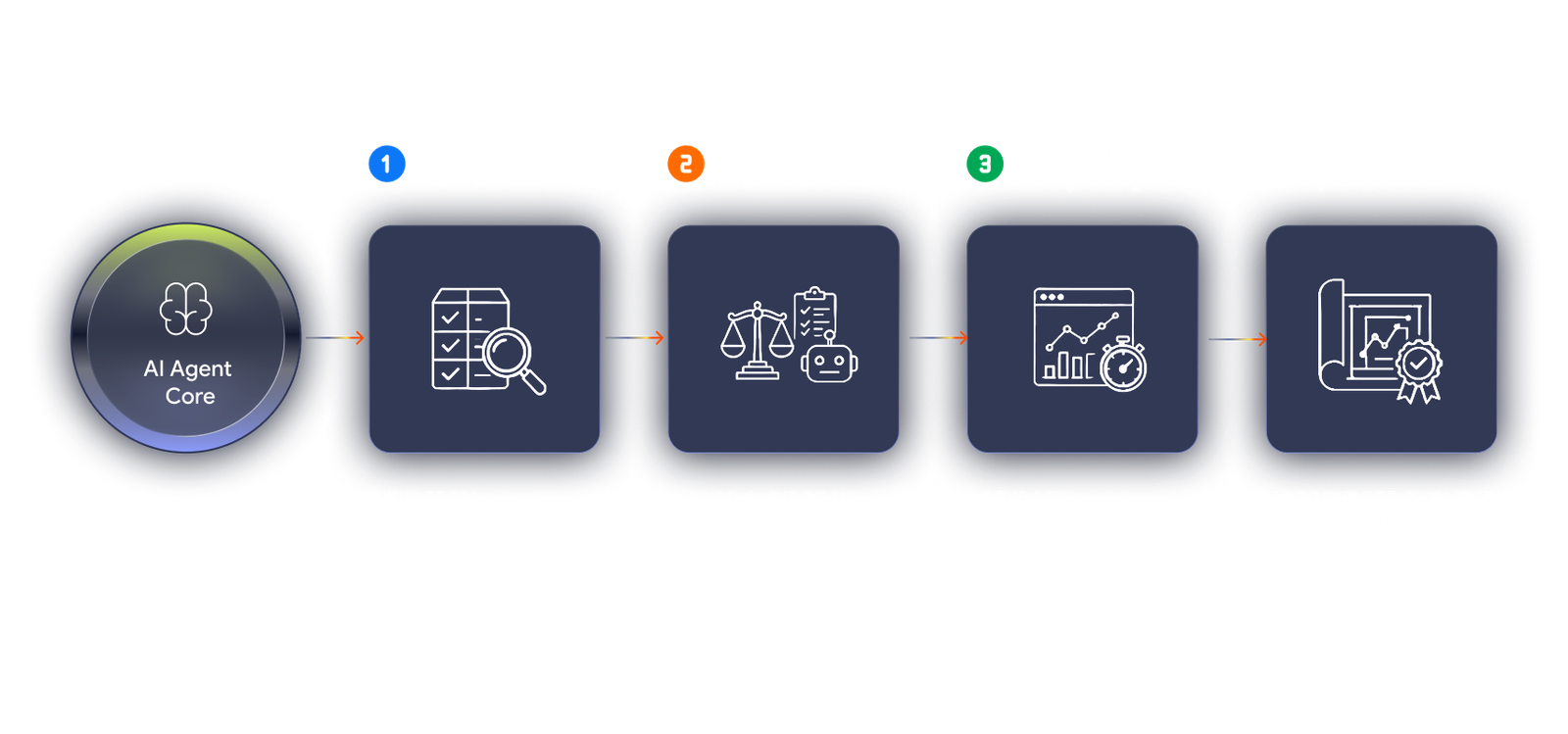

Defined Success Criteria
Know what "working" means
before you ship

Real-World Test Data
Built from actual
production traffic

Human Scoring
Deterministic checks paired
with judge evaluation
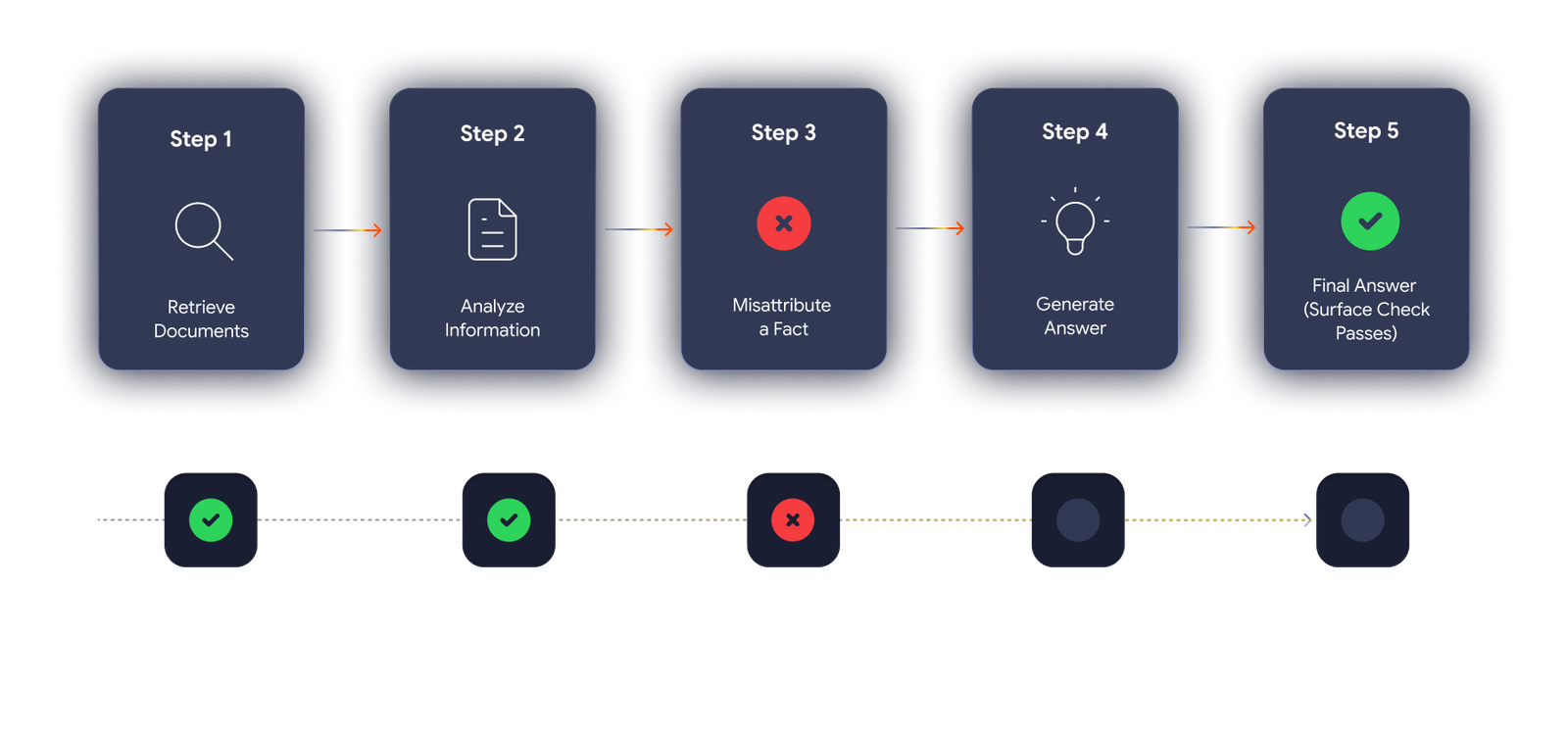
Full Reasoning Visibility
See every step, not
just the final answer
Replayable Decisions
Reconstruct what
the agent did and why
Early Error Detection
Catch mistakes before
they compound downstream
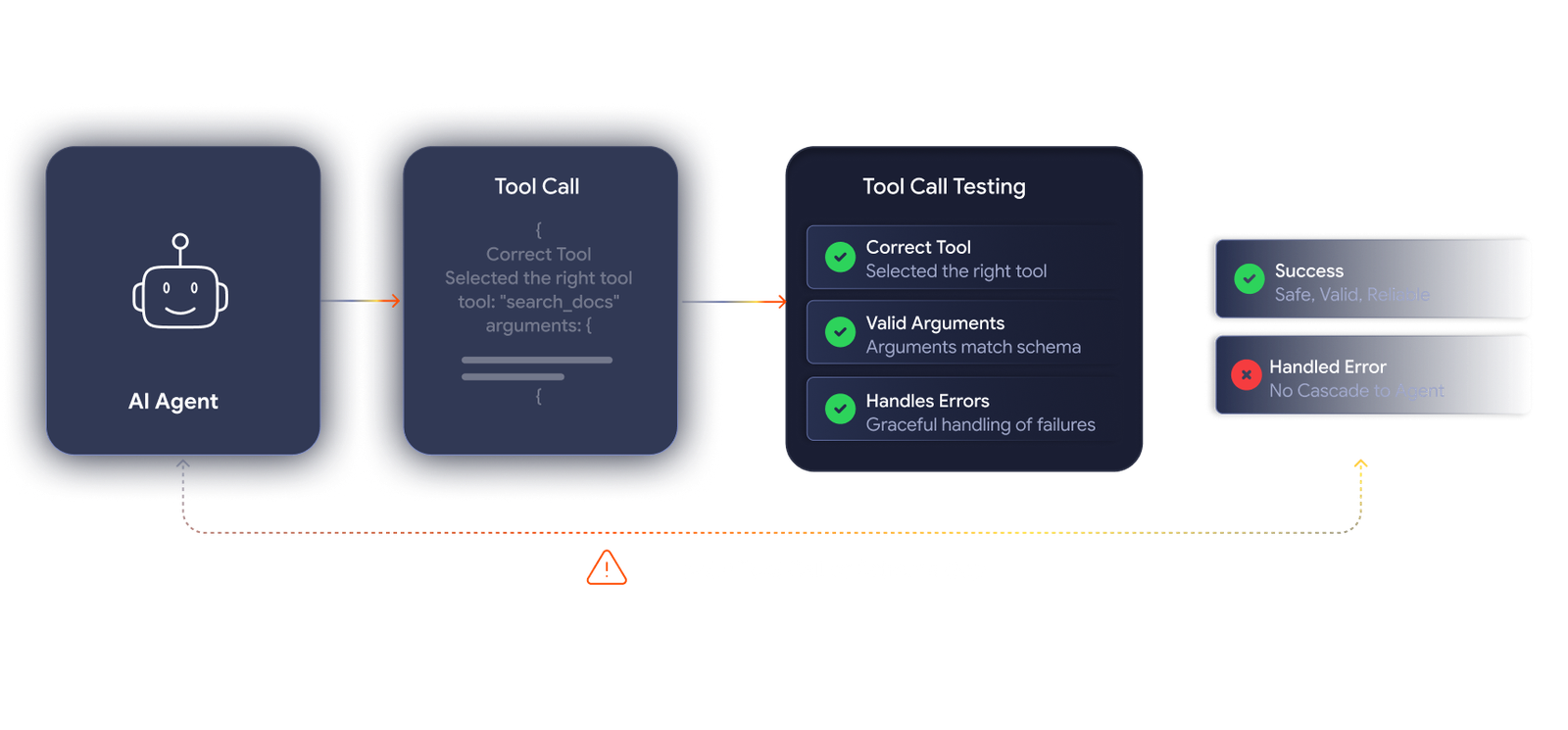
Right Tool, Right Time
Validate selection logic
against real scenarios
Schema-Level Validation
Arguments checked
before execution
Failure Handling
Tool errors contained,
not cascaded
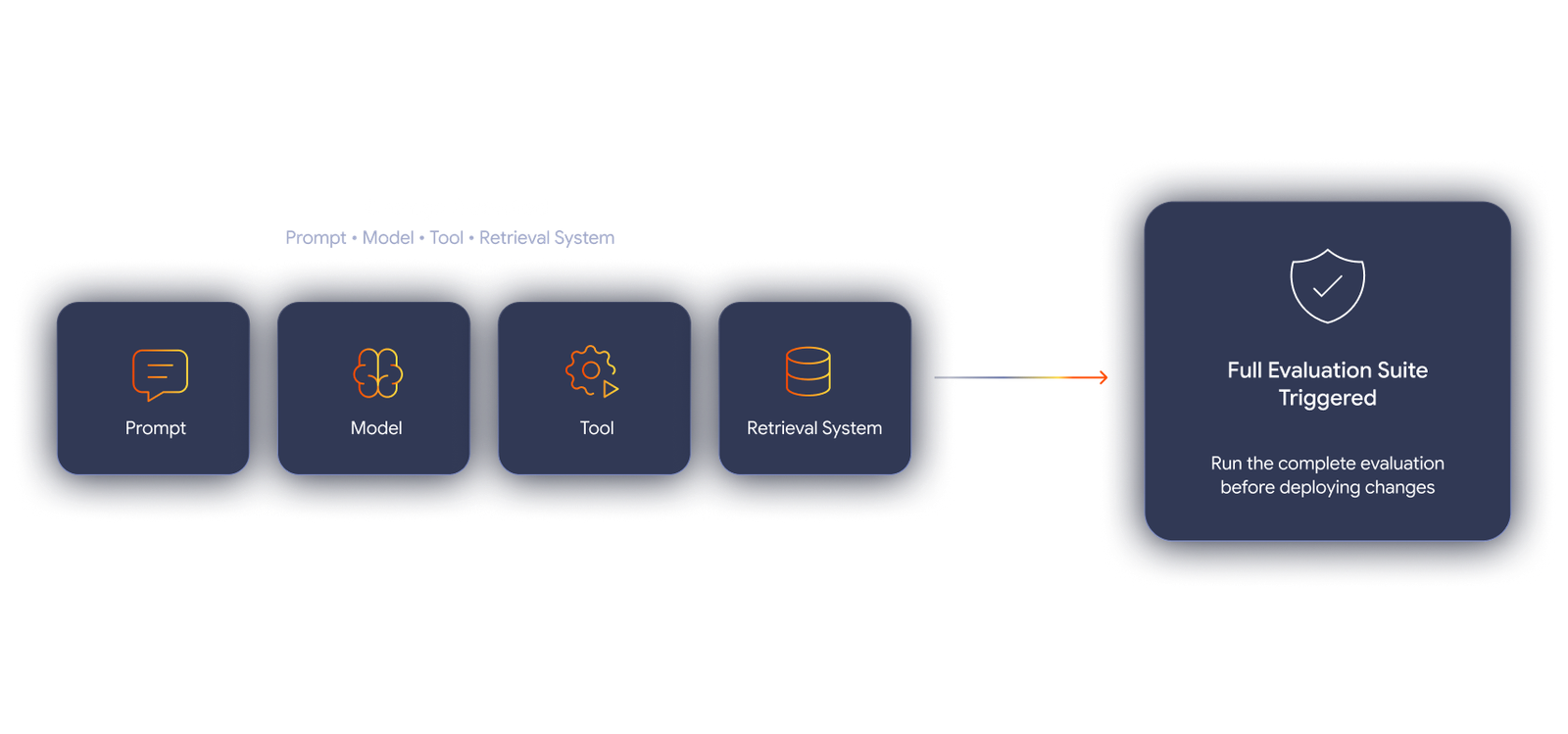
Change-Triggered Testing
Every prompt or model
update runs the full suite
Before-and-After Comparison
Trajectories diffed,
not just outputs
Pre-Production Confidence
Behavioral drift
caught before release
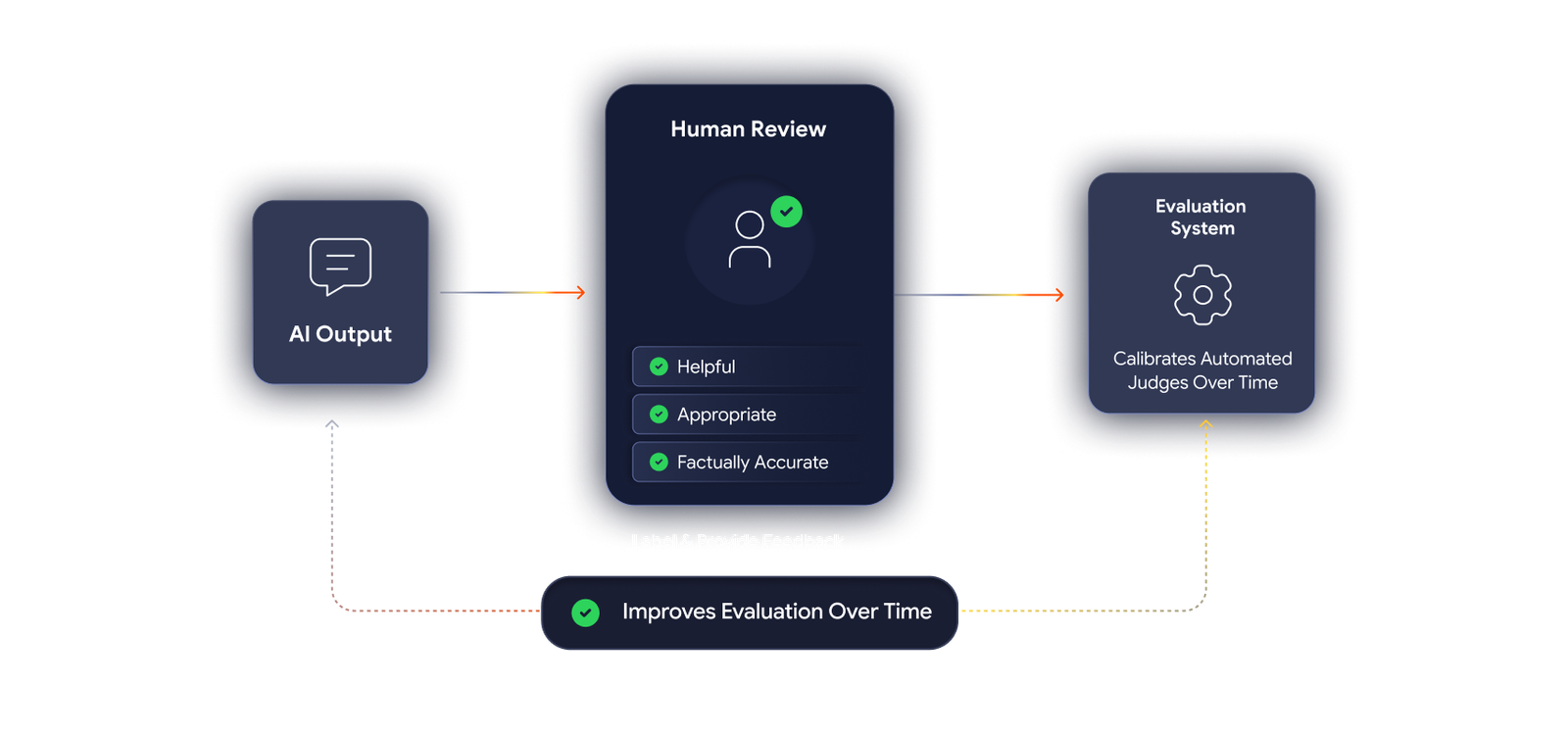
Expert Review at Scale
Sampled outputs
reviewed by people
Beyond Auto Metrics
Helpfulness and nuance
measured properly
Self-Improving Judges
Human labels calibrate
automated scoring
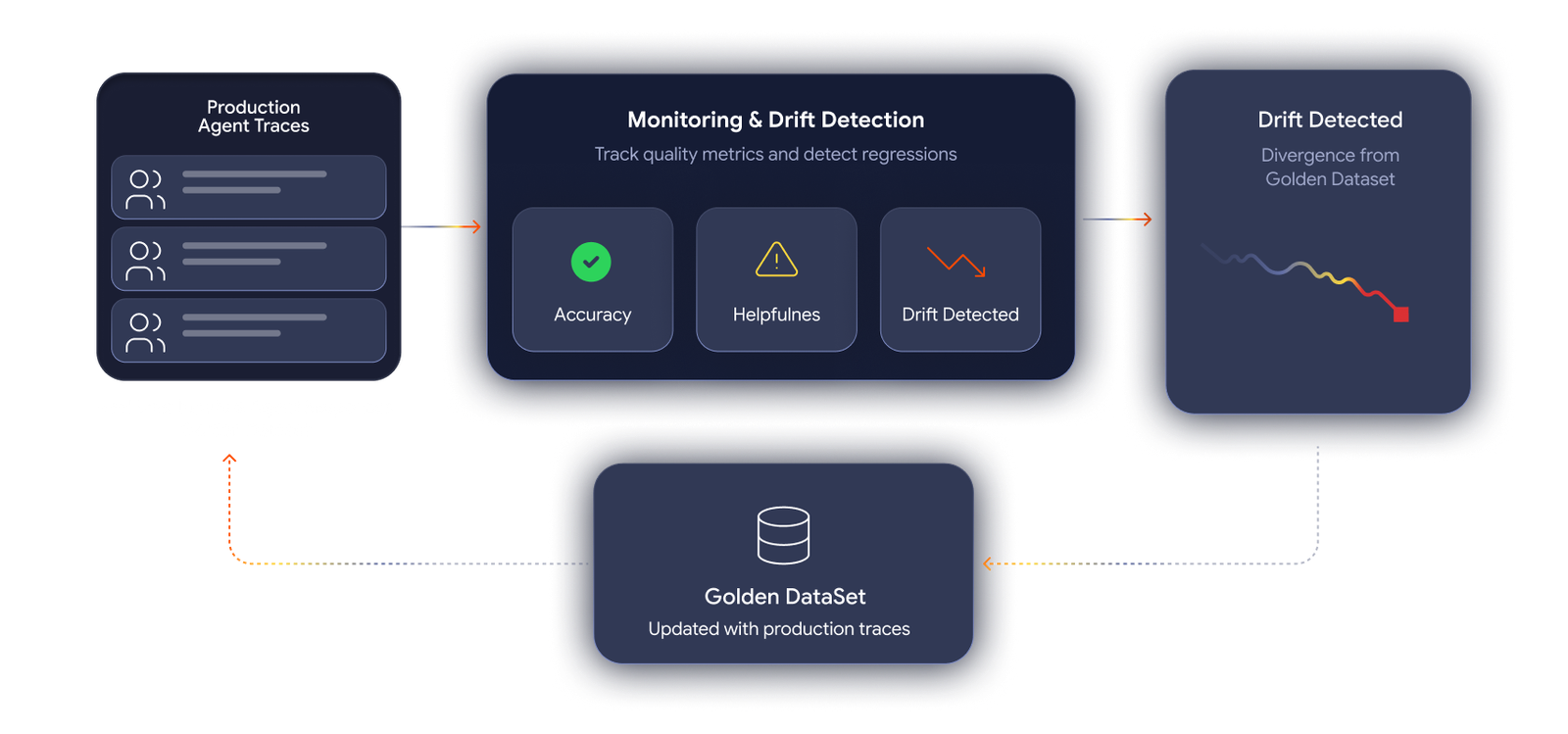
Quality Tracking
Metrics monitored
continuously after launch
Input Shift Detection
Know when real usage
diverges from testing
Living Test Suite
Production traces feed
back into evaluation
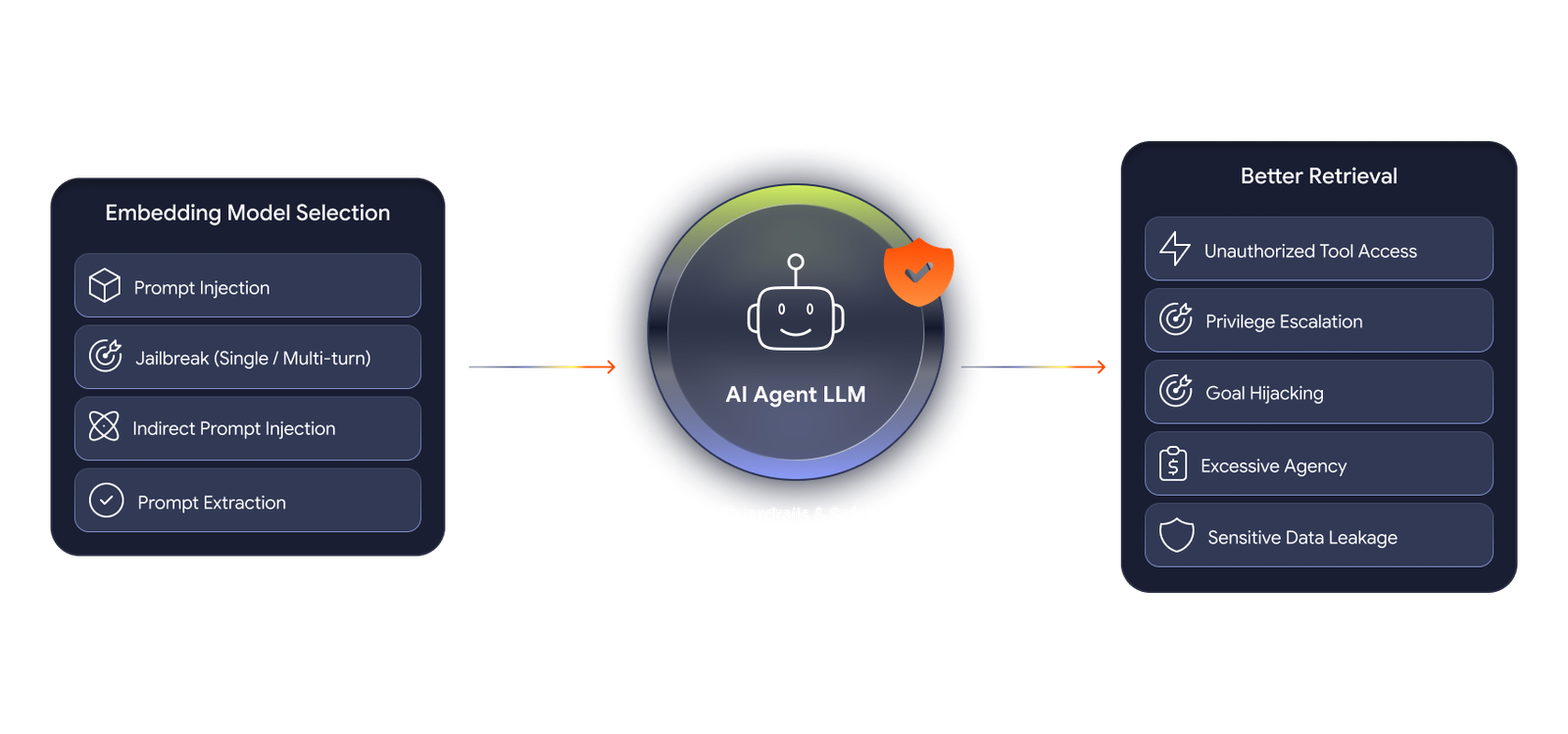
Attack Simulation
Prompt injection and
jailbreak attempts tested
Permission Boundary Test
Unauthorized tool
access blocked
Data Leak Prevention
Sensitive information
exposure caught early
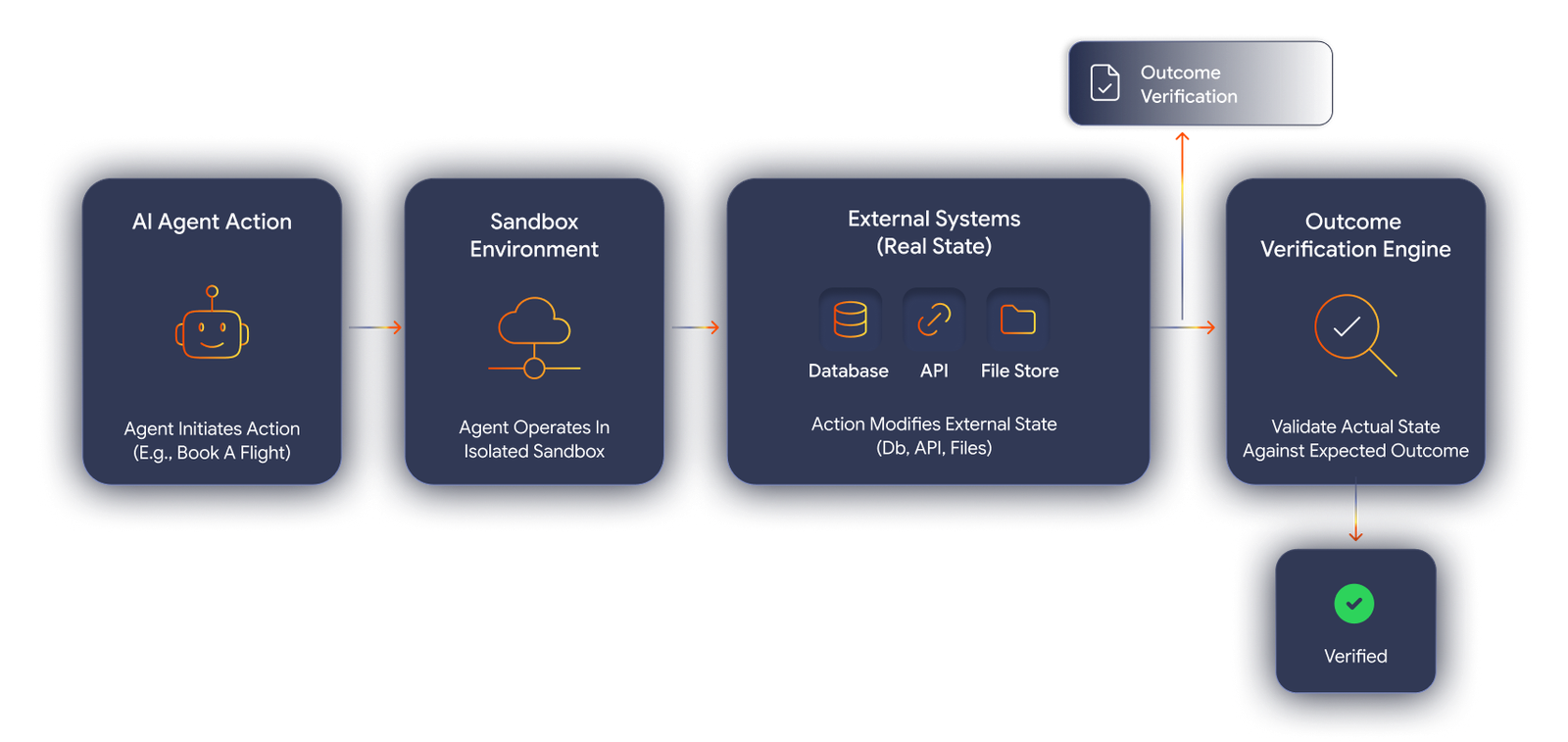
Outcome Verification
Database and file
state checked
Safe Isolation
andbox testing before
anything touches production
Environment Consistency
Same behavior in
staging and live
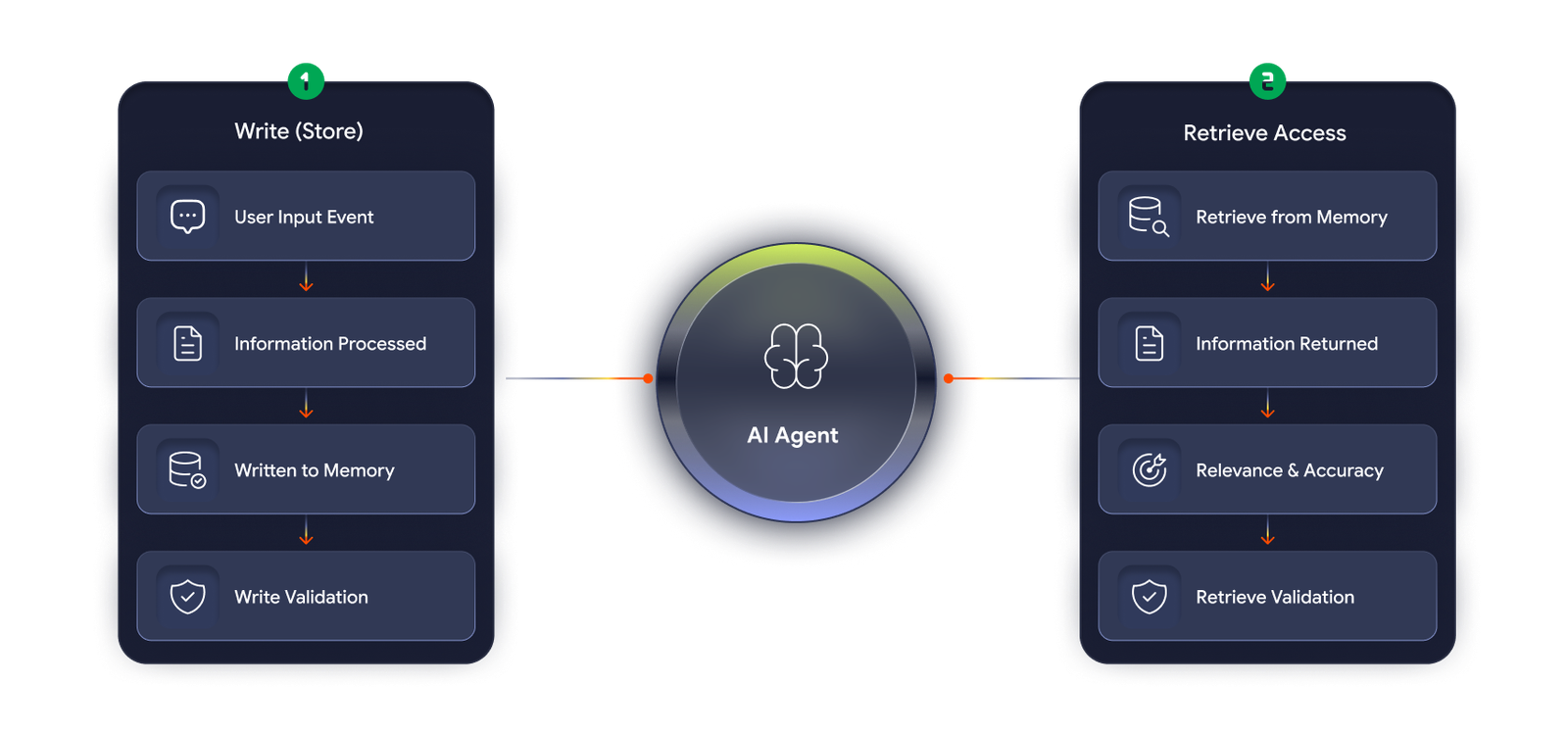
Accurate Storage
What gets written is
what actually happened
Accurate Storage
Context retained
correctly across turns
Current Over Stale
Outdated facts updated,
not surfaced
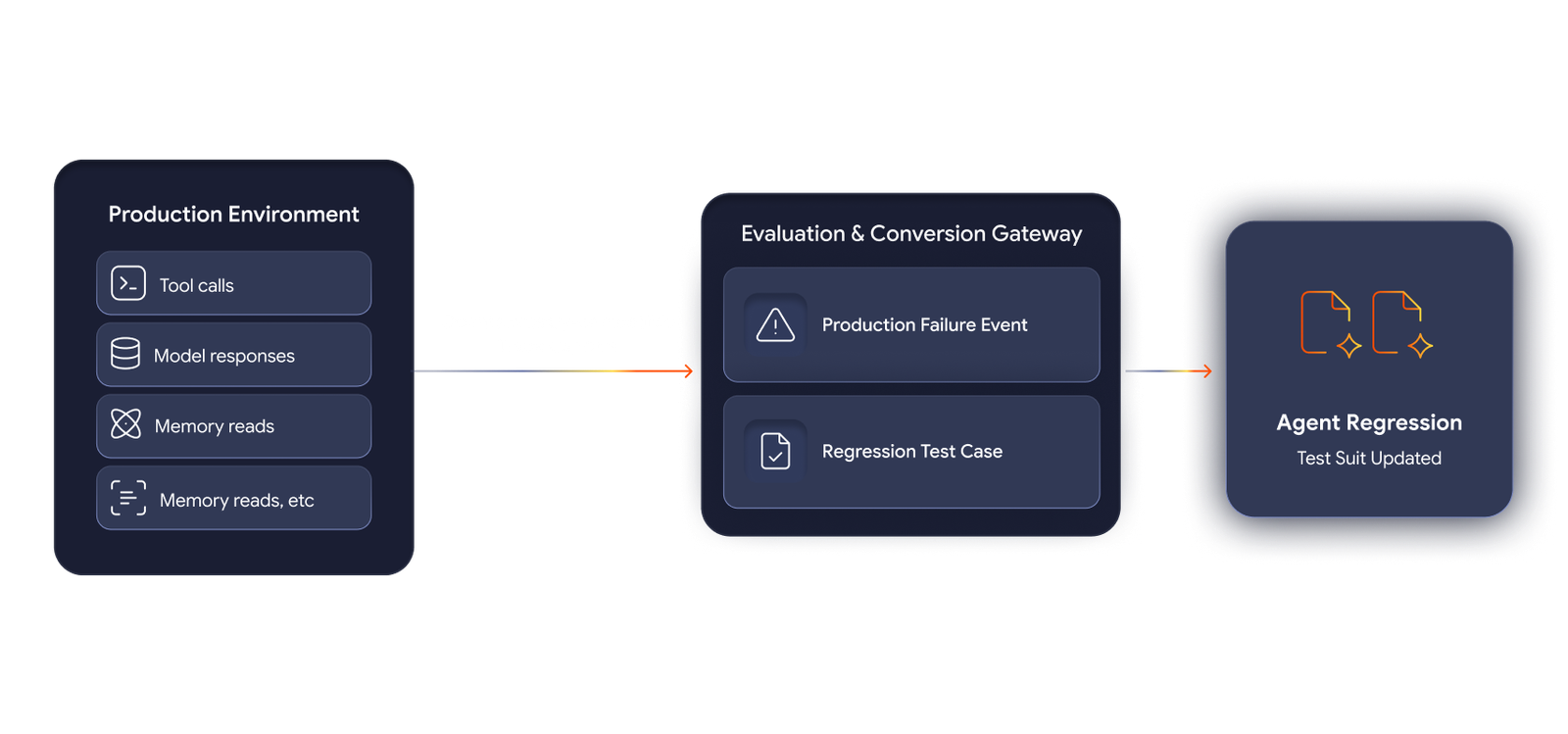
Execution Traces
Every tool call and
decision captured
Debuggable Failures
Structured data to
investigate what broke
Open Standards
OpenTelemetry-based,
no vendor lock-in
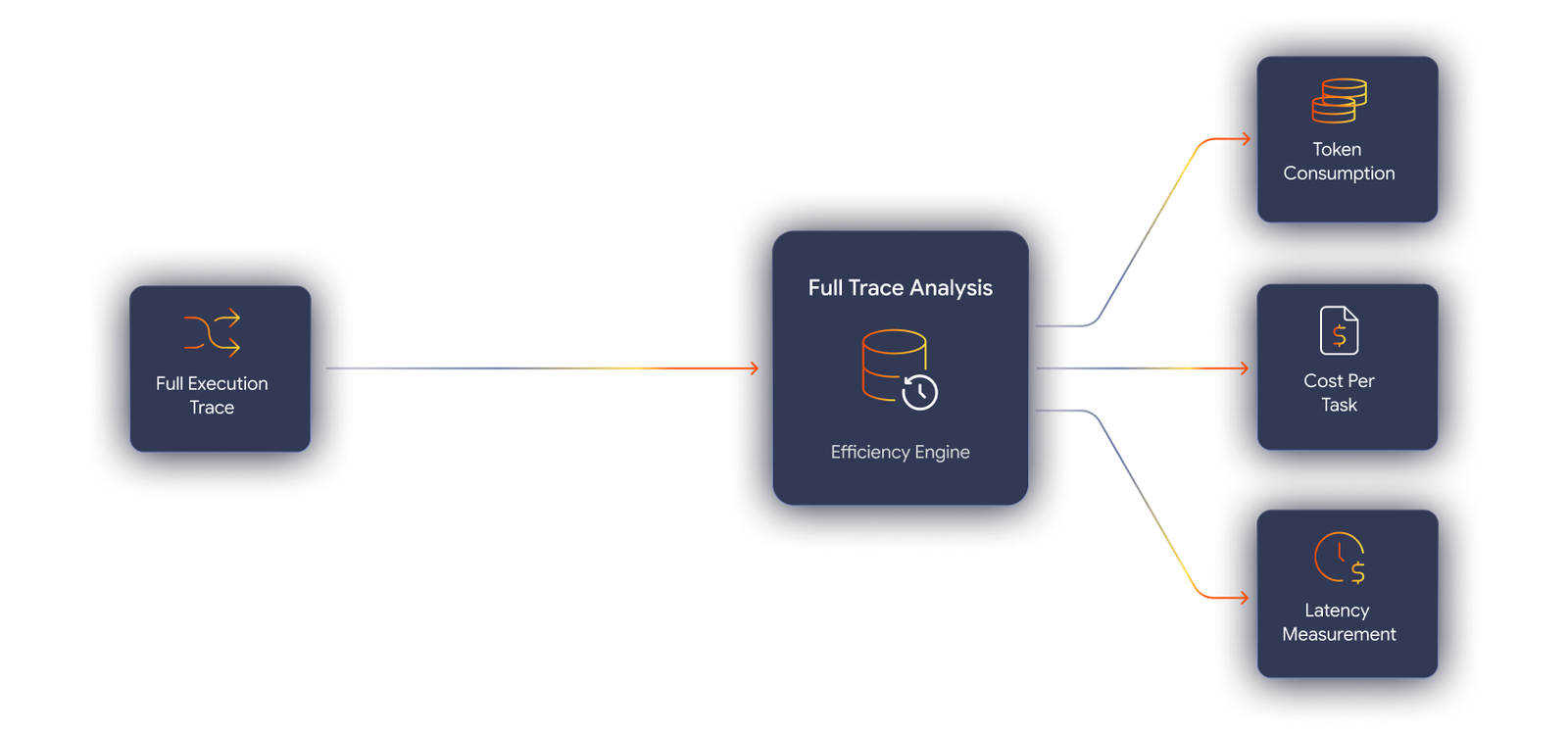
Cost Attribution
Know exactly where
spend goes
Regression Alerts
Catch expensive changes
before they ship
Latency Profiling
Identify what's actually
slowing responses
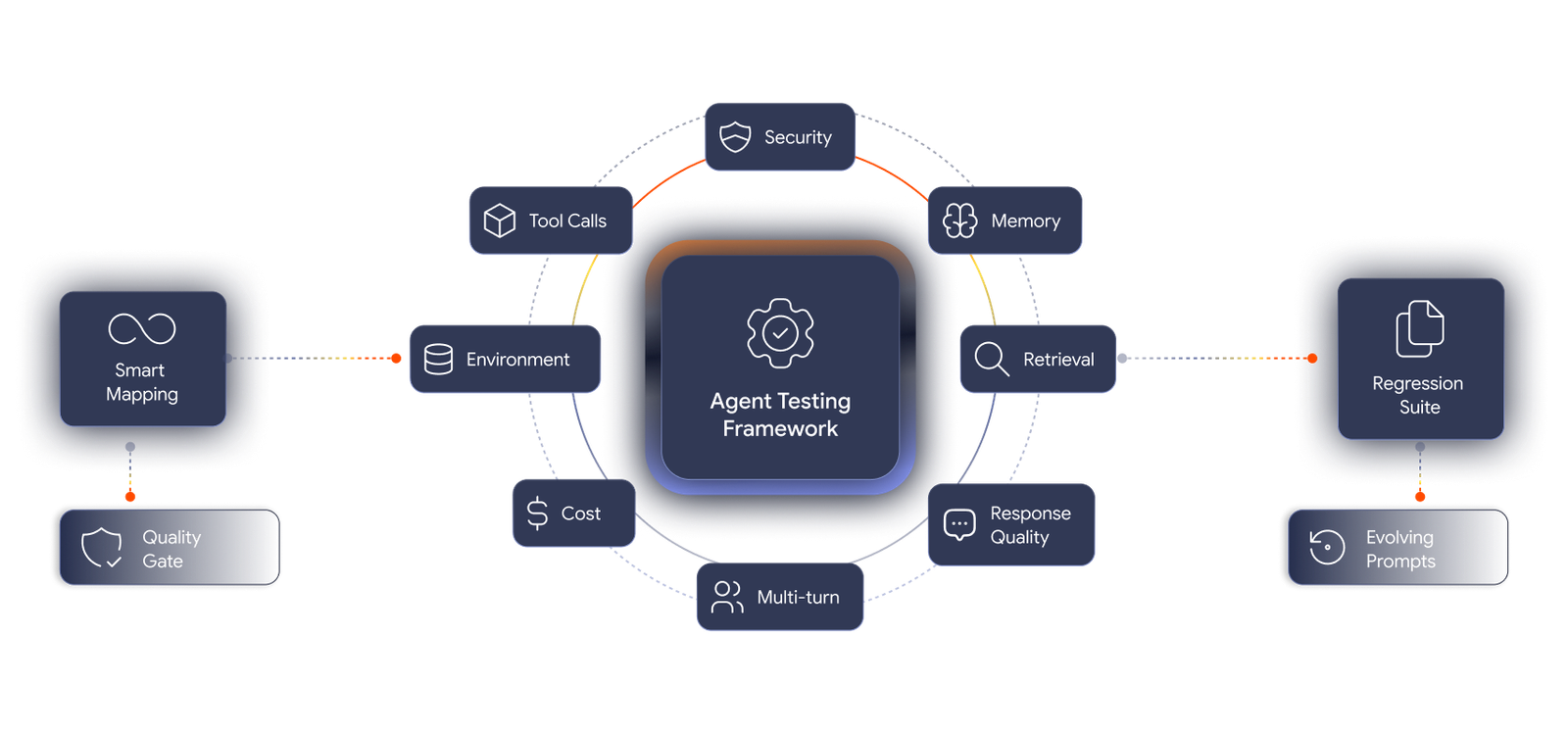
Parallel Evaluation
Multiple evaluators run
against every input
Configurable Thresholds
Pass criteria tuned
per agent type
CI/CD Integration
Quality gates
on every change
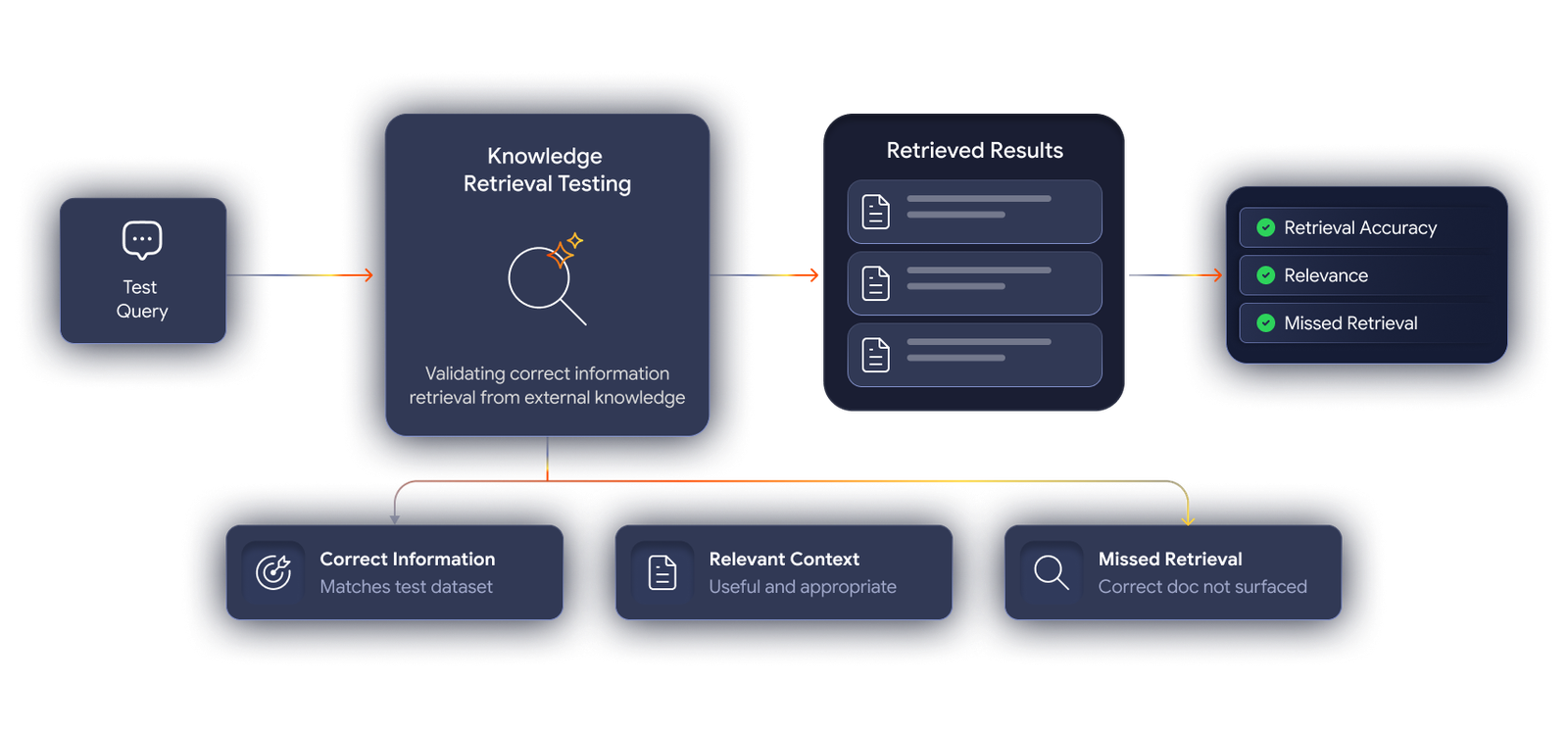
Retrieval Accuracy
Right source found
for every query
Context Relevance
Retrieved content
scored for usefulness
Silent Failure Detection
Catch when the right
document is missed
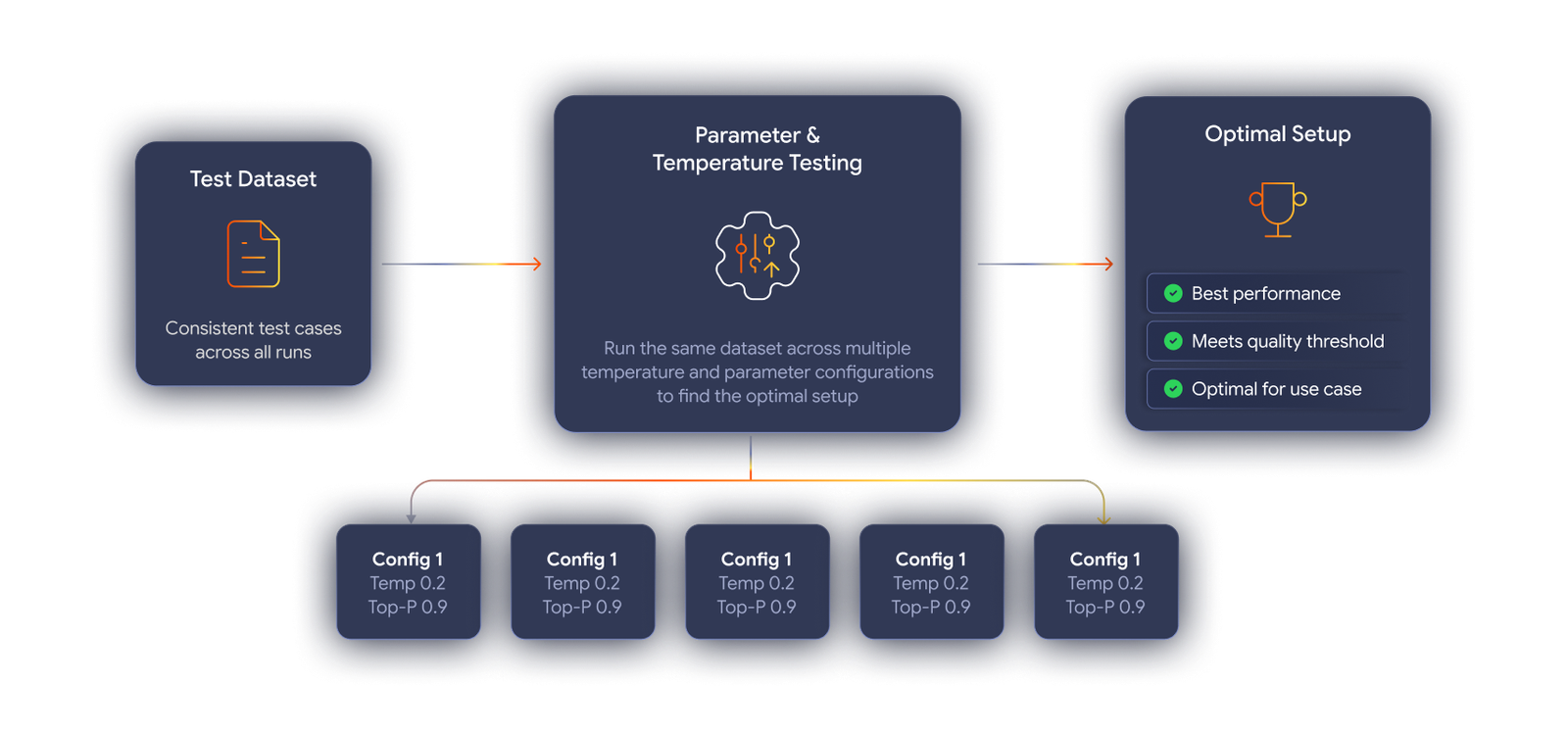
Config Benchmarking
Same dataset across
parameter ranges
Evidence-Based Settings
Optimal config proven,
not guessed
Consistency Validation
Predictable output
where it matters
Whether your focus is CI/CD modernization, Platform Engineering,
Start your assessment todayIs Your Data Infrastructure Ready for What You're Building on Top of It?
Tell us what you're trying to build, we'll show you where the data layer needs work.
Built for Complexity. Engineered for Scale.
Building the technology capabilities that underpin enterprise scale and resilience.

Cloud-native infrastructure modernization for a multi-carrier…

Automated GitLab group provisioning and user access management via…

GitLab to GitHub enterprise migration for a self-storage SaaS platform

Automating security alert management with a production-grade Jira…

Production-grade testing for enterprise AI governance
Our Technology Ecosystem












Built for Answers That Have to Be Right
Whether you're in fintech, healthcare, legal, or hi-tech, we build the pipelines and governance your AI systems, dashboards, and applications all depend on without anyone noticing they're there. We work with engineering leads, data teams, and product owners who can't afford a pipeline that fails silently.
Leaders responsible for AI systems the business can rely on.
Owners who need AI features that genuinely work for real users.
Engineers building and maintaining the technical layer AI systems run on.
Industries that depend on reliable, secure intelligent systems.
FAQs: Questions Worth Asking Before Making a Technology Decision
Strategic guidance to help technology leaders navigate complex technology questions, evaluate approaches, and address what matters most.
Yes. Opcito can evaluate an AI agent for production readiness across task completion, tool-call correctness, multi-step trajectories, security, memory, retrieval quality, cost, and real-world environment behavior. The evaluation combines deterministic checks with LLM-as-judge evaluation and can be integrated into CI/CD so quality gates run before the agent reaches production.
Opcito evaluates non-deterministic agents by assessing the complete execution rather than relying only on an exact final answer. The approach evaluates task completion, tool calls, reasoning trajectories, retrieval, memory, security, and other quality dimensions using defined evaluation criteria and automated evaluators.
Yes. Opcito evaluates the agent’s complete trajectory, including individual model responses, retrieval steps, tool calls, memory operations, and decision branches. This helps identify failures within the execution chain instead of evaluating only the final output.
Yes. Opcito validates whether an agent selects the correct tool, sends correctly structured arguments, and handles tool failures without causing the workflow to enter an incorrect state. Tool-call testing is included as part of the broader agent evaluation framework.
Opcito can run the complete agent evaluation suite whenever a prompt, model, tool, or retrieval component changes. This allows behavioral regressions to be identified before deployment and can connect evaluation quality gates with CI/CD workflows.
Bring Us the Pipeline That's Holding Everything Else Back
We'll show you exactly what needs to change and build it.
