
 Security Product Engineering












RAG Applications Built to Get the Answer Right
We build the retrieval layer that decides whether your AI gives the right answer or a confident wrong one, so your product earns trust instead of losing it.
Trusted by leading ISVs
and ecosystem partners



















Retrieval Architecture Is the Foundation of Every Accurate RAG System
We design the retrieval pipeline, chunking strategy, and evaluation framework before anything else, so the system returns accurate, grounded answers in production.
RAG application capabilities
Good retrieval is what makes a RAG system trustworthy. Here's how we build, govern, and validate it.
Designing the end-to-end retrieval pipeline first: retrieval strategy, chunking approach matched to content type, and the reranking layer that ensures the most relevant content reaches the model, not just the most similar-sounding content.
Ingestion pipelines connecting document repositories, databases, and internal systems to the retrieval layer, with incremental updates so the knowledge base stays current without a full re-index every time a document changes.
Selecting the embedding model and vector database configuration matched to query volume and latency needs, with hybrid search combining vector similarity and keyword matching to catch what semantic search alone misses.
Permission inheritance from source systems so the application returns only documents a user is authorized to see, with audit logging and PII redaction built in, not added after a compliance review.
RAG systems where retrieval is dynamic, deciding what to retrieve and from where based on the query, with multi-step retrieval for complex questions that need information gathered from more than one source.
Extending retrieval beyond text to tables, images, and mixed-format documents, so the right answer still surfaces when the information isn't sitting in a paragraph.
Evaluation frameworks measuring retrieval accuracy and answer faithfulness as ongoing, numeric scores, not one-time spot checks, so a quality drop gets caught the moment a change causes it.
Deploying with the cost, latency, and reliability instrumentation production systems need, tracking hallucination rate and retrieval quality, and alerting the moment a data source change silently breaks accuracy.
Using a knowledge graph alongside vector search for questions that need connected reasoning across documents, not just similar wording, returning an answer grounded in real relationships, not a lucky match.
Running the full RAG stack on your own infrastructure, ingestion, embedding, and the model itself, for teams with data residency needs, IP protection concerns, or high-volume costs that make third-party APIs impractical.
Building Graph RAG on a single engine instead of pairing separate vector and graph databases. No content stored twice, no sync pipeline, one query instead of two. Connects to Java and Spring Boot apps like a native database, no extra vendor SDK required.
Structure-aware retrieval using an owned, in-house implementation, no third-party licensing. The index navigates a document's own headings and sections, and an LLM reasons over that structure to find the right part, without embeddings or a vector database.
Turning the retrieval layer into something people actually use: a chat assistant in Slack, Teams, or your website. Beyond answering questions, it can check a status, update a record, or open a ticket, in the same conversation, with memory across sessions.
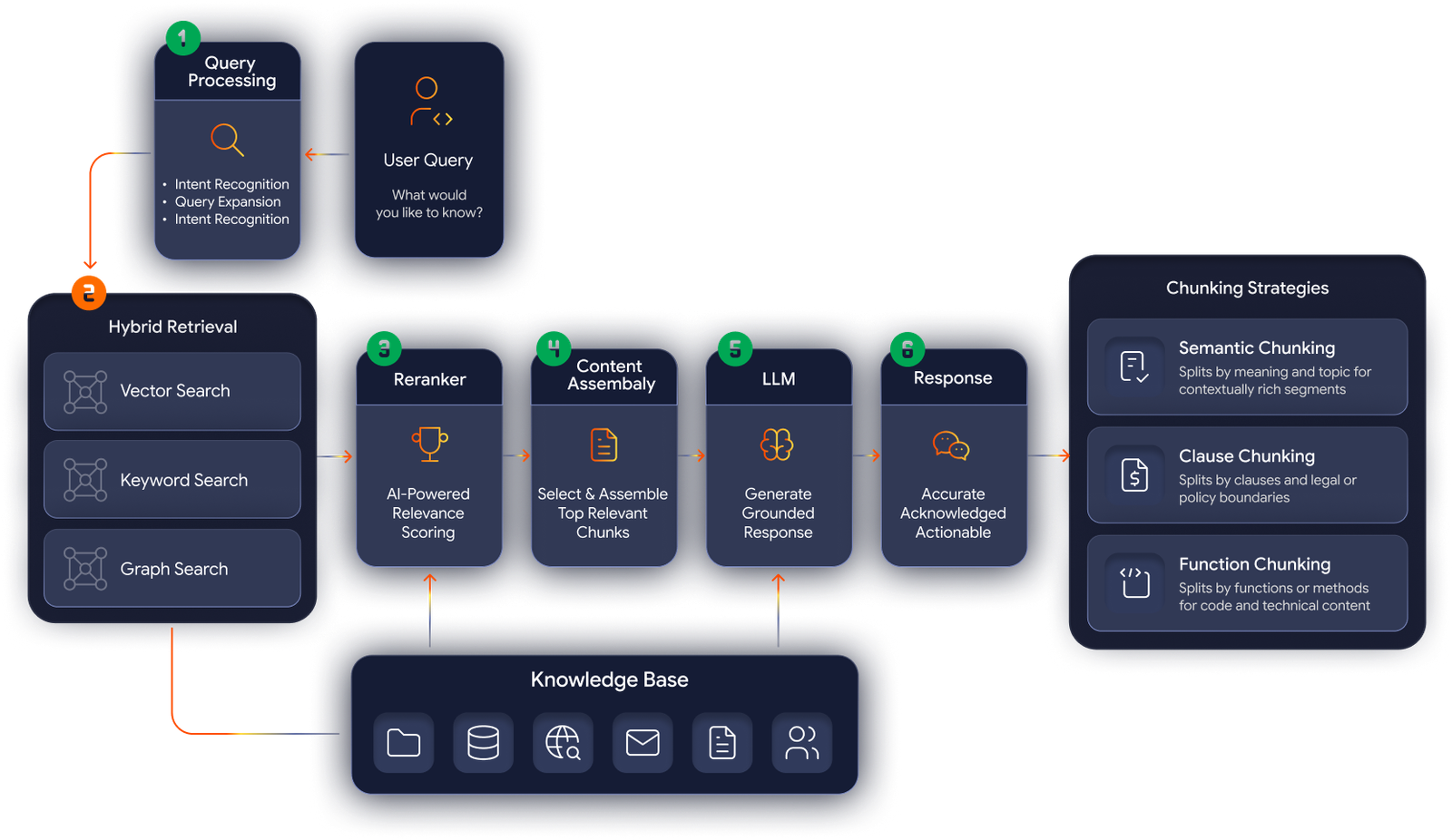

Retrieval First
Retrieval strategy
designed before any code

Content-Fit Chunks
Chunking matched
to your content type

Reranked Results
Most relevant content
reaches the model
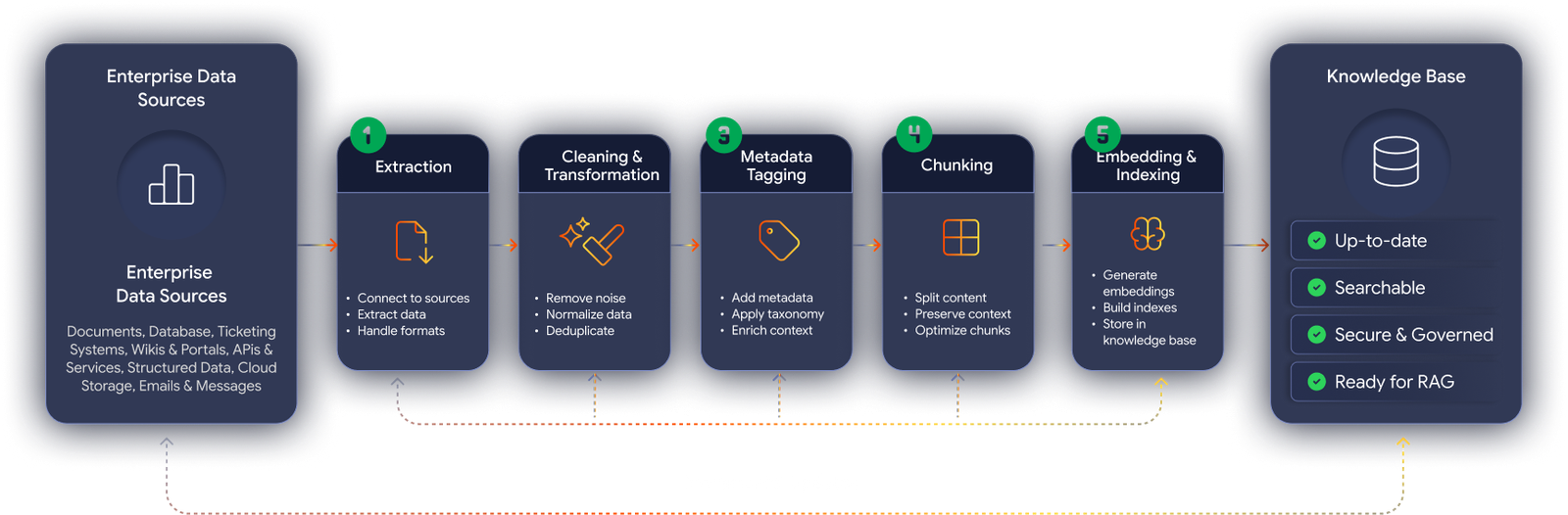
All Sources Linked
Documents, databases,
and internal systems
Always Current
Knowledge base stays
current automatically
No Full Re-Index
Incremental updates
without full re-indexing
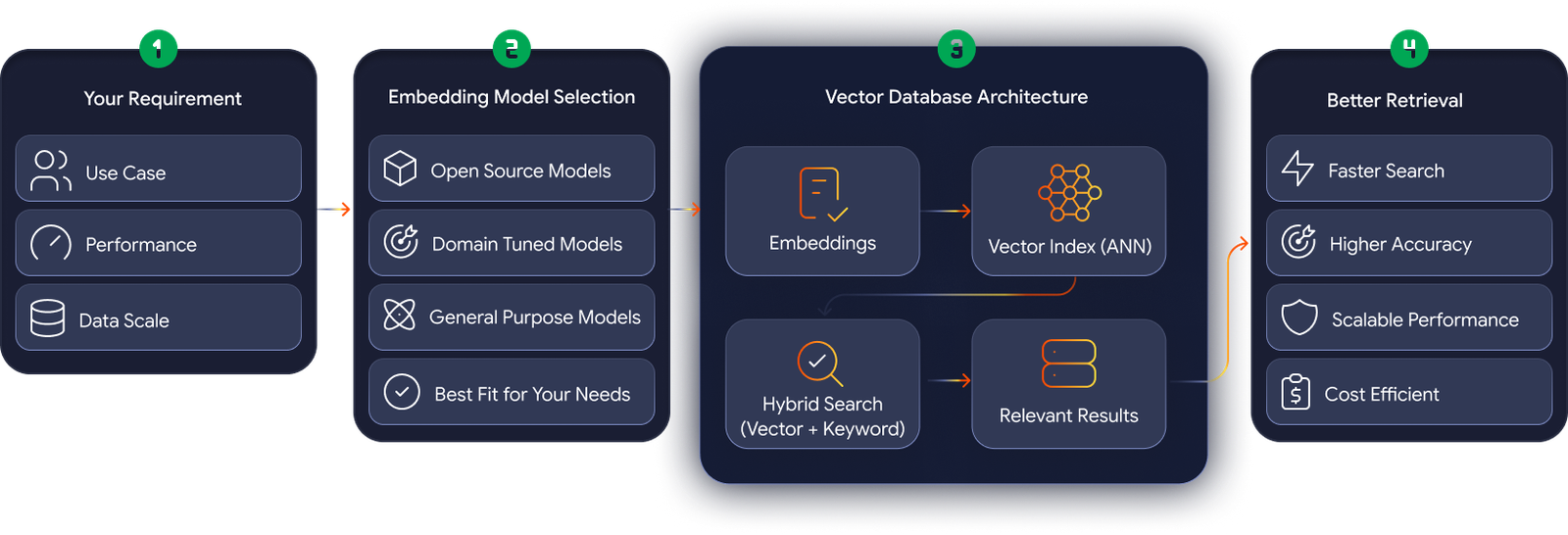
Right Model Picked
Embedding model
matched to your workload
Hybrid Search
Vector and keyword
search combined
Latency Matched
Configuration tuned
to query volume
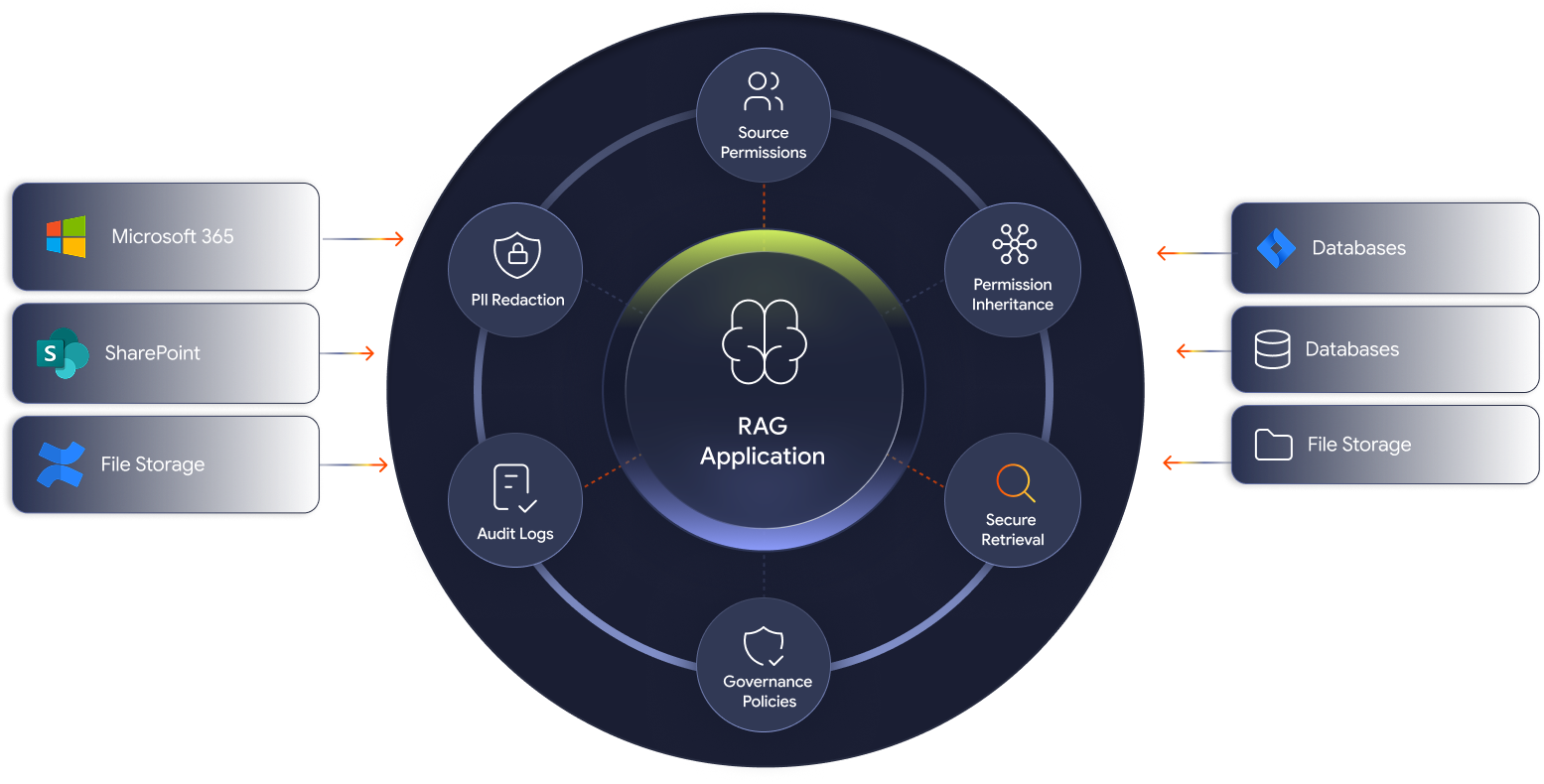
Permission Aware
Users see only what
they're authorized to
Audit Logged
Every retrieval and
generation event logged
PII Redacted
Sensitive data stripped
before it surfaces
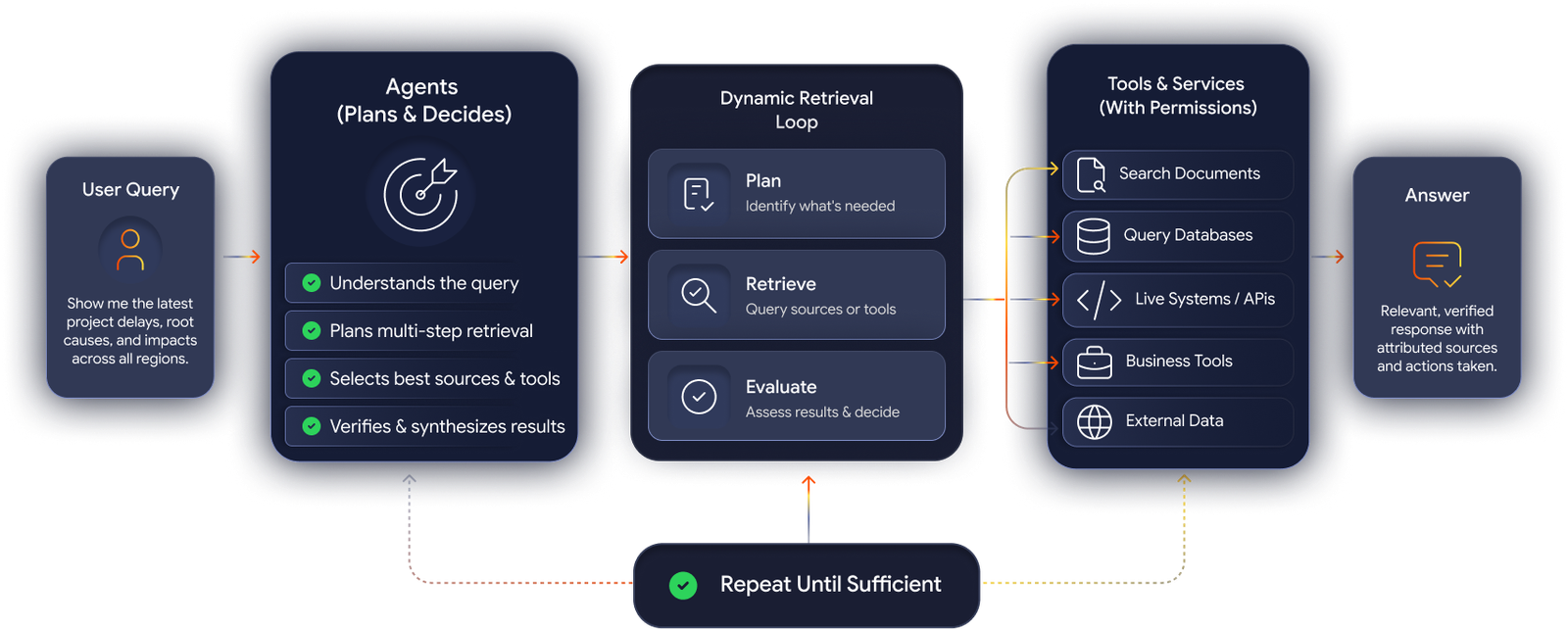
Dynamic Retrieval
System decides what
to retrieve per query
Multi-Step Queries
Complex questions gather
from many sources
Source Selection
Right source chosen,
not just first match
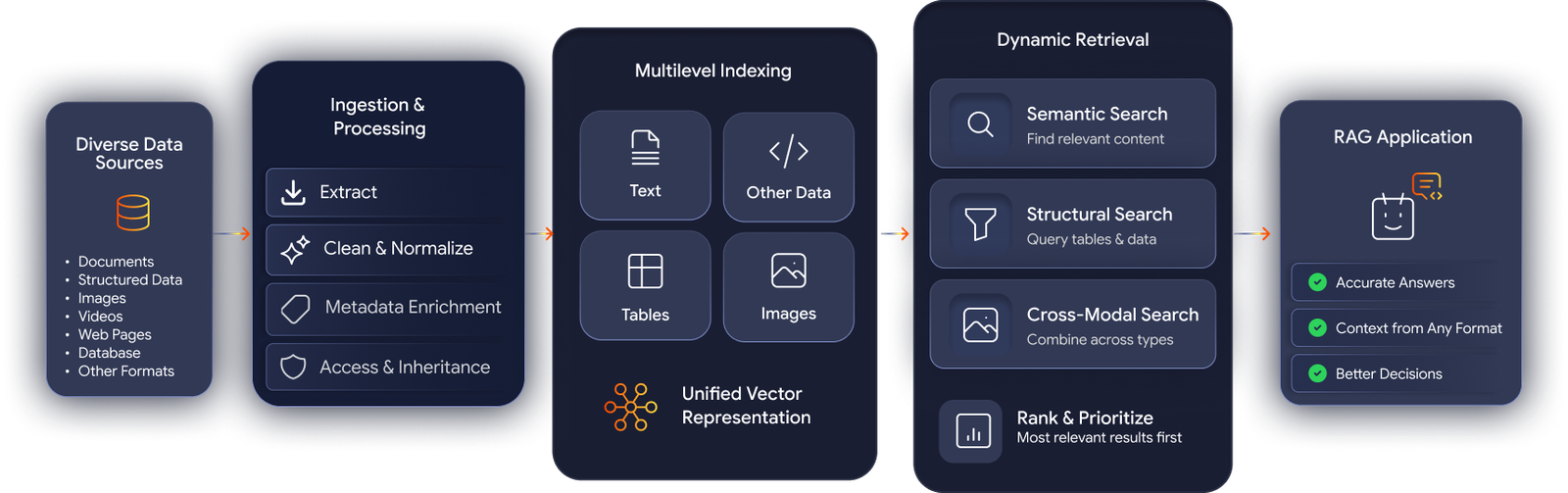
Beyond Text
Tables, images, and
mixed-format documents
Tables and Images
Answers found outside
plain paragraphs
Format Agnostic
Retrieval works
regardless of file format
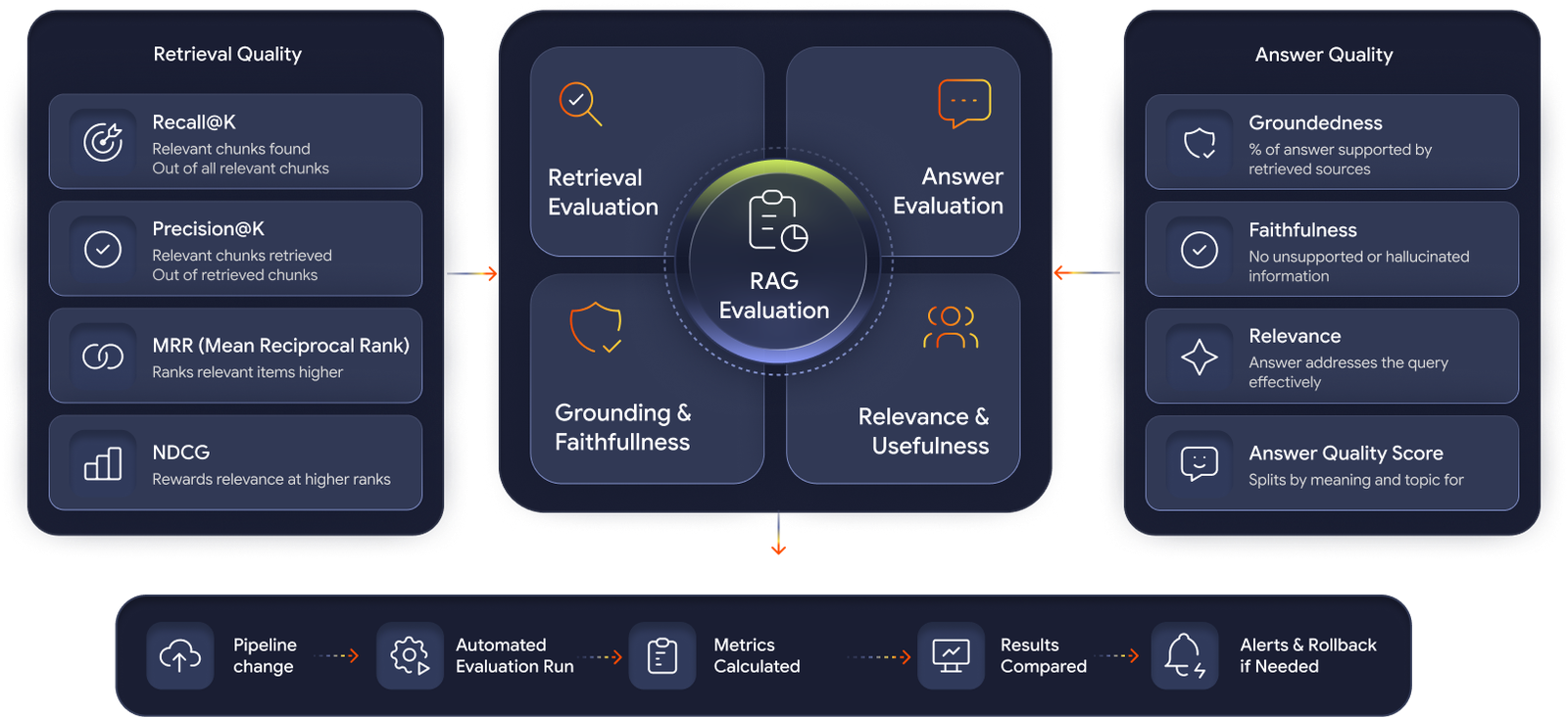
Scored Always
Accuracy and faithfulness
scored numerically
Accuracy Measured
Quality measured
against real usage
Regression Caught
Drops caught the moment
a change causes them
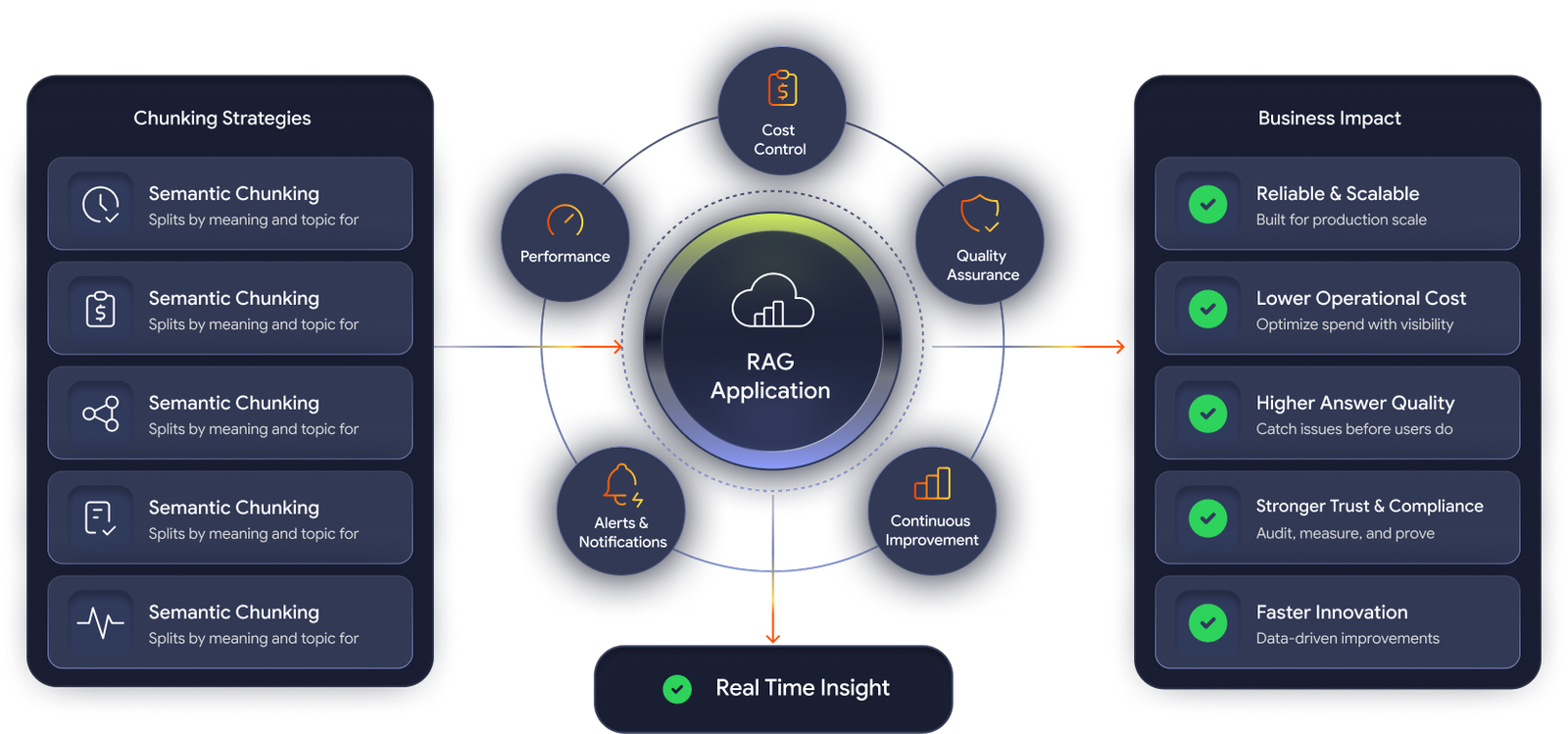
Cost Visibility
Cost and latency
tracked per query
Quality Monitored
Hallucination rate
monitored in production
Silent Breaks Seen
Alerts when a data
change breaks accuracy
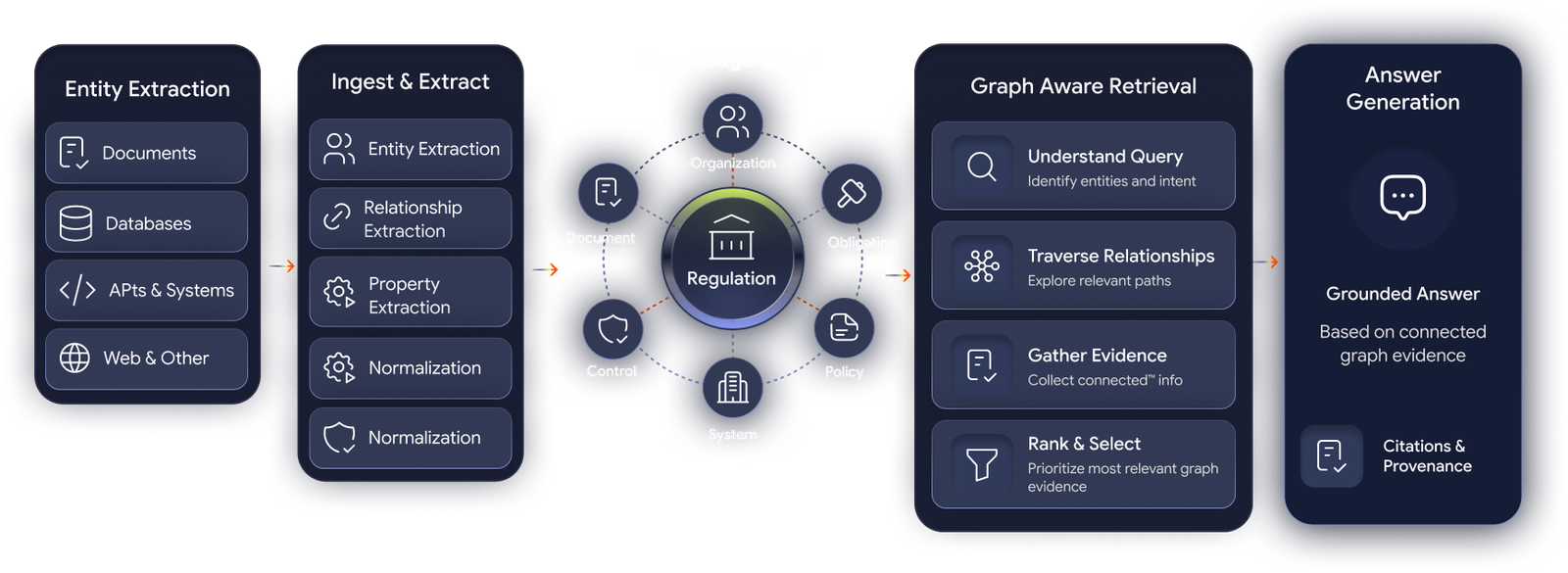
Connected Logic
Knowledge graph
alongside vector search
Relationship Aware
Answers grounded
in real relationships
Multi-Hop Answers
Questions spanning
multiple documents
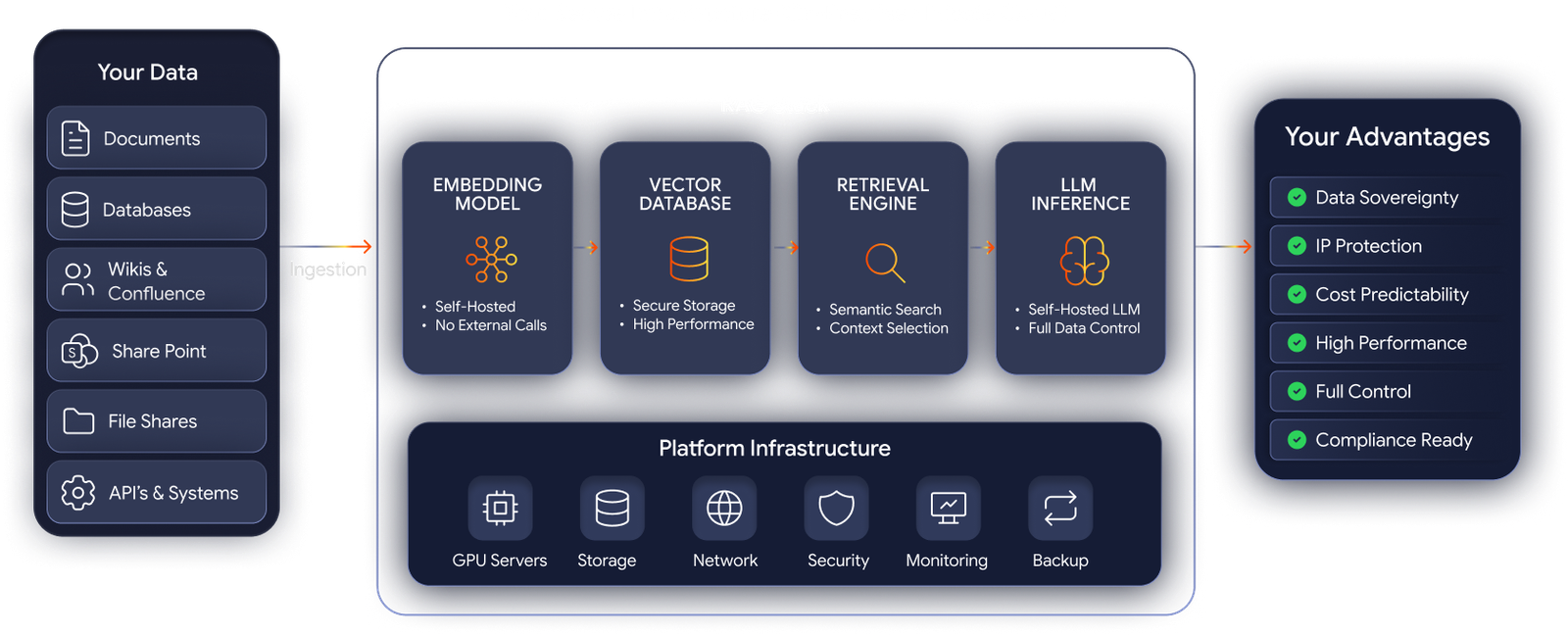
Fully Self-Hosted
Full stack runs on
your infrastructure
Data Stays Put
Meets data residency
and IP requirements
Predictable Cost
No per-token costs
at high volume
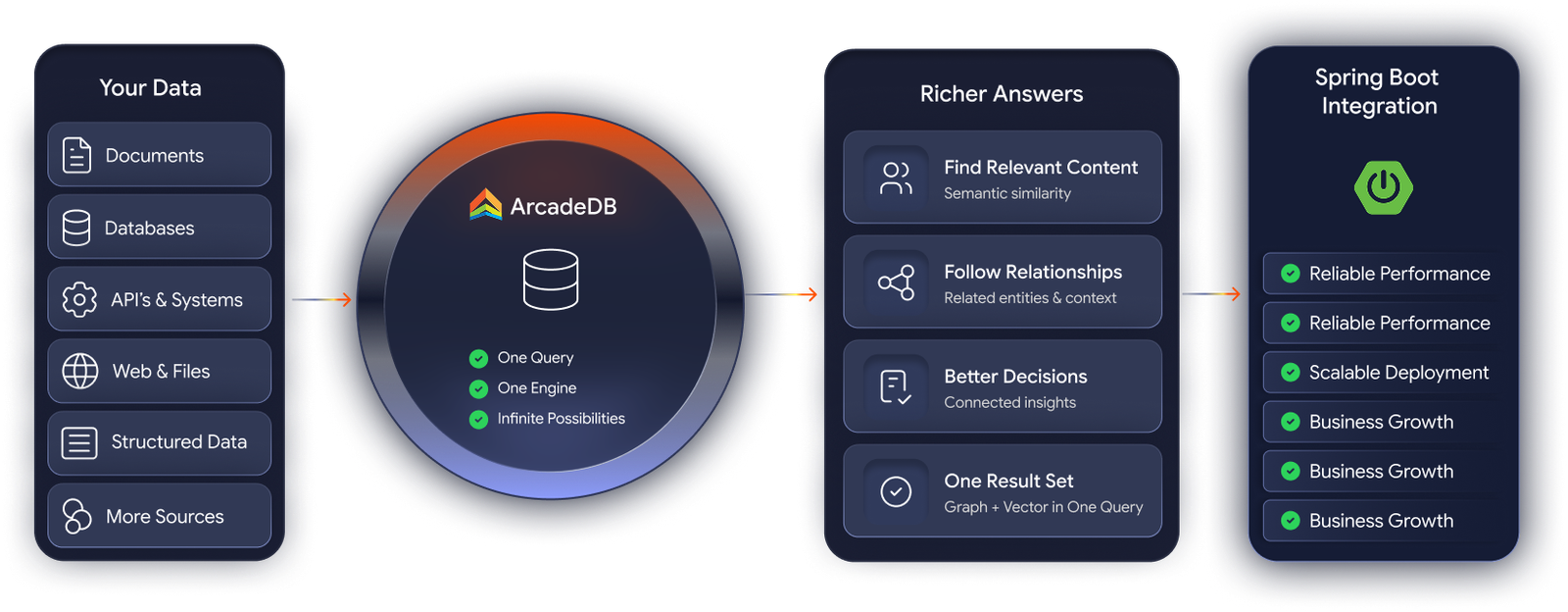
One Engine
Graph and vector
in one database
No Sync Pipeline
No duplicate storage,
no sync overhead
Java Native
Connects to Java and
Spring Boot natively
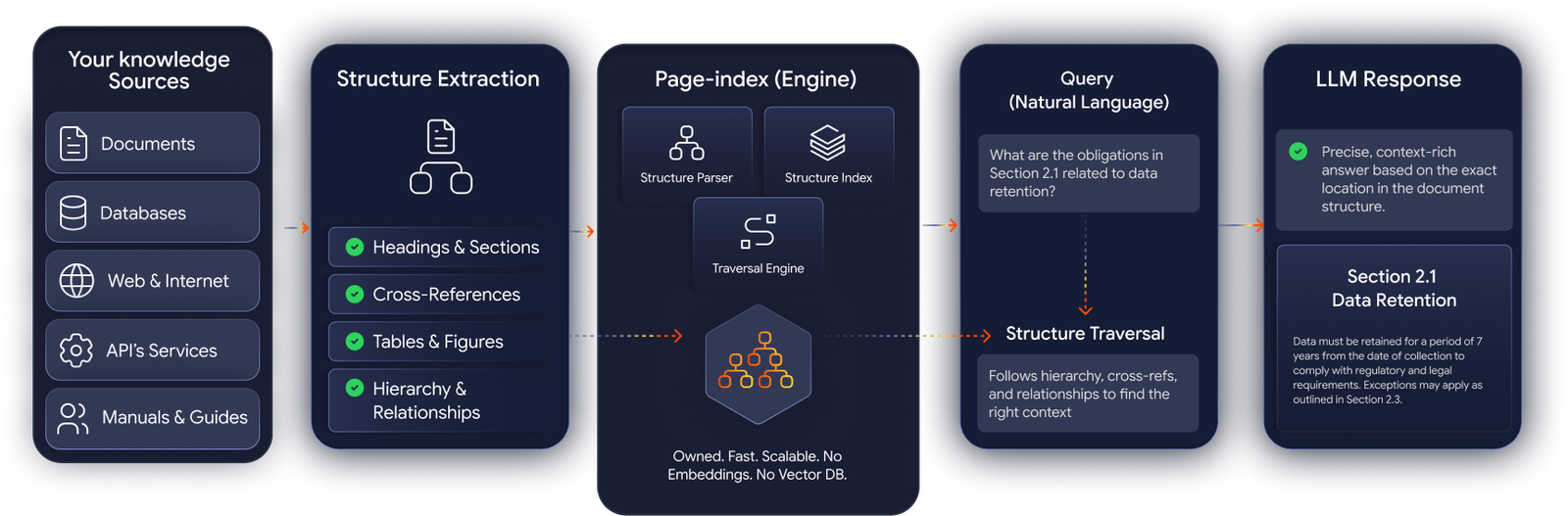
No Vector Database
Retrieval without
embeddings entirely
Structure Aware
Navigates document
headings and sections
Owned In-House
In-house build, no
third-party licensing
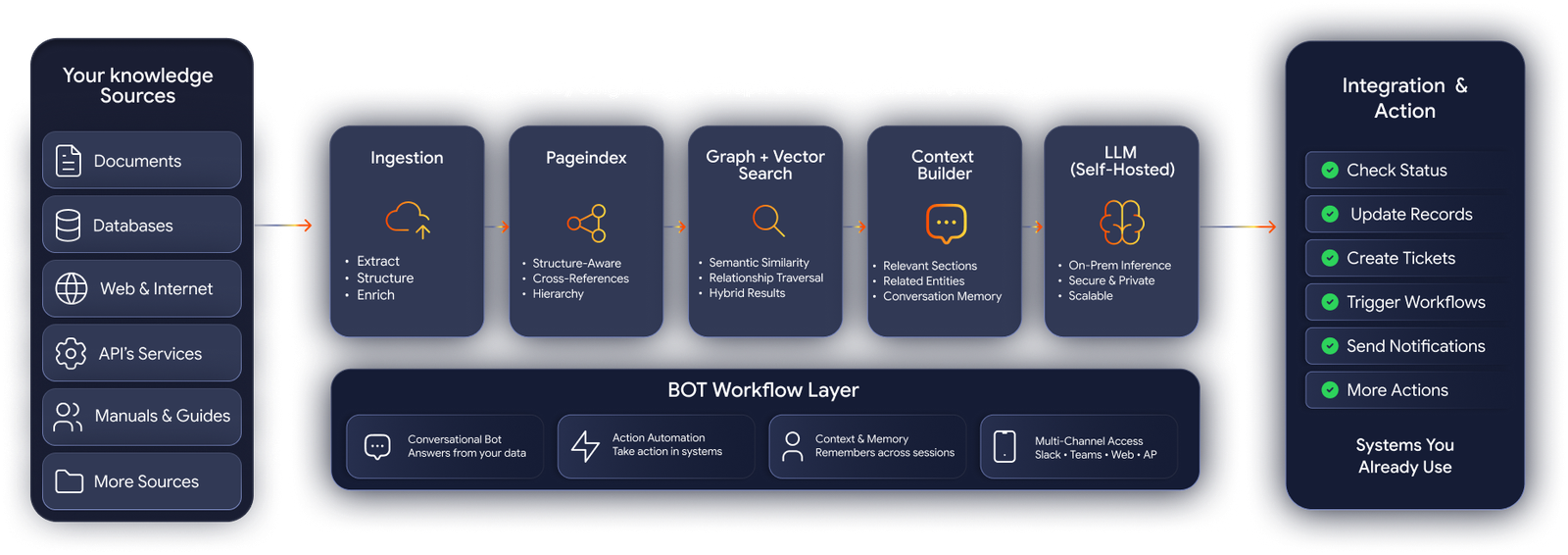
Real Interface
Chat assistant in
Slack, Teams, or web
Beyond Q&A
Checks status, updates
records, opens tickets
Session Memory
Returning users continue
where they left off
Ready to See What Accurate RAG Looks Like on Your Data?
We'll show you a working retrieval pipeline!
Built for Complexity. Engineered for Scale.
Building the technology capabilities that underpin enterprise scale and resilience.
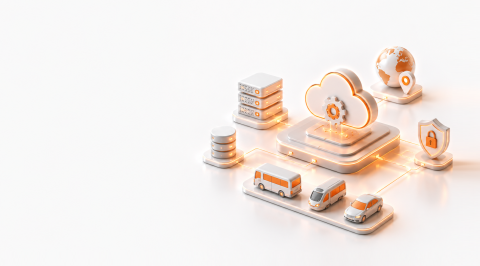
Cloud-native infrastructure modernization for a multi-carrier…
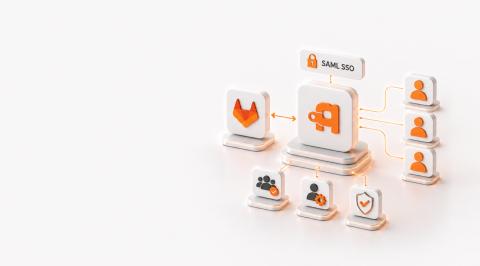
Automated GitLab group provisioning and user access management via…
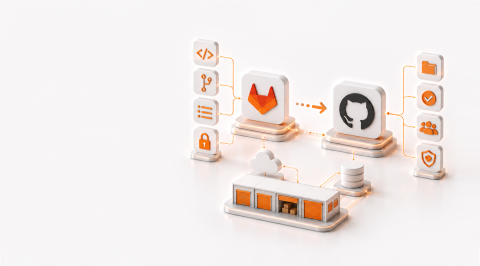
GitLab to GitHub enterprise migration for a self-storage SaaS platform
Automating security alert management with a production-grade Jira…

Production-grade testing for enterprise AI governance
Our Technology Ecosystem












Built for Answers That Have to Be Right
Whether you're in fintech, healthcare, legal, or cybersecurity, we build retrieval systems that ground every answer in your real data. We work with engineering leads, product owners, and data engineers who can't afford a confident wrong answer.
Leaders responsible for AI systems the business can rely on.
Owners who need AI features that genuinely work for real users.
Engineers building and maintaining the technical layer AI systems run on.
Industries that depend on reliable, secure intelligent systems.
FAQs: Questions Worth Asking Before Making a Technology Decision
Strategic guidance to help technology leaders navigate complex technology questions, evaluate approaches, and address what matters most.
Yes. Opcito can build production-ready RAG applications around your enterprise data, including retrieval architecture, data ingestion, chunking, reranking, evaluation, access control, deployment, and observability. The system can be designed around your actual data sources, user permissions, latency requirements, and production workloads rather than treating RAG as a simple chatbot implementation.
Opcito can assess and improve the retrieval layer by reviewing your chunking strategy, retrieval method, reranking, embeddings, and evaluation approach. We can also introduce measurable retrieval and answer-faithfulness metrics to identify where accuracy is being lost and continuously detect quality degradation after changes.
Yes. Opcito can build ingestion pipelines that connect document repositories, databases, and internal systems to the RAG retrieval layer. Incremental updates can keep the knowledge base current when documents change without requiring the entire knowledge base to be re-indexed.
Opcito can implement permission inheritance from the original source systems so users retrieve only information they are authorized to access. The RAG architecture can also include audit logging and PII redaction as part of the solution rather than adding governance controls after deployment.
Yes. Opcito can select an embedding model and vector database configuration based on your query volume, retrieval requirements, and latency targets. Where appropriate, we can also implement hybrid search that combines vector similarity with keyword matching to retrieve information that semantic search alone may miss.
Bring Us Your Hardest Retrieval Problem
We'll tell you exactly what it takes to solve it.
