
 Security Product Engineering












The Data Infrastructure Your AI Initiative Actually Depends On
Reliable pipelines, governed data, and serving infrastructure built to deliver the right data to the right system, at the latency AI requires.
Trusted by leading ISVs
and ecosystem partners



















The Model Is Ready. The Data Pipeline Is What Is Holding Your AI Back
Inconsistent data quality, pipelines built for batch when AI needs real-time, and governance gaps that block what can reach a model are among the primary reasons AI initiatives underperform after the model is built. We design and build the data infrastructure layer that removes those blockers, reliable pipelines, governed data, and the serving architecture that gets the right data to the right system at the latency it requires.
Data Engineering Capabilities
Good AI runs on good data. Here's how we build the pipeline, governance, and infrastructure that make sure yours does.
Building batch and real-time streaming pipelines that move data reliably from source to storage and processing. Covers schema validation, transformation logic, and error handling, so failures surface as alerts, not silent gaps someone finds later.
Designing a storage architecture that handles analytical queries and AI workloads on the same governed data. Covers table format selection and medallion architecture across raw, cleaned, and business-ready layers, with access patterns matched to the latency each workload needs.
Building the data layer AI systems depend on, distinct from the application itself. For RAG this means ingestion and embedding pipelines. For ML this means feature engineering, feature stores, and serving infrastructure at inference latency.
Data quality checks at ingestion, transformation, and serving so bad data is caught before it reaches a model, dashboard, or agent. Covers schema validation, outlier detection, and observability that turns freshness issues into actionable alerts.
Building the governance layer that makes data discoverable, trusted, and auditable. Covers metadata management, lineage tracking, access control, PII classification, and a catalog that lets teams find data without reverse-engineering the pipeline that made it.
Migrating legacy data warehouses, on-prem ETL pipelines, and siloed systems to modern cloud-native architectures built around current analytical and AI workloads, sequenced to keep existing reporting running throughout rather than forcing an offline cutover window.
Applying software engineering discipline to data pipelines: version-controlled definitions, automated testing, CI/CD for pipeline changes, and monitoring that catches failures before they hit downstream consumers. Untested pipelines degrade silently, and DataOps prevents that.
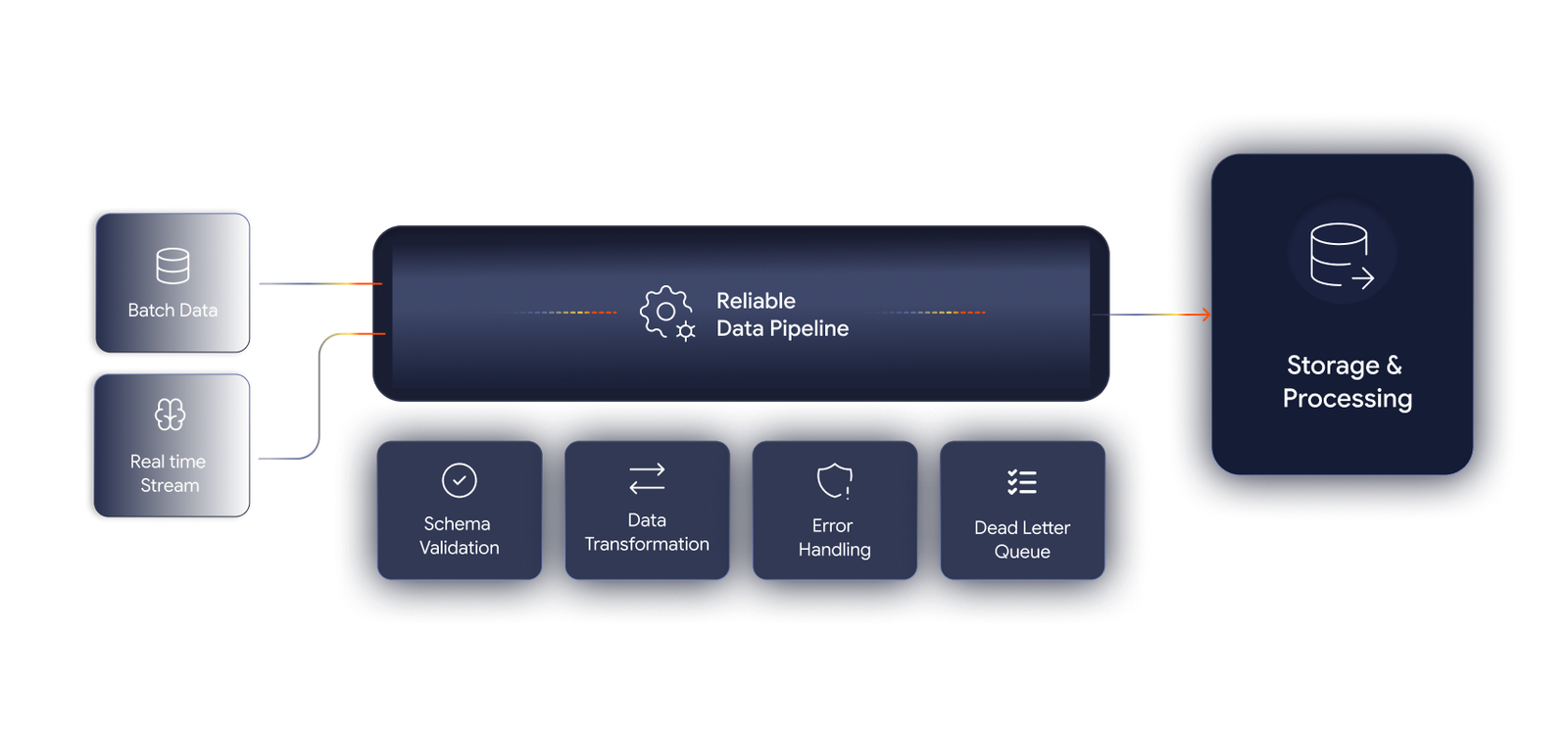

Reliable Delivery
Pipelines that move data
dependably at any volume

Failures Surface Immediately
Structured alerts, not
silent gaps found later

Batch & Real-Time
One architecture serving
both workload types
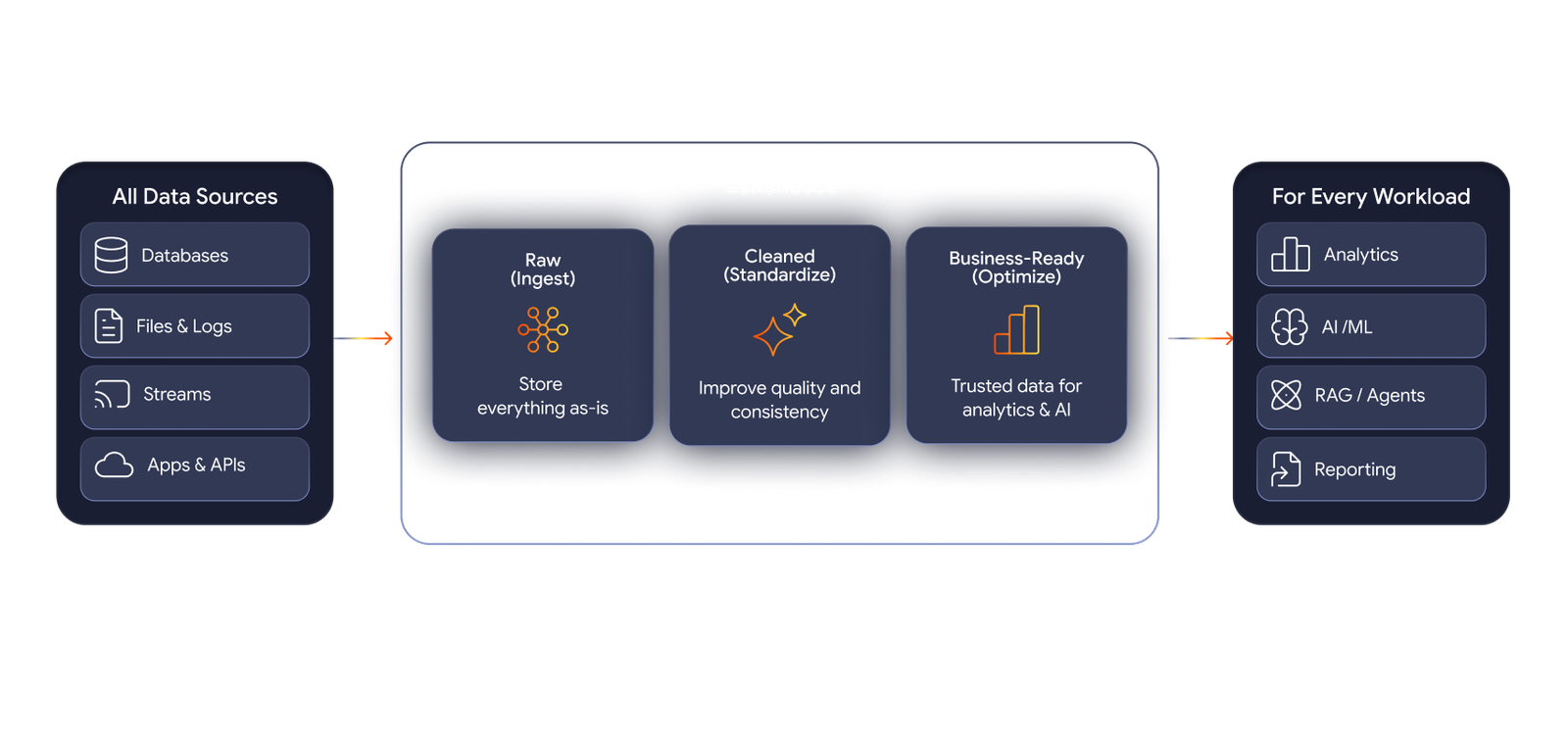
One Platform
Analytics and AI on
the same governed data
No Duplication
No cost of maintaining
separate systems
Right Latency
Access patterns
designed per workload
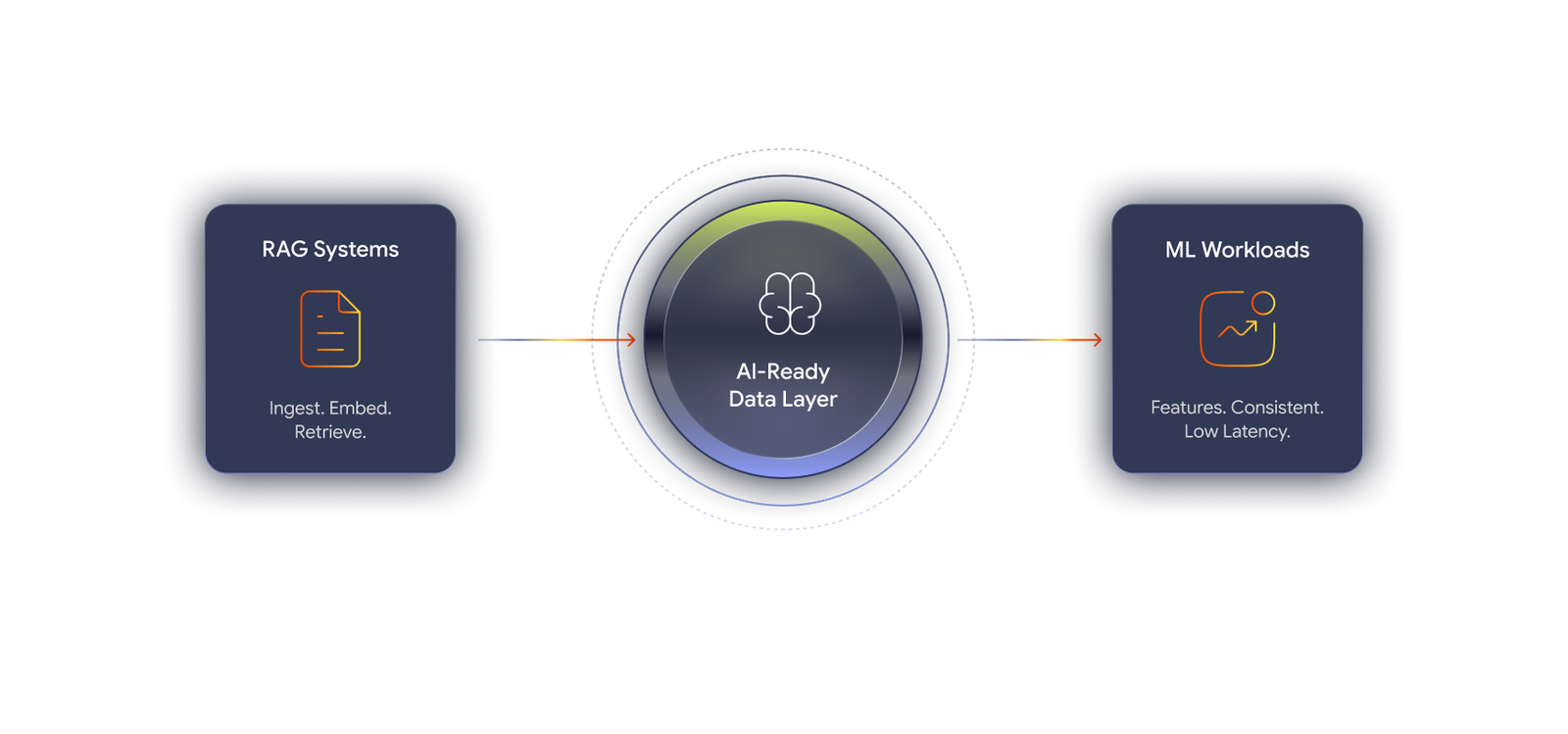
Faster AI Value
Data layer ready before
the model needs it
RAG & ML Ready
Embedding pipelines and
feature stores in one
Inference Speed
Features served at
production speed
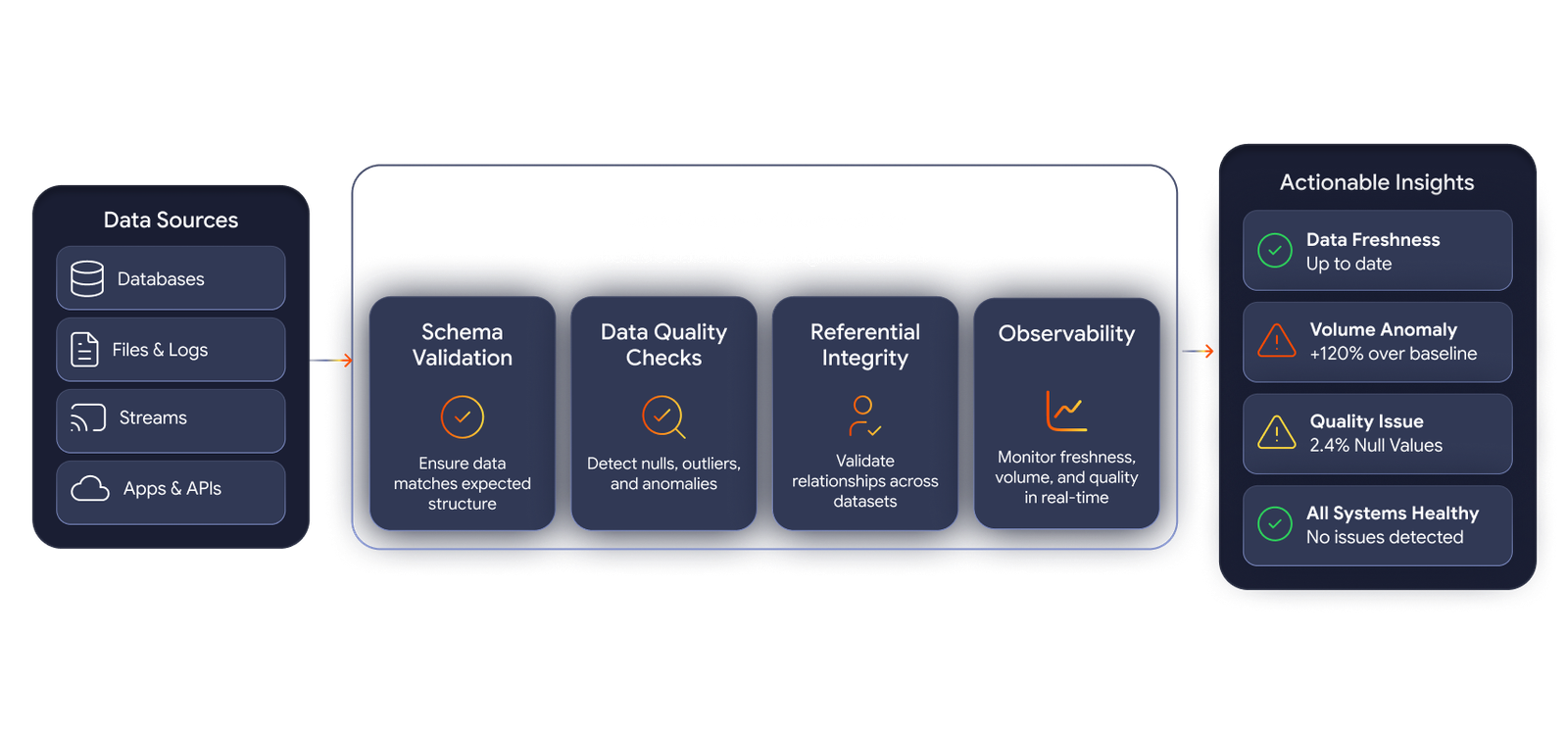
Early Detection
Validation at ingestion,
transform, and serving
Trusted Inputs
What reaches your model
or dashboard is correct
Proven Freshness
Staleness and anomalies
flagged as alerts
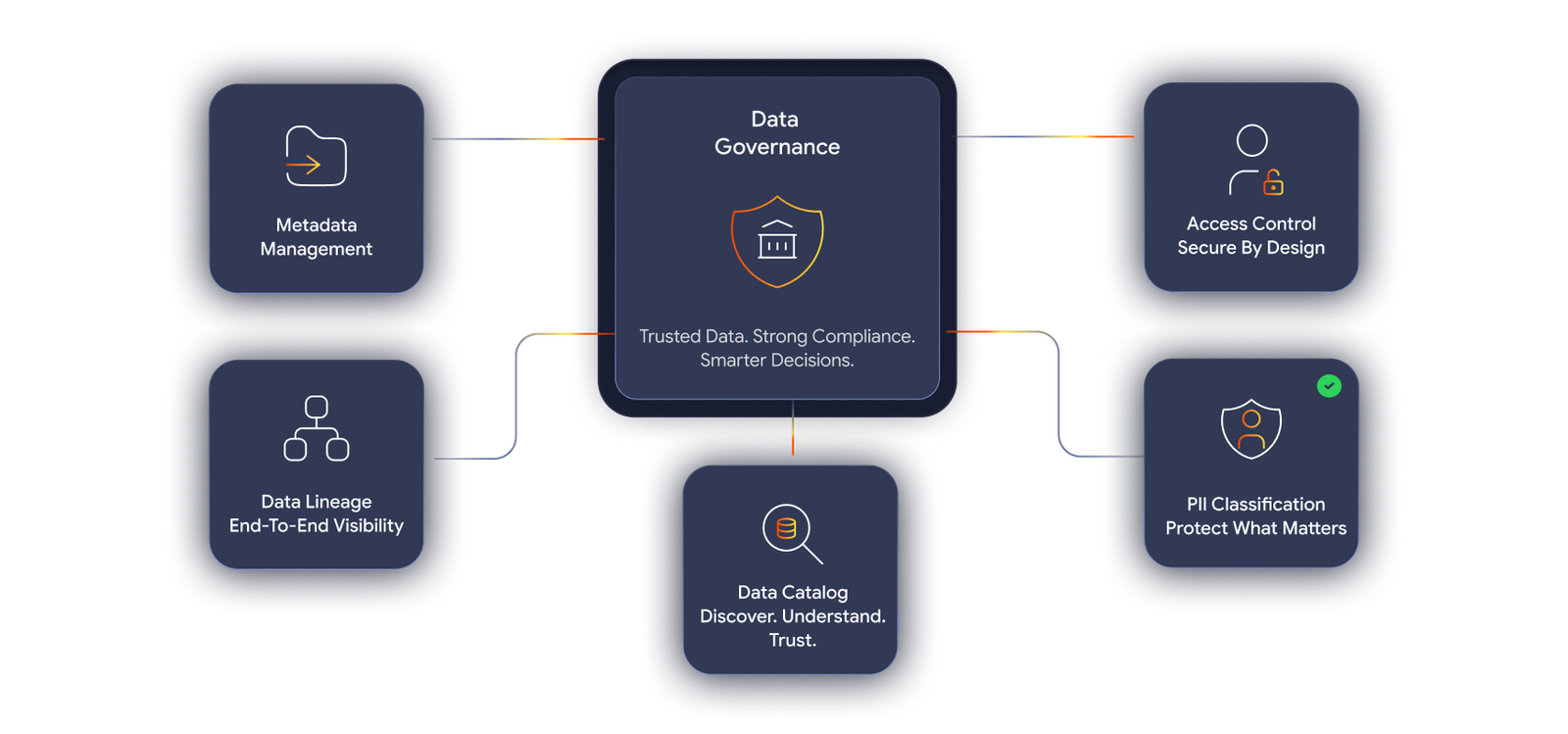
Audit Ready
Full lineage traced from
source to consumption
Compliance Ready
PII classified, access
controlled, enforced
Findable Data
Catalogued and documented,
not tribal knowledge
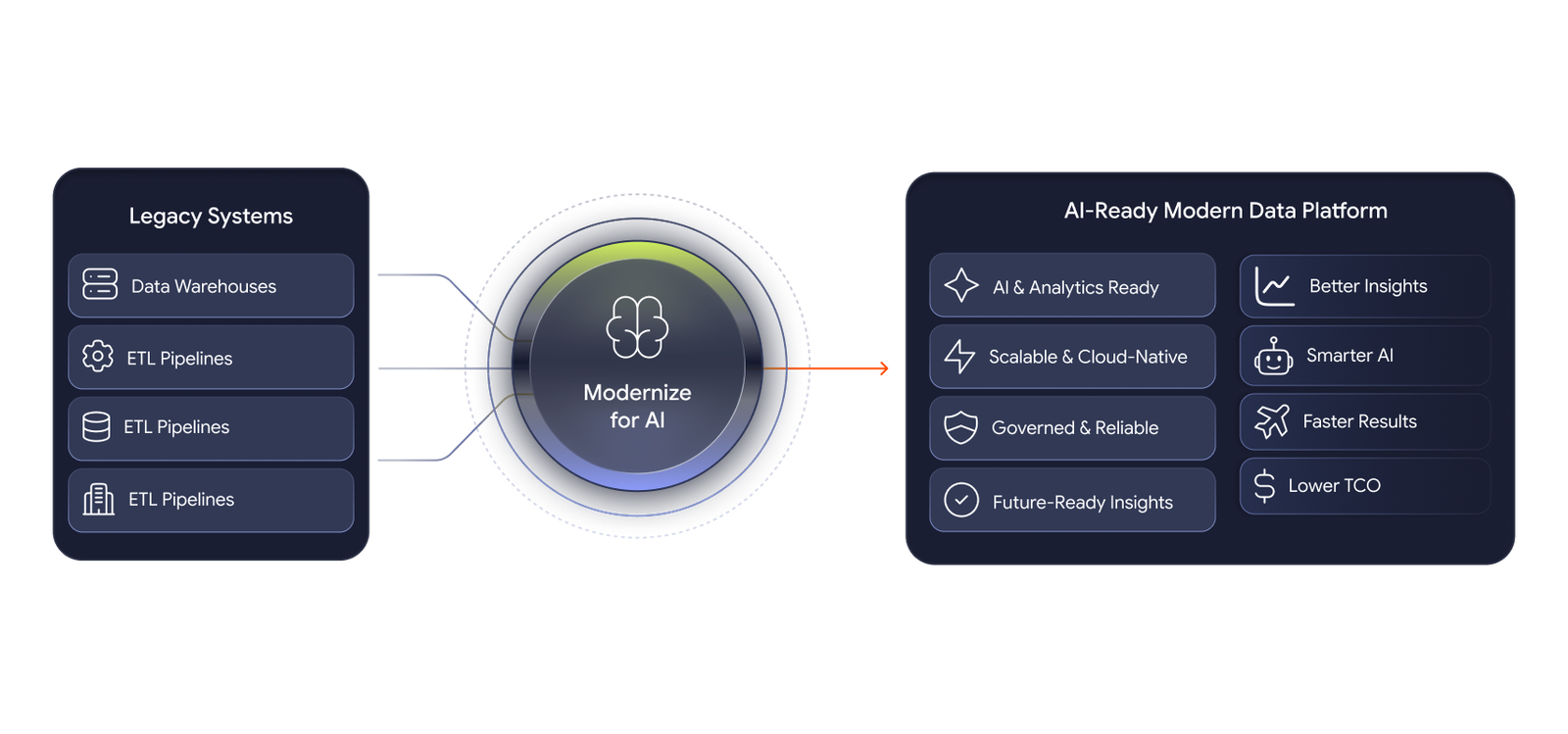
Zero Downtime
Existing reporting runs
throughout migration
Lower TCO
Cloud-native replaces
legacy licensing cost
Lower TCO
Cloud-native replaces
legacy licensing cost
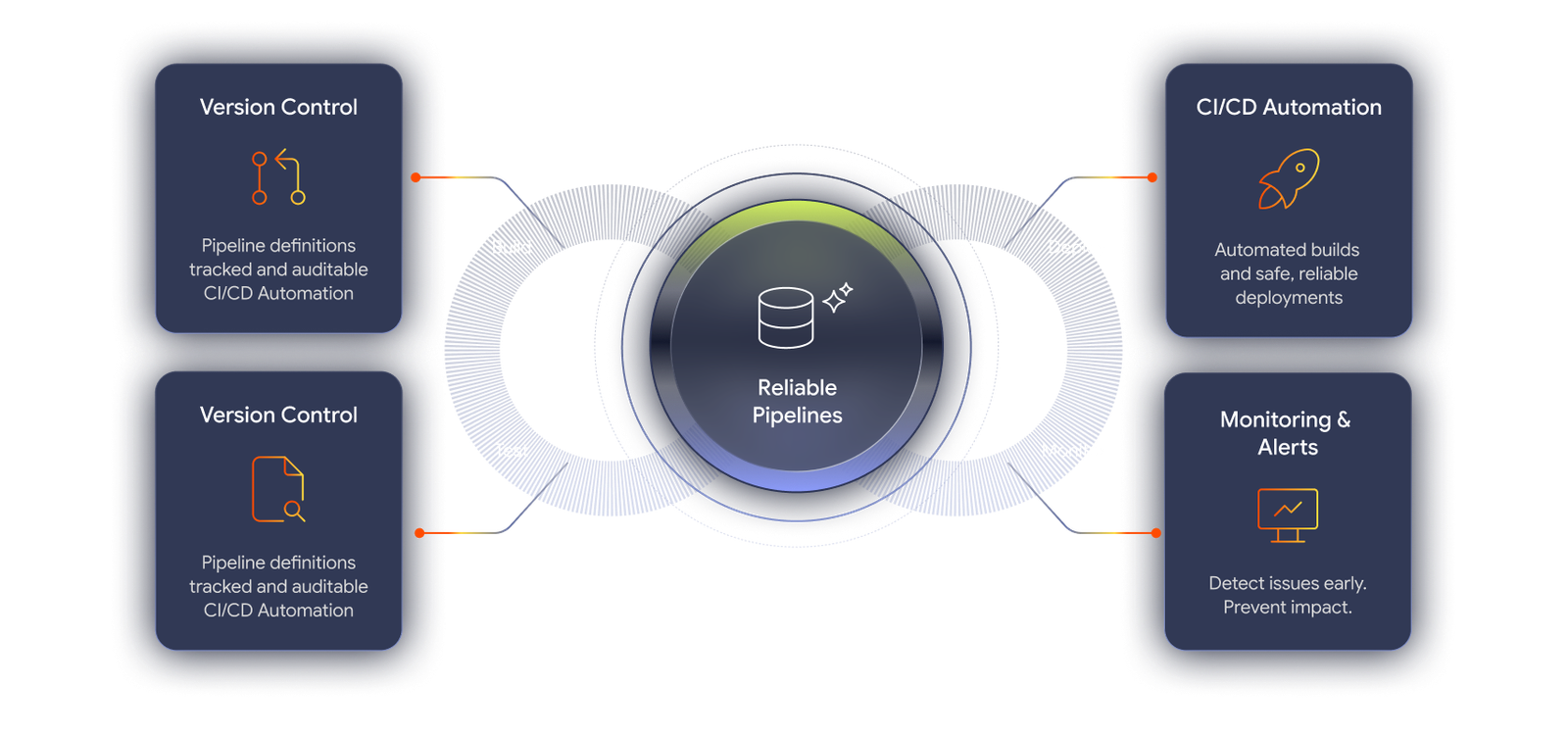
Engineering Rigor
Version control, testing,
and CI/CD applied
Upstream Catches
Failures caught before
consumers see them
Scales With You
Reliability holds as
volume and sources grow
Is Your Data Infrastructure Ready for What You're Building on Top of It?
Tell us what you're trying to build, we'll show you where the data layer needs work.
Built for Complexity. Engineered for Scale.
Building the technology capabilities that underpin enterprise scale and resilience.

Cloud-native infrastructure modernization for a multi-carrier…
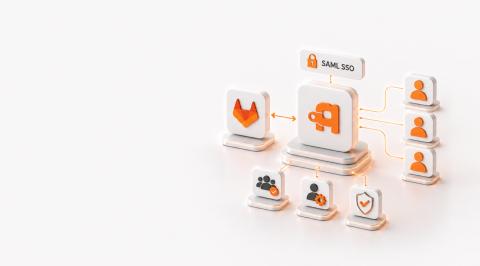
Automated GitLab group provisioning and user access management via…
GitLab to GitHub enterprise migration for a self-storage SaaS platform
Automating security alert management with a production-grade Jira…

Production-grade testing for enterprise AI governance
Our Technology Ecosystem












Built for Answers That Have to Be Right
Whether you're in fintech, healthcare, legal, or hi-tech, we build the pipelines and governance your AI systems, dashboards, and applications all depend on without anyone noticing they're there. We work with engineering leads, data teams, and product owners who can't afford a pipeline that fails silently.
Leaders responsible for AI systems the business can rely on.
Owners who need AI features that genuinely work for real users.
Engineers building and maintaining the technical layer AI systems run on.
Industries that depend on reliable, secure intelligent systems.
FAQs: Questions Worth Asking Before Making a Technology Decision
Strategic guidance to help technology leaders navigate complex technology questions, evaluate approaches, and address what matters most.
Opcito designs and develops batch and real-time data pipelines that reliably move data from source systems to storage and processing. The pipelines include schema validation, transformation logic, and error handling so failures are detected and surfaced as alerts rather than becoming silent data gaps. This helps organizations build a dependable data foundation for AI workloads.
Yes. Opcito can modernize legacy data warehouses, on-premise ETL pipelines, and siloed data systems into modern cloud-native data architectures. The migration can be sequenced so existing reporting continues to run throughout the transition instead of requiring an offline cutover window.
Opcito builds the data infrastructure required by AI systems independently from the application layer. For RAG implementations, this includes ingestion and embedding pipelines. For ML workloads, it includes feature engineering, feature stores, and serving infrastructure designed around inference latency requirements.
Yes. Data pipeline architecture can be designed around both batch and real-time streaming requirements. Opcito builds pipelines that move data reliably from source systems through storage and processing, with schema validation, transformation logic, and error handling incorporated into the pipeline.
Opcito applies data quality checks across ingestion, transformation, and serving layers so bad data can be detected before it reaches a model, dashboard, or agent. The approach includes schema validation, outlier detection, and observability that turns freshness and data-quality issues into actionable alerts.
Bring Us the Pipeline That's Holding Everything Else Back
We'll show you exactly what needs to change and build it.
