
 Security Product Engineering












AI Agents Built to Handle Real Work, Not Just Demos
We design agents around what production demands, real users, real data, and inputs nobody planned for, so the agent still works when it matters.
Trusted by leading ISVs
and ecosystem partners



















Production-Grade AI Agent Development for Complex, Multi-Step Workflows
An agent that completes a task in a controlled environment and an agent that handles real users, real data, and unexpected inputs reliably are two different engineering problems. We design agent systems around production requirements from the start, tool calling, governance and observability, memory, multi-agent coordination, and human-in-the-loop controls, defined before the first line of orchestration code is written.
The Engineering Behind an Agent That Holds Up in Production
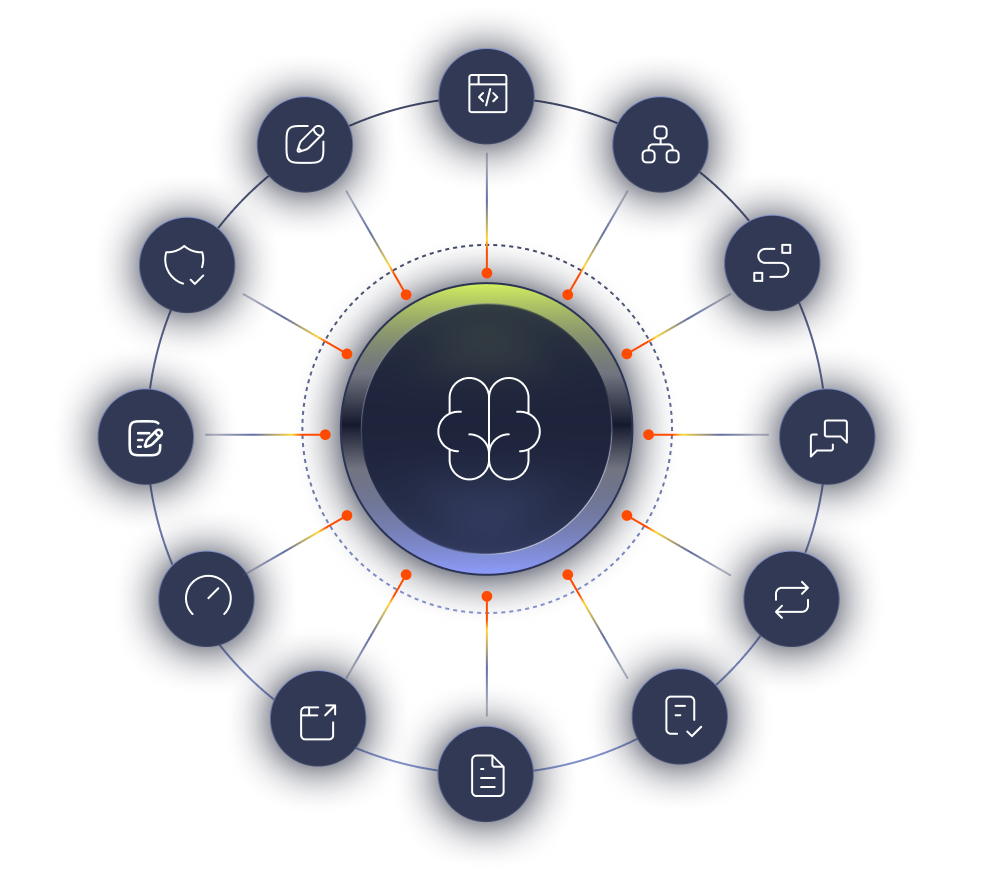
We design and build every layer of the agent, architecture, memory, tools, and guardrails, then test it against input nobody planned for.
Defining the agent's architecture before building it: single-agent versus multi-agent, the orchestration pattern, sequential, parallel, or graph-based, and the failure handling strategy. Decisions made here are far harder to reverse after the first production incident.
Building Model Context Protocol servers for internal systems, proprietary APIs, and databases with no existing MCP implementation, so agents call them through the same standard interface as any other tool, no bespoke connector code per integration.
Wrapping existing APIs and third-party integrations as MCP servers so agents discover and call them through the standard protocol instead of custom glue code, with versioning that prevents schema drift from silently breaking agent tool calls.
Building the memory architecture that gives the agent context across turns and sessions, short-term conversational memory, long-term persistent memory, and the retrieval strategy that surfaces the right context without overloading the model's context window.
Building agent systems using composable components: Skills extend behavior through reusable capability units, sub-agents decompose complex workflows across specialized agents, and hooks enforce guardrails and logging at points the model cannot bypass.
Designing systems where multiple specialized agents collaborate, with an orchestrator that decomposes tasks, routes work to the right sub-agent, and assembles results, including the failure handling for when one agent's output breaks the next step.
Building checkpoints where the agent pauses for human confirmation before high-stakes actions, covering which actions need approval versus which run autonomously, and the audit trail recording every human decision alongside the agent's reasoning.
Designing the prompts and reasoning patterns that determine how the agent plans, decides, and recovers from errors, chain-of-thought for complex tasks, self-reflection before returning output, and structured formats for downstream processing.
Instrumenting token usage per trace and designing agents to minimize unnecessary model calls, since multi-agent workflows that chain calls accumulate cost fast. Covers model selection by task, caching, and latency profiling to find what's slow.
Building controls that stop the agent from being manipulated through adversarial inputs or leaking sensitive data, covering prompt injection detection, output validation against a defined schema, and scope restrictions tied to user permissions.
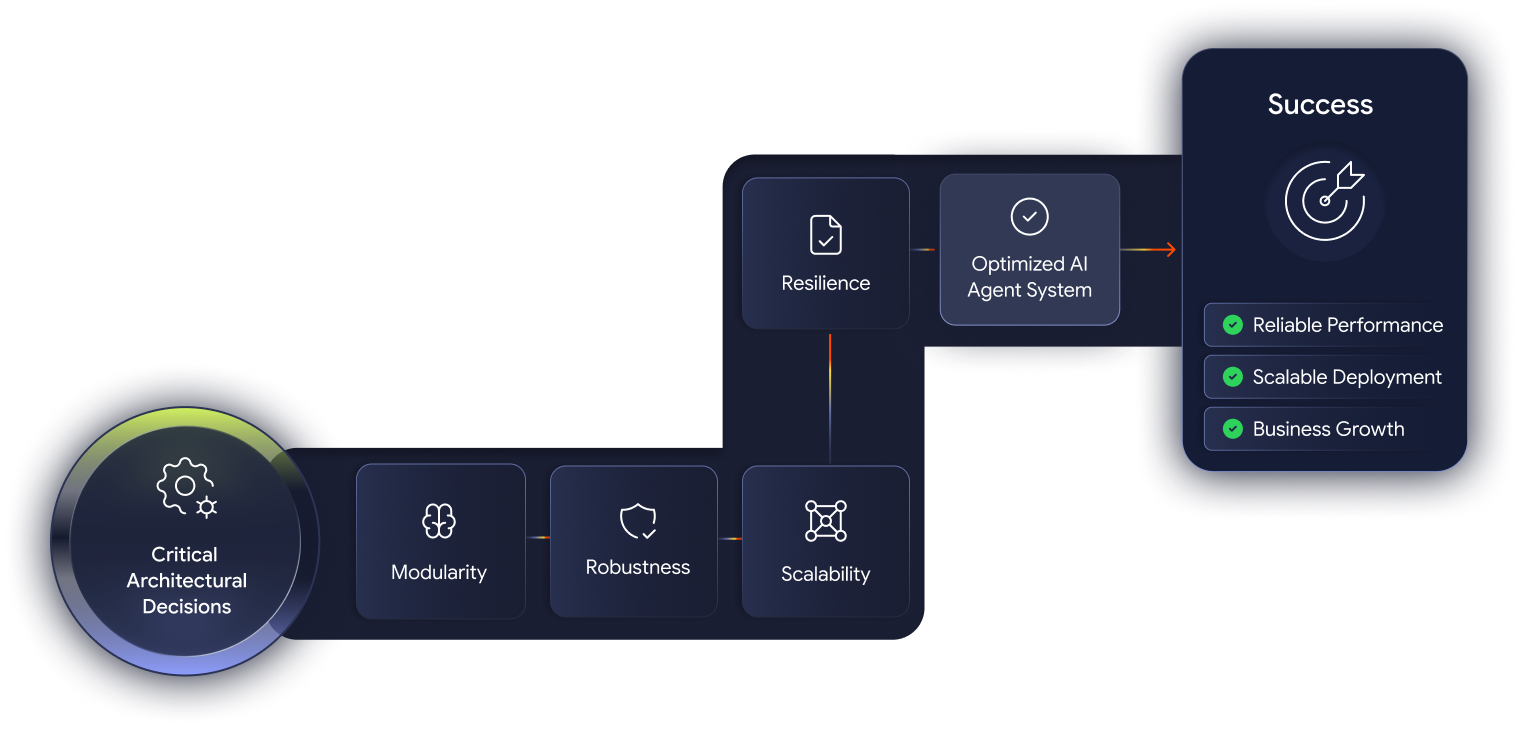

Right Pattern
Single or multi-agent
decided upfront

Failure Planned
Sequential, parallel,
or graph-based flow

Hard to Reverse
Architecture locked
before code is written
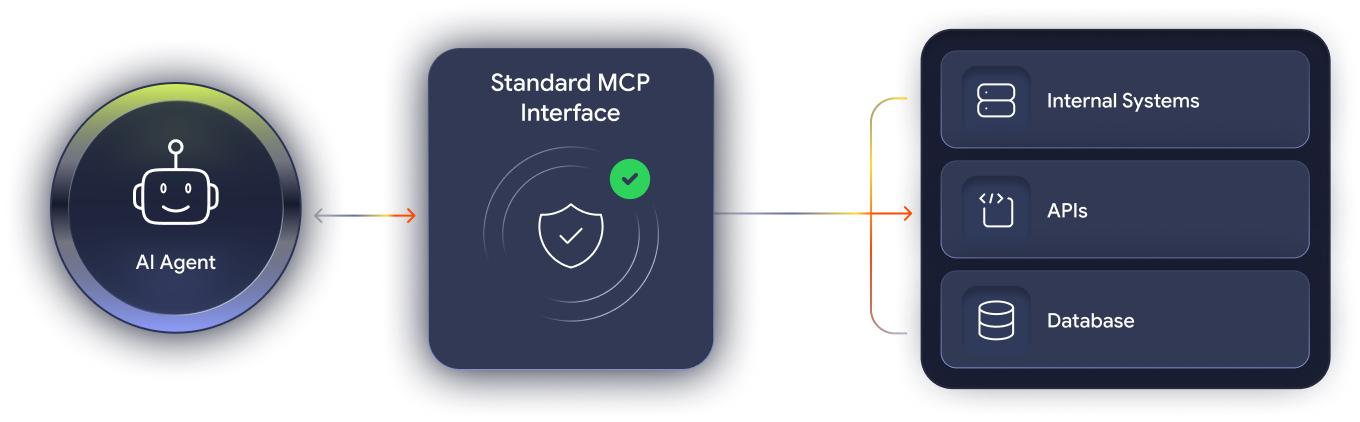
Any System Reached
Internal systems and
proprietary APIs reachable
One Interface
Agents call everything
the same standard way
No Custom Glue
No bespoke connector
code per integration
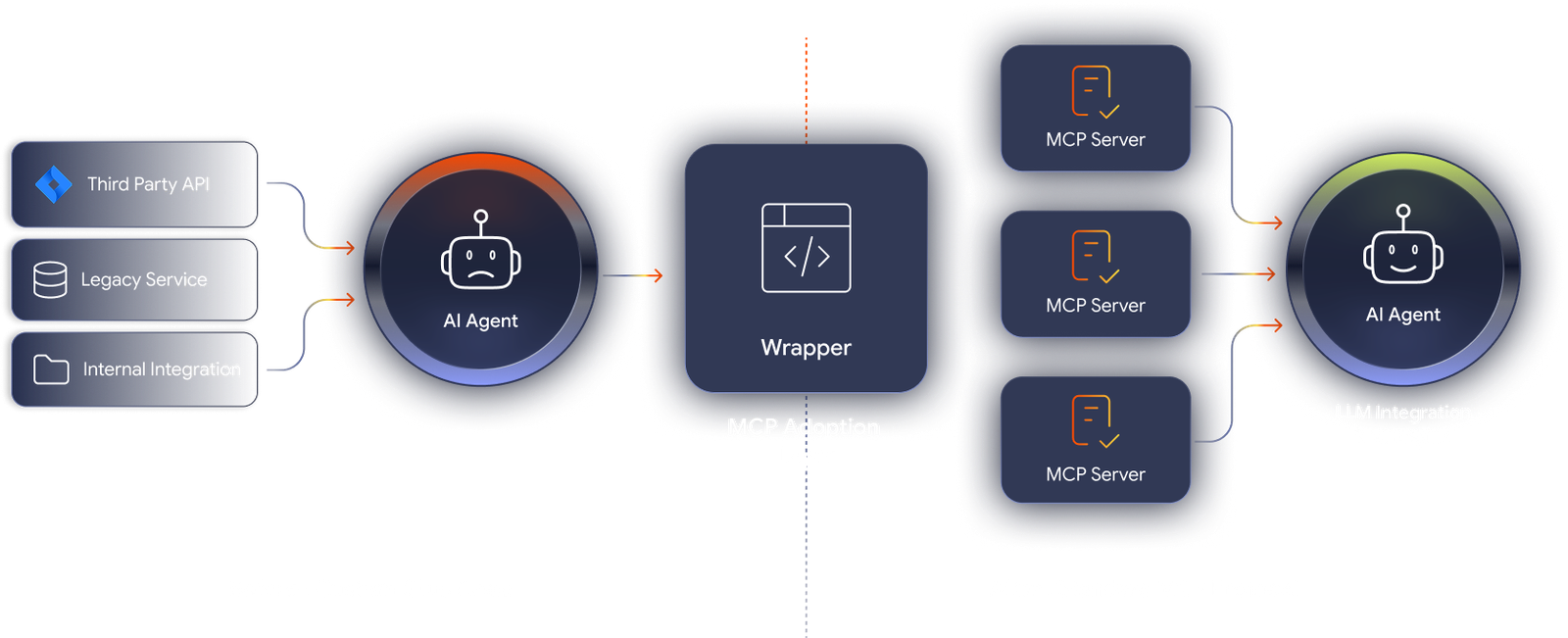
Wrap What You Have
Existing APIs exposed
through the protocol
No Silent Breaks
Schema versioning
prevents silent breakage
Version Controlled
Agents discover tools
without custom glue
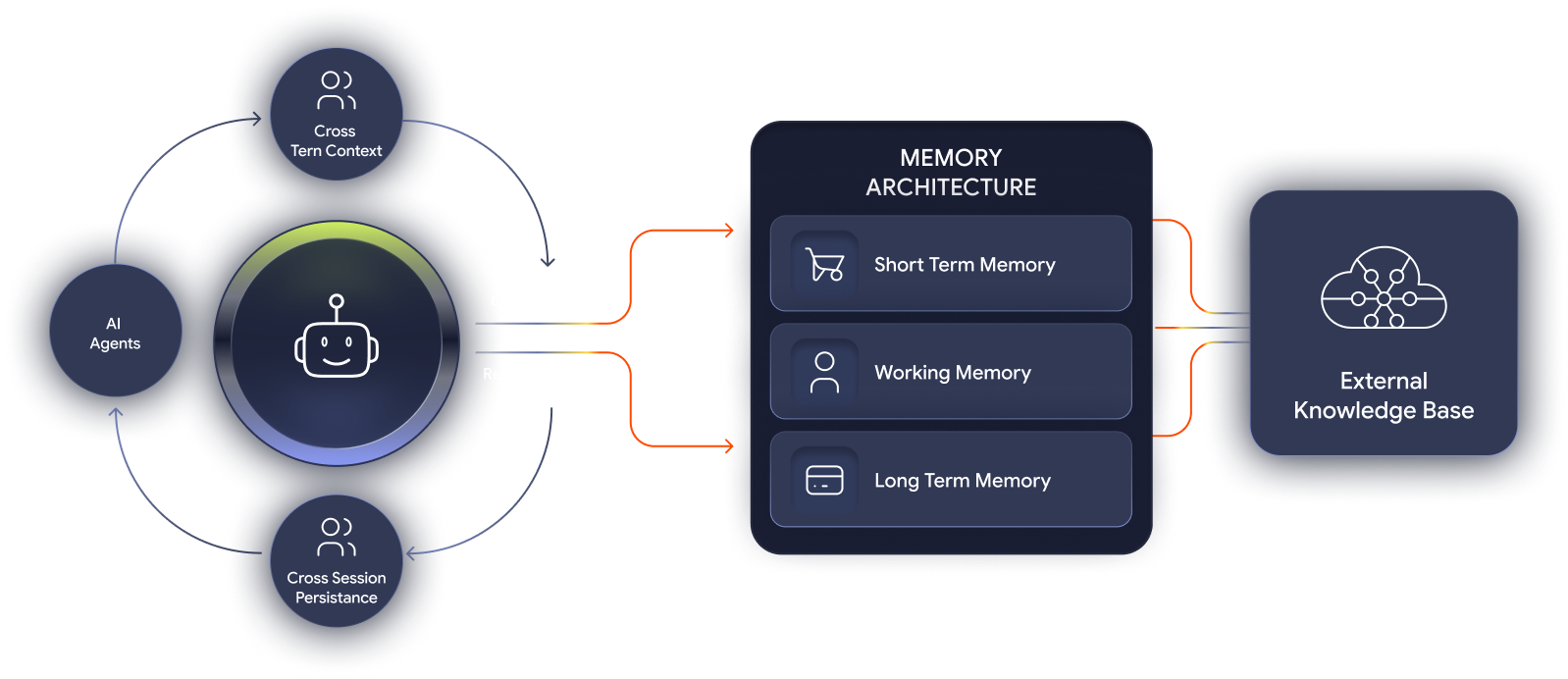
Context Persists
Memory that carries
across turns and sessions
Short and Long
Short-term chat plus
long-term persistence
Window Managed
Right context surfaced
without window overload
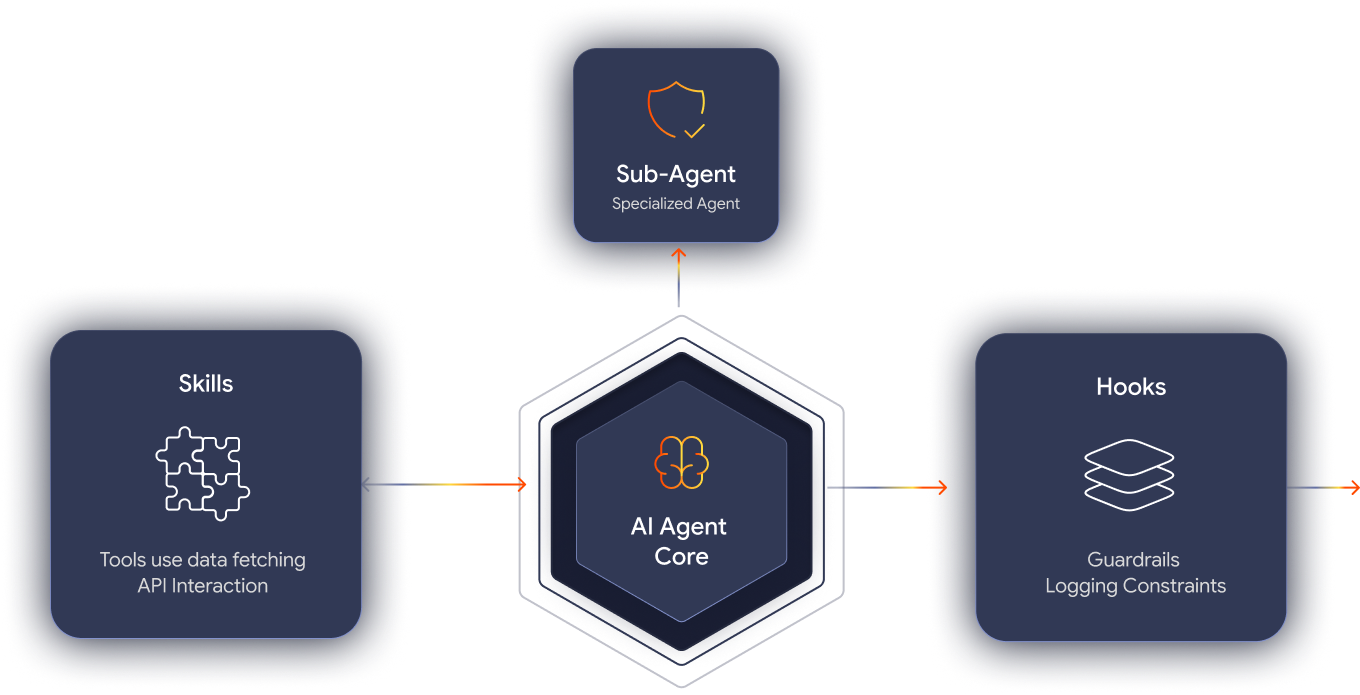
Reusable Skills
Reusable capability
units extend behavior
Sub-Agent Design
Complex work split
across specialized agents
Unbypassable Hooks
Guardrails the model
itself cannot bypass
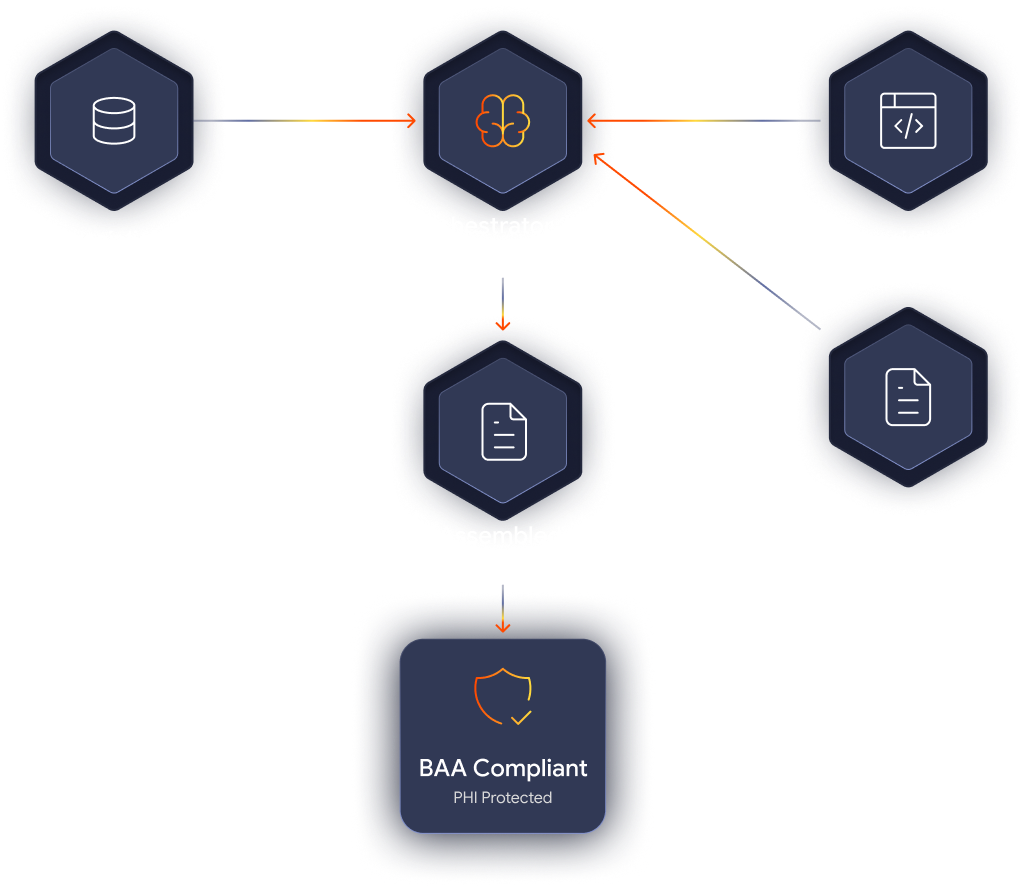
Task Routing
Orchestrator decomposes
and routes work
Right Agent Picked
Each sub-agent handles
what it does best
Failure Contained
One agent's failure
doesn't break the chain
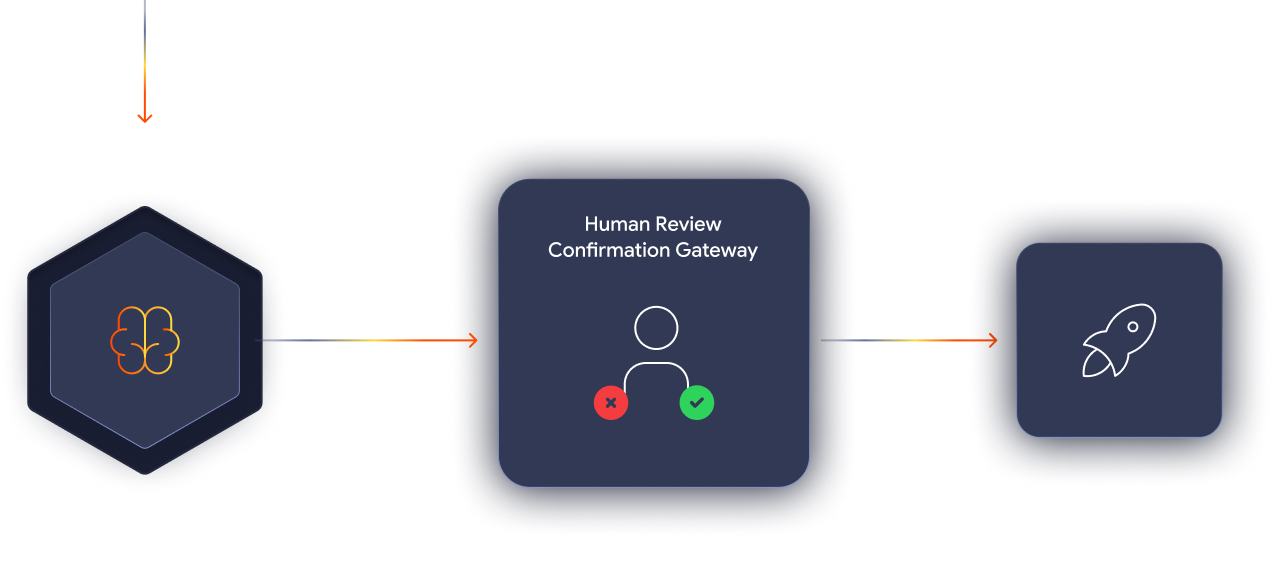
Approval Gates
High-stakes actions
pause for confirmation
Set Boundaries
Clear line between
autonomous and approved
Full Audit Trail
Every human decision
recorded with reasoning
Structured Logic
Chain-of-thought
for multi-step tasks
Self-Correction
Agent evaluates its
own output first
Parseable Output
Structured formats for
downstream systems
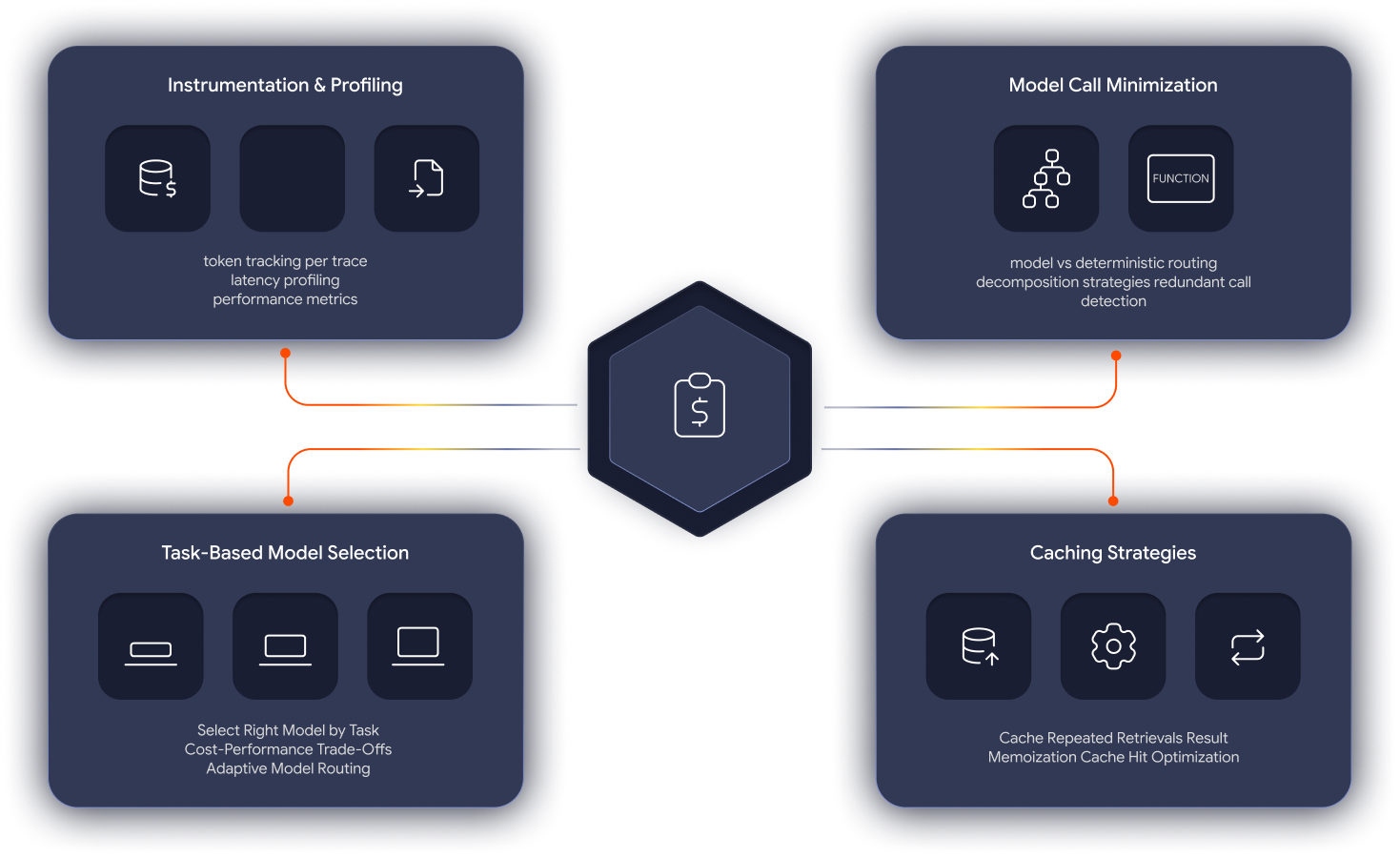
Token Visibility
Token usage tracked
per execution trace
Fewer Model Calls
Model calls minimized
by design
Latency Profiled
Slow steps
identified and optimized
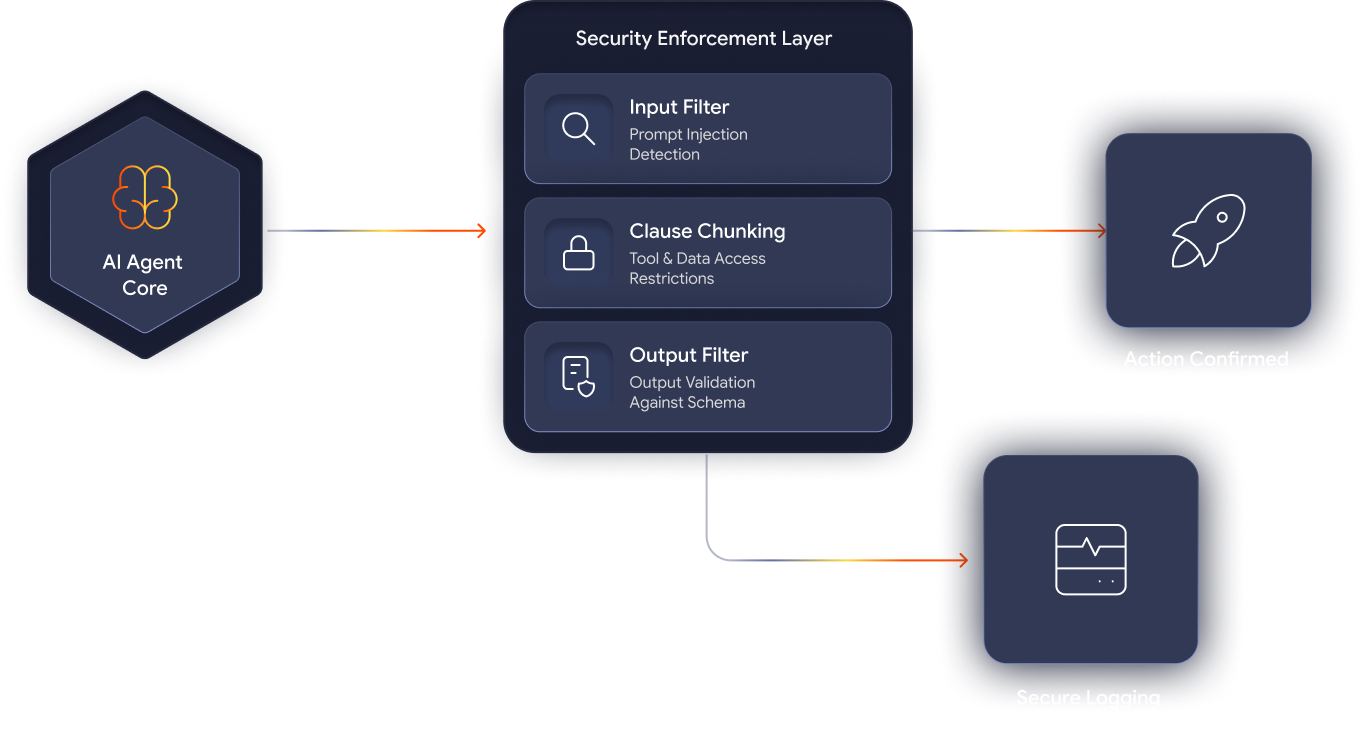
Injection Blocked
Prompt injection
detected and blocked
Output Validated
Outputs checked against
defined schema
Scoped Permissions
Tool access tied
to user permissions
Ready to Turn a Working Prototype Into a Production-Ready Agent?
Tell us what the agent needs to do, we'll scope the architecture around it.
Built for Complexity. Engineered for Scale.
Building the technology capabilities that underpin enterprise scale and resilience.

Cloud-native infrastructure modernization for a multi-carrier…
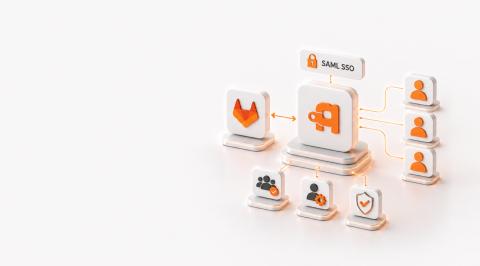
Automated GitLab group provisioning and user access management via…
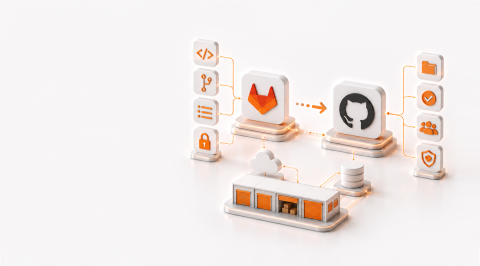
GitLab to GitHub enterprise migration for a self-storage SaaS platform
Automating security alert management with a production-grade Jira…

Production-grade testing for enterprise AI governance
Our Technology Ecosystem












Built for Agents Trusted to Act, Not Just Answer
Whether you're in fintech, healthcare, legal, or hi-tech, we build agents that call the right tool, escalate the right decision, and never act outside their scope. We work with engineering leads, platform teams, and product owners who can't afford an agent that does the wrong thing.
Leaders responsible for AI systems the business can rely on.
Owners who need AI features that genuinely work for real users.
Engineers building and maintaining the technical layer AI systems run on.
Industries that depend on reliable, secure intelligent systems.
FAQs: Questions Worth Asking Before Making a Technology Decision
Strategic guidance to help technology leaders navigate complex technology questions, evaluate approaches, and address what matters most.
Yes. Opcito develops production-ready AI agents for complex, multi-step workflows, with architecture, tool calling, memory, orchestration, governance, observability, guardrails, and human-in-the-loop controls designed into the system from the start. The approach is built around production requirements rather than only demonstrating that an agent can complete a task in a controlled environment.
Opcito can take an agent from architecture through production operations. The engagement covers architecture and orchestration decisions during design, development with guardrails and cost instrumentation, validation against real-world inputs, and ongoing monitoring of accuracy, security, and cost after deployment.
Yes. Opcito can develop MCP servers for internal systems, proprietary APIs, and databases that do not already have an MCP implementation. This gives agents a standard interface for accessing those systems instead of requiring bespoke connector code for every integration.
MCP server adaptation for existing tools — Wrapping existing APIs and third-party integrations as MCP servers so agents discover and call them through the standard protocol instead of custom glue code, with versioning that prevents schema drift from silently breaking agent tool calls.
Opcito designs memory architectures around the type of context the agent needs to retain and retrieve. This can include short-term conversational memory, long-term persistent memory, and retrieval strategies that surface relevant context without unnecessarily filling the model's context window.
Bring Us the Agent You Haven't Been Able to Ship
We'll tell you exactly what it takes to get it into production.
