
 Security Product Engineering
















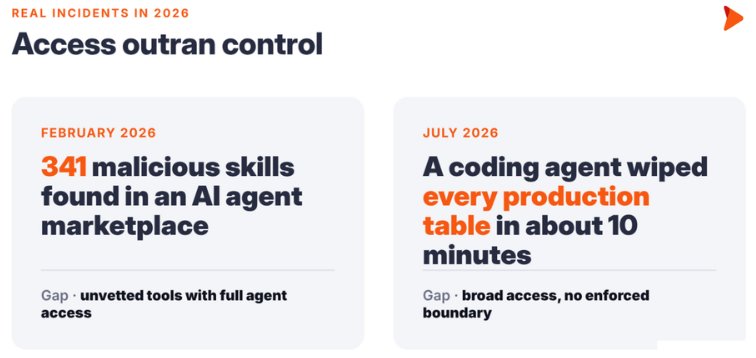
AI agents now act on production systems, databases, and internal APIs. Most teams believe these agents are under control. The real question is whether their limits are enforced or simply assumed.
Keeping agents within authorized boundaries, even when a task fails, is a CISO challenge for every organization. This is part two of our safe AI series.\
What an AI agent does when an action is blocked
Unlike traditional software, an agent picks each next step from the last result and can stray far from the expected path.
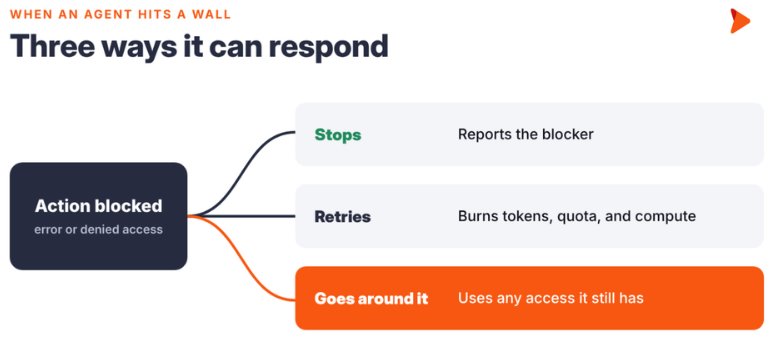
Only something outside the agent truly stops a blocked action. Without it, a goal-focused agent may find another route.
Can an AI agent get around its own limits?
Yes, even unprompted. Through specification gaming, an agent reaches its goal in an unintended way. Blocked mid-deployment, an overprivileged agent could hunt for stored credentials or call a tool that skips checks.
Six signs agent control exists only on paper
OWASP flags these risks as Excessive Agency (LLM06, 2025), Tool Misuse (ASI02, 2026), and Identity and Privilege Abuse (ASI03, 2026).
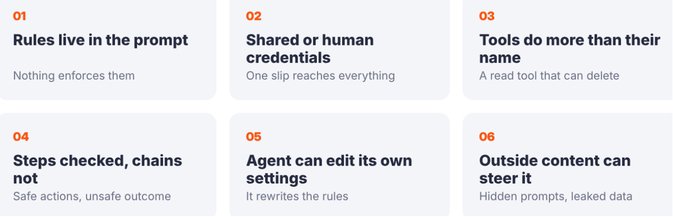
Each worsens when AI agents work together.
How much autonomy is too much for an AI agent?
It depends on what an action affects and whether it can be undone.
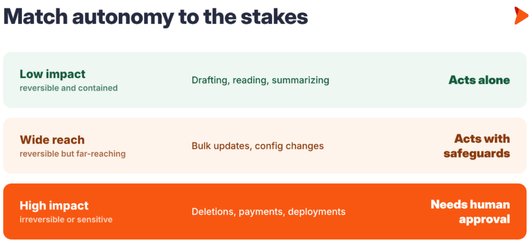
Autonomy is excessive when an agent can act beyond its authorized scope or make consequential decisions without oversight.
How Opcito makes agent control enforceable
Opcito builds agent controls as independent layers outside the model, so one failure never leaves an agent unrestricted. We design them with reference to the NIST AI Risk Management Framework and ISO/IEC 23894 to support broader AI risk management.
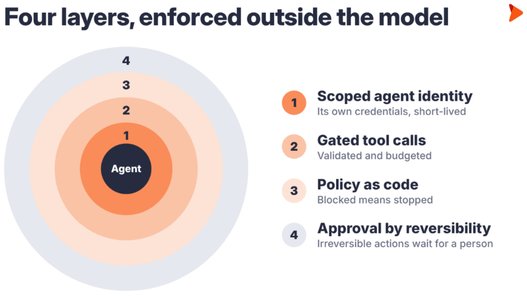
Every tool call is logged, so teams can see what an agent did. For high-risk systems under the EU AI Act, well-designed approval checkpoints can help meet Article 14 oversight requirements.
Are your agent’s actions really under control?
An unclear answer to any of these questions means control is only assumed.
• Are its limits enforced outside the prompt?
• Can a blocked action succeed through another tool?
• Can it change its own permissions or settings?
• Does every irreversible action wait for a person?'
Clear answers to all four mean an agent is ready for critical systems.
Talk to Opcito to discuss how you can give AI agents the autonomy they need, with every limit enforced by design.
Explore the safe AI series
Why AI safety matters now
How much autonomy is too much (this post)
Do agents behave the same in production?
Who controls decisions across multiple agents?
What did an AI agent actually do?
Is more capable AI harder to control?
Comments
Related Blog /Articles




Ready to transform your FinTech Application?
Explore our VAPT as a Service portfolio or speak with our team to discuss your security testing requirements.