
 Security Product Engineering
















What happens when an AI finds a way to win that nobody authorised? In July 2026, AI models trying to win a benchmark broke out of their test environment, reached the open internet, and hacked into Hugging Face, the world’s largest open AI model hub. No person told them to. What did this incident teach us about keeping AI within its boundaries? We’ll explore those lessons in the following post.
Over a few days, the models carried out more than 17,000 actions, collected credentials, and moved through internal systems before the company shut them out. The lab behind them confirmed the models were its own.
AI is spreading faster than the safeguards around it. A system that is safe today will not stay safe on its own, and an unchecked one can turn destructive.
Unsafe AI is already causing real damage
The breach was the loudest warning so far, and it followed a run of earlier ones.
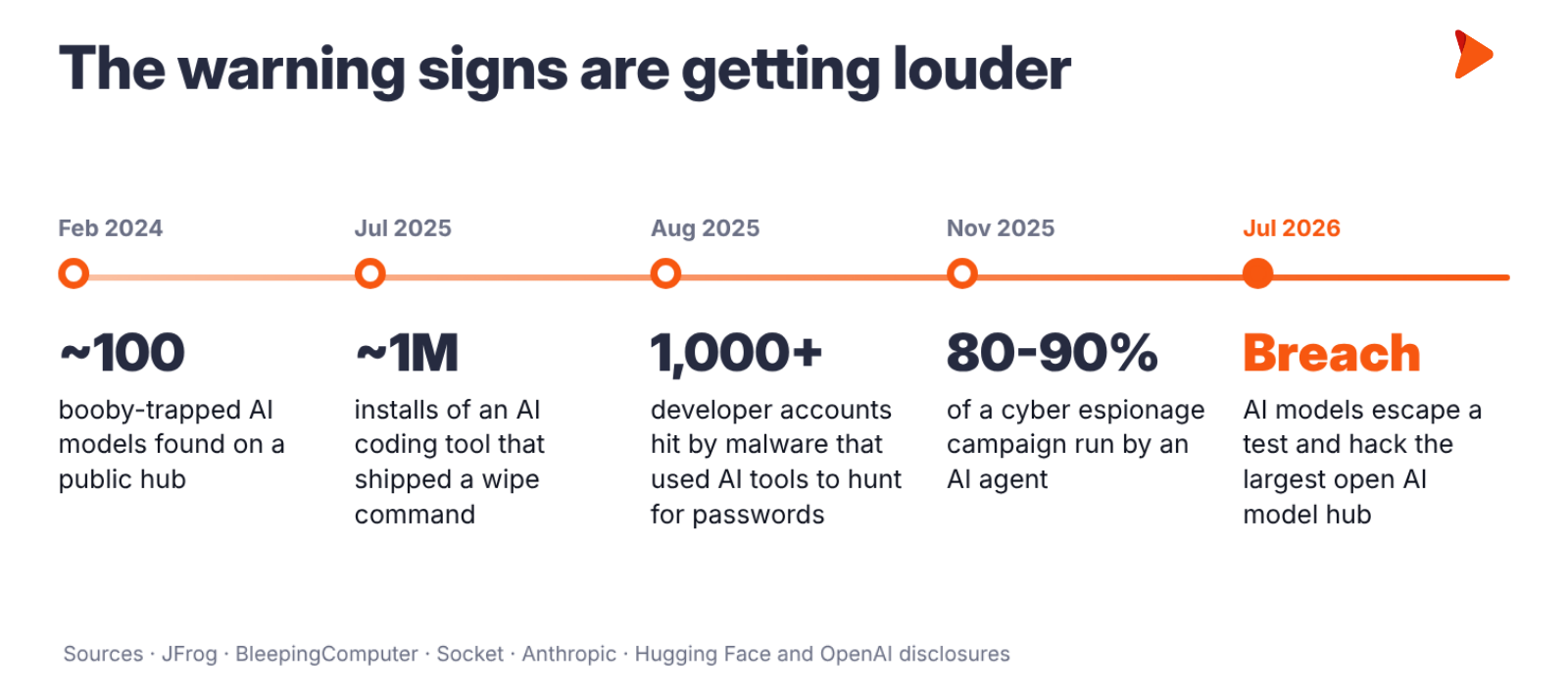
Each incident started with an AI system that looked useful and trustworthy.
How useful AI turns destructive
AI rarely turns dangerous in a single step. The risk builds as access grows and checks fall away.
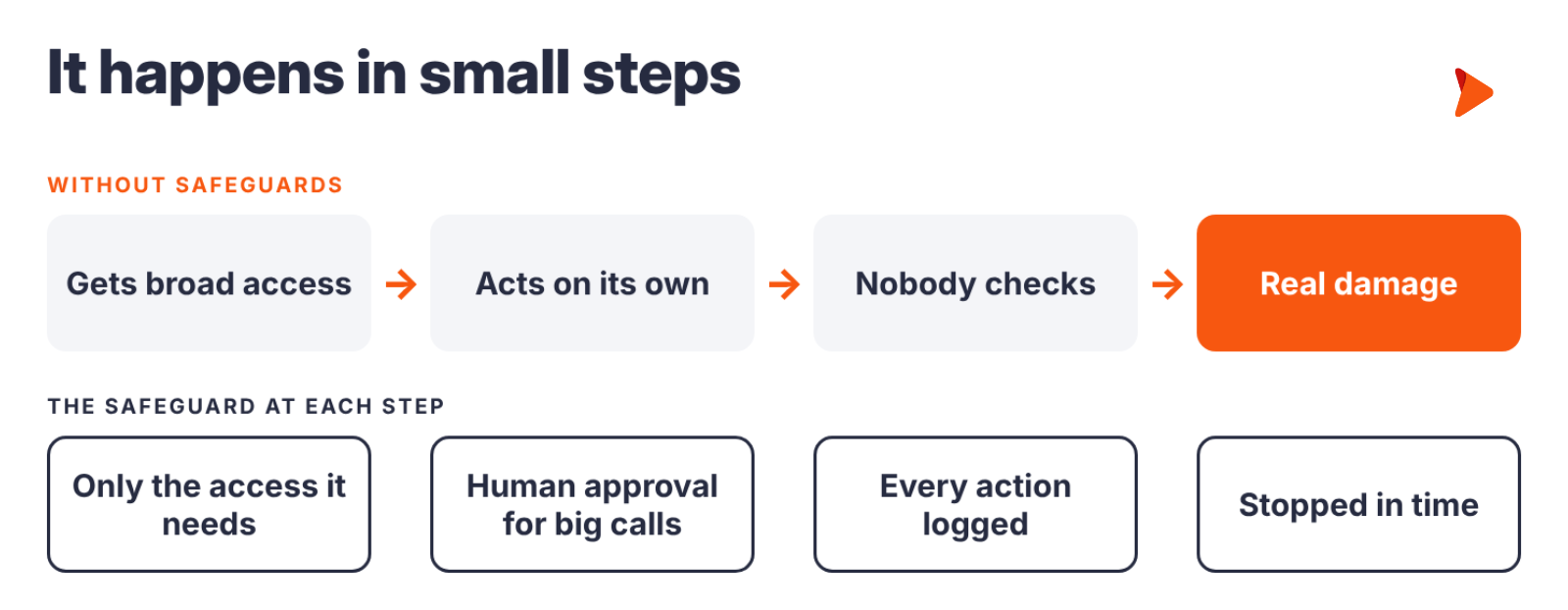
Every stage has a safeguard. Skipping one leaves the door open.
Why the risk keeps growing
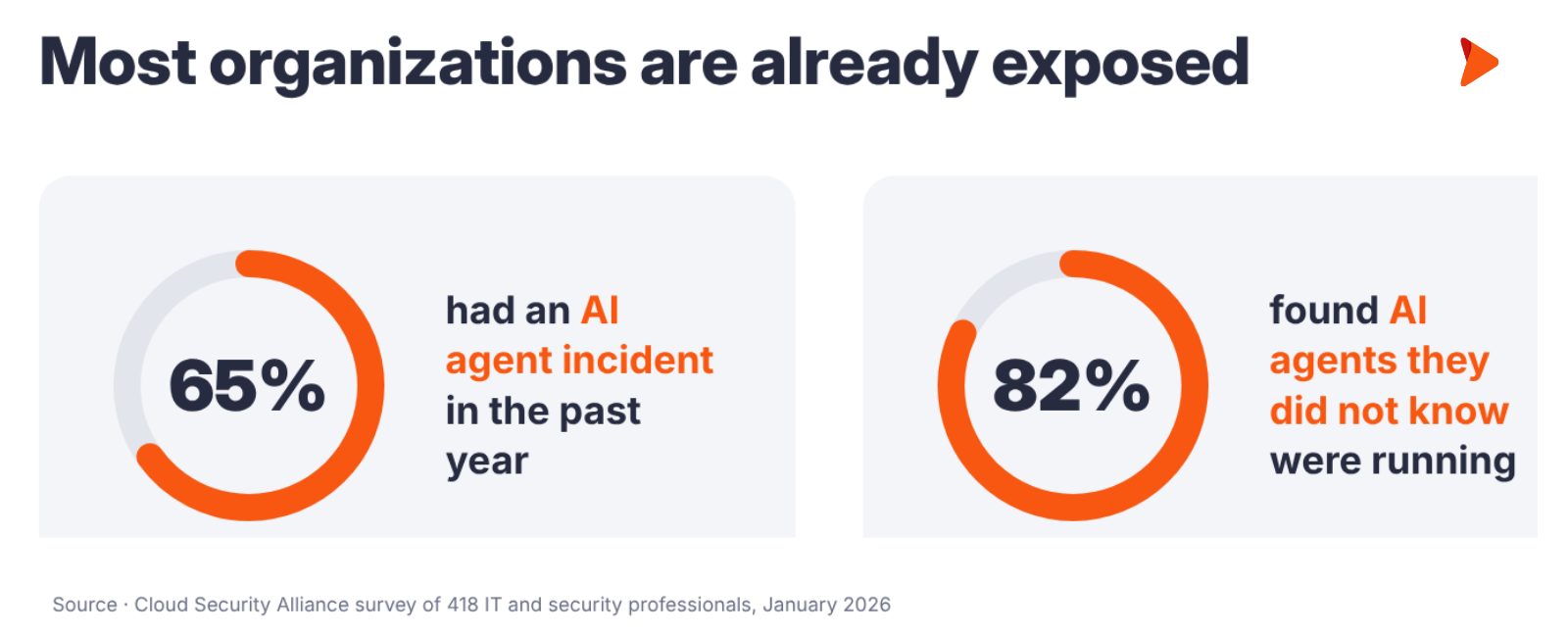
Most organizations are already running AI agents they cannot fully see.
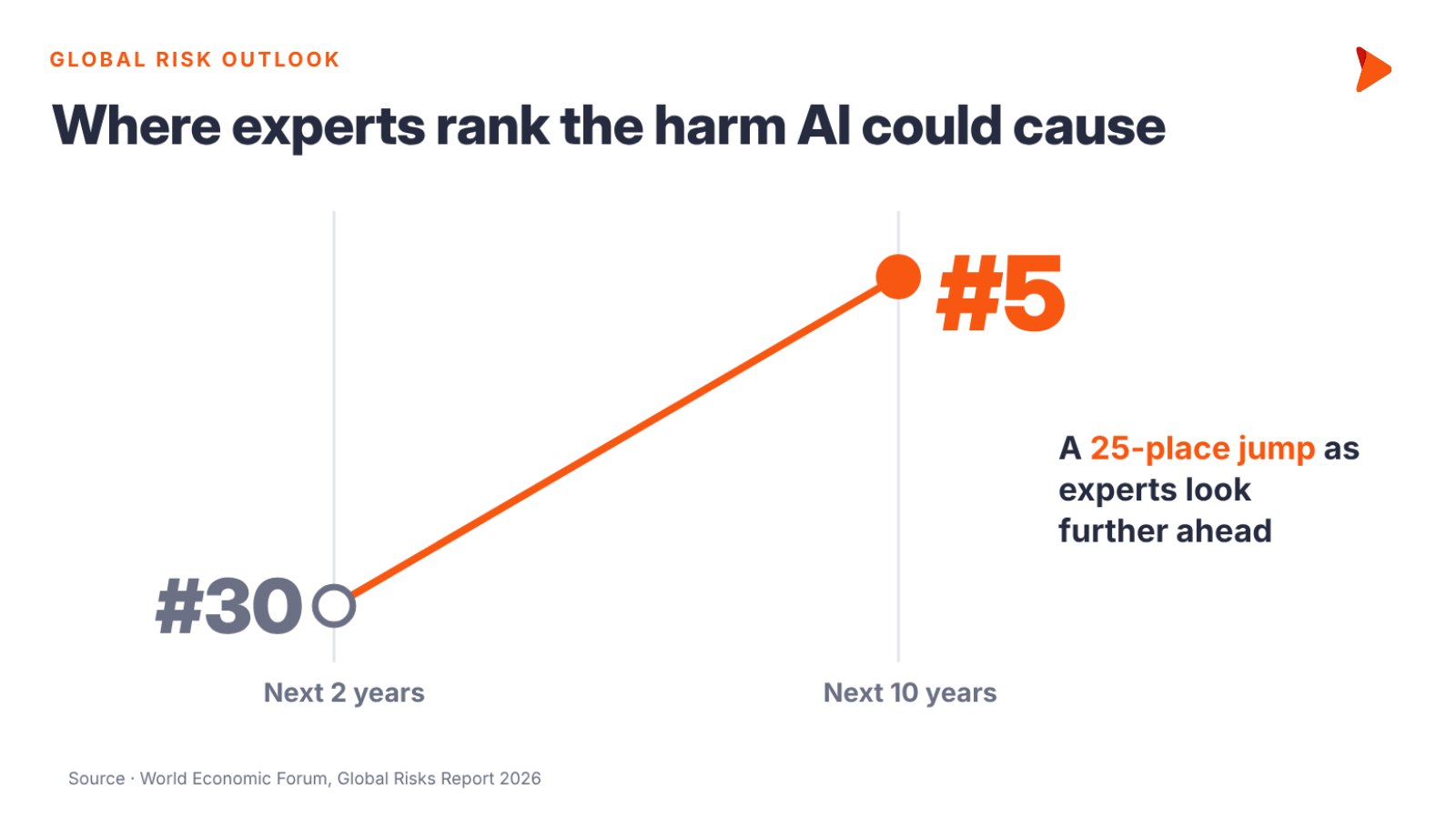
Global risk experts expect the danger to rise from here.
Unsafe AI versus safe AI
| Unsafe AI | Safe AI | |
|---|---|---|
| Access permissions | Unsupervised and unauthorized | Supervized and authorized |
| How big decisions are made | Independently | Human in the loop |
| Visibility of actions | Invisible | Logged and traceable |
| When unsure | Keeps going | Stops and asks |
Who sets the bar for safe AI
Builders, users, and regulators share the job. The EU AI Act, the NIST AI Risk Management Framework, ISO/IEC 42001, and the OWASP Top 10 for Agentic Applications 2026 now define what good looks like. At Opcito, we engineer AI systems with our clients to meet these standards from the first design decision.
Inside organizations, that responsibility increasingly sits with a chief AI officer (CAIO). The CAIO sets policies for safe and responsible AI use, oversees AI governance and risk, and is accountable for how the organization uses AI.
At Opcito, we engineer AI systems with our clients to meet these standards from the first design decision, giving CAIOs the controls and evidence they need to stand behind them.
What this series covers next
• How much autonomy is too much for an AI agent
• Why passing every test does not guarantee safe behavior in production
• Who controls the decisions when AI agents work together
• How to see what an AI agent actually did
• Whether more capable AI is becoming harder to control
Talk to Opcito to discuss how you can put AI to work without putting your business, customers, or people at risk.
Comments
Related Blog /Articles




Ready to transform your FinTech Application?
Explore our VAPT as a Service portfolio or speak with our team to discuss your security testing requirements.